

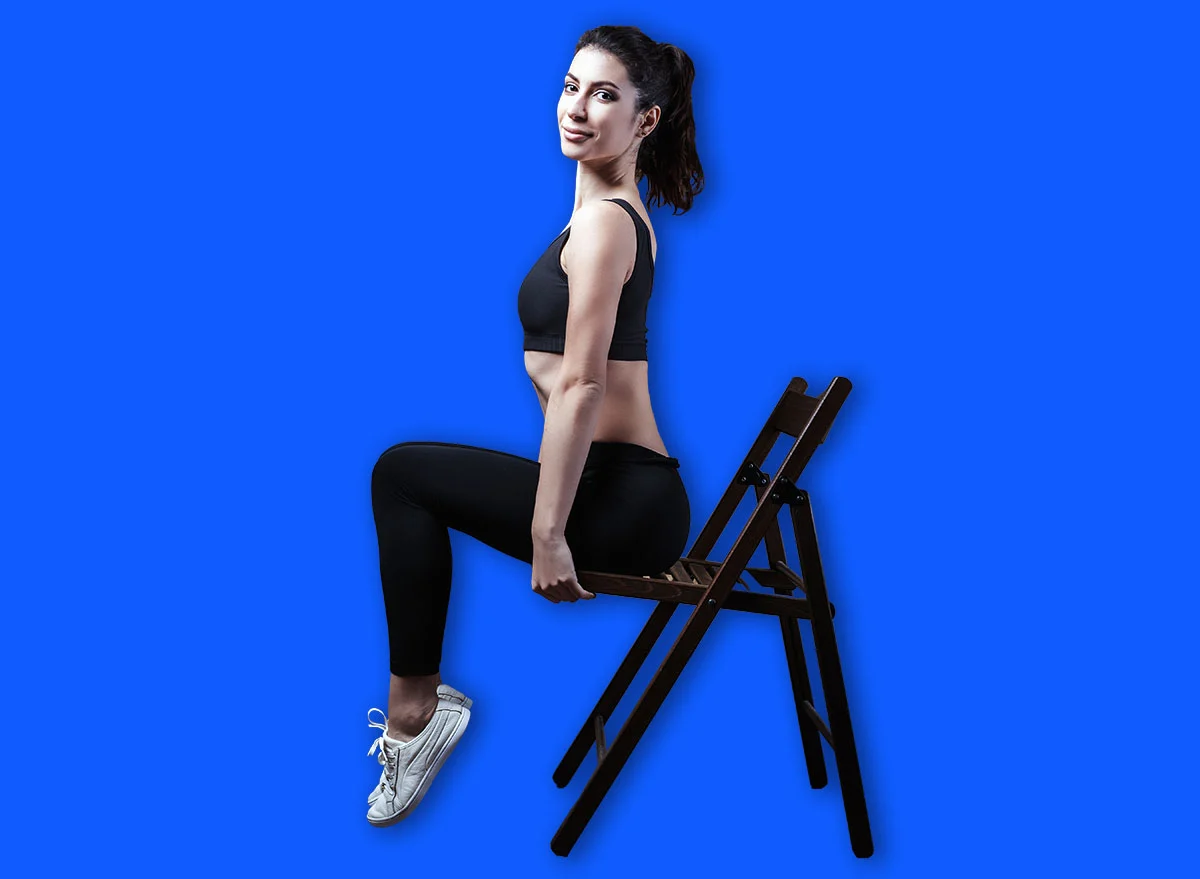
For many, the milestone of turning 60 brings a renewed focus on longevity and functional independence. While the allure of high-tech leg press machines and complex gym equipment is often marketed as the "gold standard" for fitness, the reality for many older adults is that these machines can be intimidating, inaccessible, or even jarring to sensitive joints. Recent breakthroughs in physical therapy and sports science, however, suggest that you don’t need a commercial gym to rebuild robust knee strength. In fact, a simple, stable chair may be the most effective tool in your fitness arsenal.
The Core Philosophy: Why Targeted Training Matters
Knee health after 60 is not just about avoiding pain; it is about proactive, direct training. When the musculature surrounding the knee joint—specifically the quadriceps, hamstrings, and glutes—is adequately strengthened, the joint gains a layer of "dynamic support." This support acts as a natural shock absorber, allowing for everyday movements like standing, walking, and stair-climbing to become predictable and pain-free.
The shift in modern exercise science has moved away from the "no pain, no gain" mentality toward a more sustainable approach: functional stability. By utilizing a chair as a consistent, stable base, individuals can practice controlled repetitions and adjust their range of motion without the risk of overextension. This method prioritizes "time under tension" and proper tracking of the knee, which is far more valuable for long-term health than stacking heavy weight plates onto a machine and hoping for the best.
The Evolution of Movement: A Chronology of Progress
For decades, the fitness industry encouraged older adults to "take it easy" or rely on passive treatments for joint discomfort. However, the last decade has seen a paradigm shift. Research now overwhelmingly supports the use of resistance training to combat sarcopenia (age-related muscle loss) and osteopenia (loss of bone density).
- The Early Phase (Years 1–2): Initial efforts often focus on bodyweight movements to establish a baseline of stability.
- The Intermediate Phase (Years 3–5): Introduction of controlled, chair-assisted movements allows for the isolation of specific muscle groups without joint strain.
- The Current Standard: Today, experts like Jarrod Nobbe, CSCS, advocate for "functional, intentional movement." The goal is to build strength that translates directly into the ability to move through life with confidence, rather than just moving weight in a vacuum.
Supporting Data: The Science of Stability
The efficacy of chair-based exercise is not merely anecdotal; it is grounded in clinical observation. According to studies published in the National Center for Biotechnology Information (NCBI), controlled resistance training in older populations significantly improves proprioception—the body’s ability to perceive its position in space—which is crucial for fall prevention.
By keeping the chair as a "fixed point," the brain receives consistent feedback about spatial orientation. When performing a squat or a lunge, the chair provides a safety net that encourages the user to push through the heels rather than the toes, effectively engaging the posterior chain (glutes and hamstrings) instead of relying solely on the vulnerable knee joint.
Expert Insight: Why the Chair Works
"I have seen countless individuals reclaim their mobility by mastering simple, fundamental movements," says Jarrod Nobbe, a USAW National Coach. "A clean, controlled sit-to-stand movement provides far more diagnostic and functional value than a heavy, forced machine set. At 60 and beyond, our goal is steady, cumulative progress that our knees can actually utilize in the real world."
The implication of this approach is clear: stability fosters safety. When the fear of movement is removed, individuals are more likely to stay consistent, which is the primary driver of all physical adaptation.

The Four Pillars of Knee Strength
To integrate this into your routine, aim for two to four sessions per week. Ensure your chair is on a non-slip surface, and focus on slow, deliberate tempo.
1. The Chair Box Squat
This movement is the "king" of functional leg strength. It trains the exact motion of sitting and standing, which is essential for preserving independence.
- The Benefit: It ensures consistent depth and forces the user to utilize the glutes rather than collapsing into the chair.
- Execution: Stand in front of a chair, feet shoulder-width apart. Lower your hips back until you lightly touch the seat, then drive through your heels to return to a standing position.
- Pro Tip: Do not "park" your weight on the chair. A light tap is all that is needed to ensure you’ve reached the required depth.
2. Chair-Supported Reverse Lunge
Lunges are excellent for correcting muscle imbalances, but they can be daunting for those with balance concerns. The chair acts as a stabilizer.
- The Benefit: It isolates one leg at a time, allowing the quadriceps and calves to work without the instability of a free-standing lunge.
- Execution: Stand behind the chair, holding the backrest for support. Step one foot back, dropping the back knee toward the ground while keeping the front heel firmly planted.
- Pro Tip: Keep the torso upright to shift the focus onto the quads and glutes.
3. Seated Leg Extension with Pause
This move targets the vastus medialis, the teardrop-shaped muscle on the inside of the knee that is vital for stability.
- The Benefit: The pause at the top of the movement increases "metabolic stress," which is a key driver for muscle growth without the need for heavy external weight.
- Execution: Seated with good posture, extend one leg until it is straight. Hold for two seconds, squeezing the quad, then lower it slowly.
- Pro Tip: Avoid snapping the knee joint; the movement should be fluid, not jerky.
4. Seated Band Hamstring Curl
The hamstrings are the "brakes" of the knee. Strengthening them prevents the common issue of quad dominance, which can lead to patellar tracking problems.
- The Benefit: By using a resistance band, you can control the tension throughout the entire range of motion, which is much kinder to the knee than a mechanical cable machine.
- Execution: Loop a band around your ankle and secure it to a table leg or heavy object. From a seated position, pull your heel back toward the chair.
- Pro Tip: Focus on keeping your thigh stationary. The movement should occur exclusively at the hinge of the knee.
Implications for Longevity
The implications of adopting a consistent, chair-based knee program are profound. Beyond just the physical gains, there is a significant psychological benefit. When you no longer "second-guess every bend" of the knee, your world expands. You are more likely to participate in social activities, walk in nature, and engage in hobbies that require physical movement.
By choosing controlled, functional movements over high-impact or machine-heavy protocols, you are investing in a future of independence. As with any exercise program, start slowly. If you have existing knee conditions or injuries, consult with a physical therapist to ensure these movements align with your specific medical needs.
Ultimately, strength is not about how much you can lift; it is about the ability to move through your golden years with grace, stability, and pain-free confidence. The chair is waiting—all you have to do is take the first, controlled step.
