

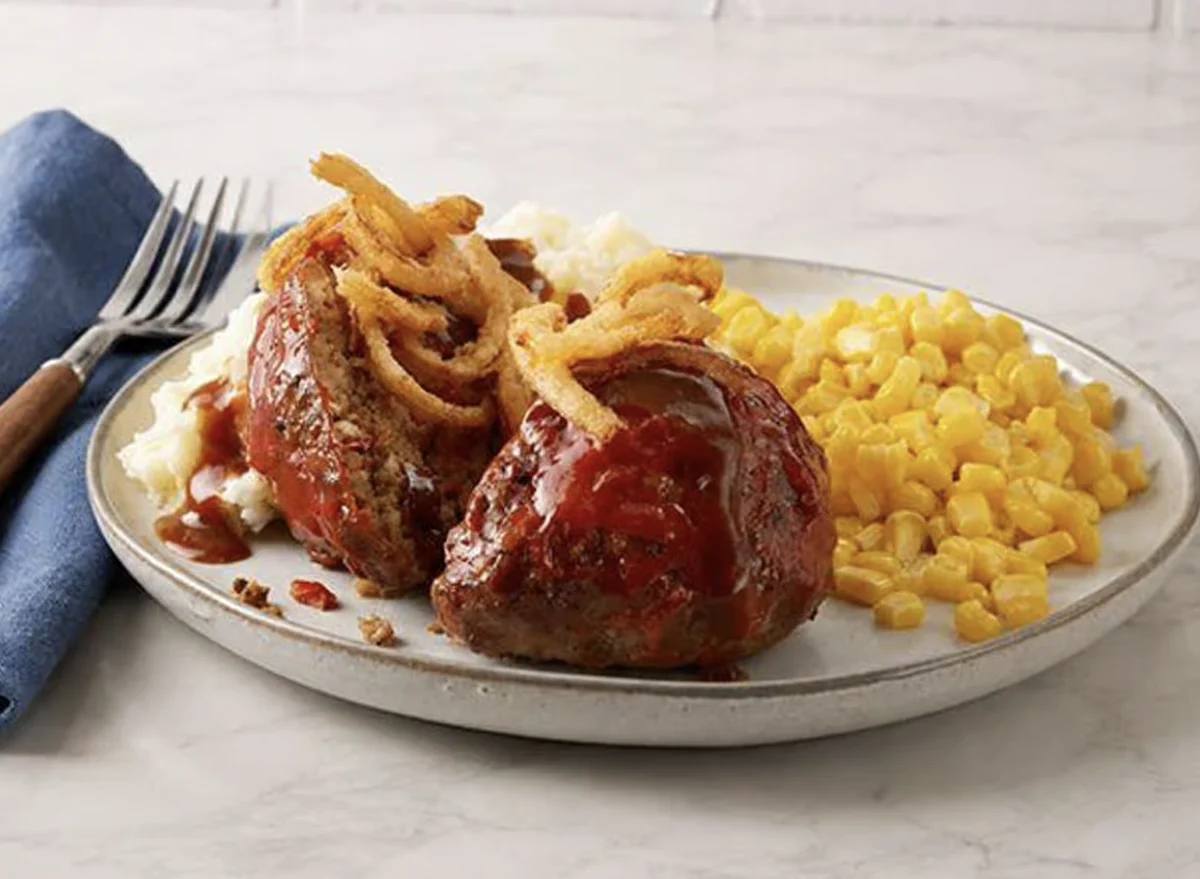
Meatloaf and mashed potatoes represent the quintessential American culinary experience. It is a dish defined by nostalgia, warmth, and the alchemy of humble ingredients transformed into something greater than the sum of their parts. While many home kitchens strive to perfect the Sunday dinner classic, the art of the restaurant-grade meatloaf is a unique challenge. Achieving the perfect balance—a tender, flavorful protein, airy yet substantial potatoes, and a gravy that acts as the savory glue—is a feat few chains master.
To identify which establishments truly elevate this comfort staple, we consulted with Emma Sullivan, a seasoned home chef and recipe developer at DailyCookingRecipe.com. According to Sullivan, the difference between a mediocre meatloaf and a transcendent one lies in the texture of the meat, the quality of the sear, and the depth of the accompanying gravy. Below, we examine four restaurant chains that have successfully claimed their place in the pantheon of comfort food.
The Anatomy of the Perfect Plate: Main Facts
When evaluating meatloaf, culinary experts look for three specific markers:
- The Protein Blend: The ideal meatloaf avoids the trap of being either too dense (which suggests over-mixing) or falling apart. A blend of beef, often tempered with onions, bell peppers, and fresh herbs, is the gold standard.
- The Crust: Whether baked in a loaf pan or seared on a flat-top, the exterior must provide a contrast to the interior.
- The Gravy Profile: A rich, savory brown gravy or a tomato-based glaze is essential to cut through the richness of the meat and the creaminess of the potatoes.
A Chronology of Comfort: How the Meatloaf Evolved
Meatloaf originated as a practical solution to food waste during the Industrial Revolution, but it found its true footing in American culture during the Great Depression. As families sought to stretch expensive meat rations, combining ground meat with fillers like breadcrumbs, crackers, and vegetables became a standard practice. By the mid-20th century, meatloaf had shed its reputation as a "thrift meal" and moved into the spotlight as a cornerstone of diner culture.
In the 21st century, major chains have pivoted back to these roots, recognizing that diners are increasingly seeking "low-tech" comfort in an era of complex, modern gastronomy. The chains listed below have managed to maintain the home-cooked aesthetic while scaling production to meet high demand.

The Top Contenders: Expert Analysis
1. Cracker Barrel: The Gold Standard of Homestyle
Cracker Barrel’s classic meatloaf is widely considered the industry benchmark. For many, it serves as the "control group" against which all other meatloaves are measured.
The Experience:
The dish is a hearty, straightforward blend of ground beef, onions, bell peppers, and tomatoes. It is rarely reinvented; instead, it is served with the consistency that has defined the brand for decades. "Cracker Barrel’s meatloaf and mashed potatoes is the combination I compare everything else to," says Sullivan. "It tastes like a Sunday dinner at someone’s house—which is exactly what Cracker Barrel is going for and exactly what they deliver."
Why It Works:
The consistency of the flavor profile is the primary driver of its success. By sticking to a traditional recipe that prioritizes a tender crumb and a robust, tomato-forward profile, they tap into a deeply ingrained memory of American home cooking.
2. Metro Diner: The Art of the Sear
If Cracker Barrel represents the traditional baked approach, Metro Diner represents the evolution of the diner griddle.
The Experience:
The "Iron City Meatloaf" is not merely baked and sliced; it is finished on a hot griddle. This creates a caramelized, flavorful crust that provides a textural contrast to the soft interior. Accompanied by a rich brown gravy and steamed French-style green beans, it is a masterclass in balance.

The "Diners, Drive-Ins and Dives" Factor:
The dish received a significant boost in reputation after being featured on Guy Fieri’s Diners, Drive-Ins and Dives. Fieri’s endorsement highlighted the importance of the sear, a sentiment echoed by Sullivan. "The griddle-searing is the standout feature," she notes. "It gives the meatloaf a crust rather than the uniformly soft texture you sometimes get with traditional baked meatloaf."
3. The Cheesecake Factory: The "Sleeper Hit"
While The Cheesecake Factory is often associated with its eponymous dessert and massive, eclectic menu, its "Famous Factory Meatloaf" is a hidden gem for comfort food enthusiasts.
The Experience:
This is a more opulent take on the classic. The plate includes generous portions of mashed potatoes, savory mushroom gravy, grilled onions, and buttered corn. It is a substantial, heavy plate that feels indulgent.
Implications:
For the diner who is overwhelmed by the Cheesecake Factory’s lengthy menu, this dish offers a reliable, high-quality "anchor." Sullivan characterizes it as a "sleeper hit," noting that it satisfies the craving for something hearty and traditional without the experimental fusion elements often found in their other entrées. The mushroom gravy adds an earthiness that differentiates it from the standard brown gravies found elsewhere.
4. Perkins Restaurant and Bakery: Diner Care
Perkins occupies a special space in the American landscape, often serving as the late-night or early-morning hub for travelers and families alike.

The Experience:
Perkins treats the dish with the respect of a scratch kitchen. The meatloaf is dense and well-seasoned, and the gravy tastes as though it were prepared in-house rather than reconstituted.
The Finishing Touch:
What sets Perkins apart is the ecosystem of the meal. "Perkins does this combination with the care of a real diner kitchen," says Sullivan. "Mashed potatoes that have actual potato texture—that’s rare in a chain. Finish with a slice of their fresh-baked pie, and it’s a complete comfort food meal worth going out of your way for."
Supporting Data and Nutritional Considerations
While these dishes are undeniably comforting, it is important to note their role in a balanced diet. Most chain-restaurant meatloaf portions are calorie-dense, often ranging between 800 and 1,200 calories per plate depending on the gravy and side dishes. The high sodium content in the gravy and the fat content in the ground beef are standard for these preparations.
However, nutritionists often suggest that the psychological benefit of "comfort food" in moderation can aid in stress reduction and social bonding. When dining out, portion control—such as opting for a side salad instead of extra bread or sharing the dessert—can allow diners to enjoy these classics without overindulgence.
Official Responses and Culinary Philosophy
Representatives from these chains often emphasize that the success of their meatloaf program relies on two things: supply chain consistency and adherence to legacy recipes.

At Cracker Barrel, the philosophy remains "country-style" hospitality. At Metro Diner, the focus is on "craveability"—the idea that a dish should offer a unique textural experience that cannot be easily replicated at home. These chains invest heavily in the training of their kitchen staff to ensure that the "sear" (in the case of Metro Diner) or the "simmer" (in the case of The Cheesecake Factory) is executed correctly across thousands of locations.
Implications for the Future of Comfort Food
The enduring popularity of these four dishes suggests that despite the rise of plant-based proteins and fast-casual health trends, the American public remains deeply committed to traditional, meat-heavy comfort food.
The industry is seeing a shift where "homestyle" is becoming a premium category. Chains that can successfully market the "slow-cooked" nature of their dishes, even when produced at scale, are winning the loyalty of customers who are increasingly wary of processed, assembly-line meals. As we look toward the future, it is likely that more chains will focus on "elevation"—adding high-quality ingredients like wild mushrooms, fresh herbs, or artisanal cheeses to their gravy profiles to keep these classics relevant for a new generation.
In conclusion, whether you are seeking the nostalgic benchmark of Cracker Barrel, the textural perfection of Metro Diner, the richness of The Cheesecake Factory, or the diner-style reliability of Perkins, the landscape of chain-restaurant meatloaf is surprisingly vibrant. These four establishments prove that with the right attention to detail, a simple combination of meat and potato can remain the undisputed king of the dinner table.
