

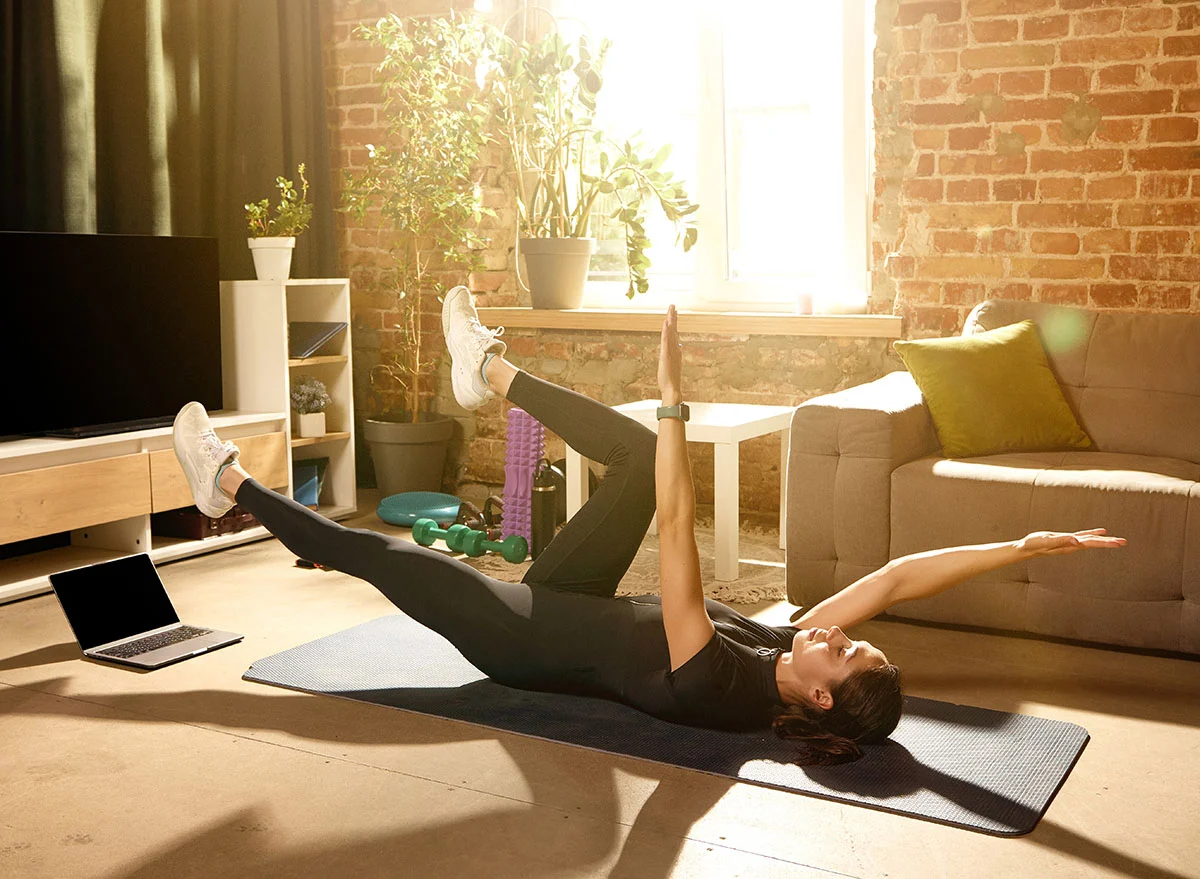
For decades, the fitness industry has centered on the "plank" as the gold standard for abdominal strength. While the static hold has its merits, many individuals over the age of 55 find that long-duration planks often lead to shoulder fatigue, neck strain, or lower back discomfort long before their abdominal muscles actually reach a point of meaningful exhaustion. As the body matures, the goal of core training shifts: it is no longer just about "getting a six-pack," but about fostering functional stability, protecting the spine, and enhancing daily mobility.
Recent research underscores that core training after 55 works best when it feels both simple and repeatable. By moving away from static endurance tests and toward dynamic, controlled movements, you can create a stronger, more resilient midsection. This article explores a more sophisticated approach to core conditioning, providing a comprehensive guide to bodyweight movements that prioritize structural integrity over duration.
Main Facts: The Shift in Core Philosophy
The core is not a single muscle; it is a complex kinetic chain involving the rectus abdominis, obliques, transverse abdominis, and the muscles of the lower back. After age 55, the primary focus should be "trunk control"—the ability to maintain a stable spine while the extremities are in motion.
When you perform a standard plank, you are essentially training your core to be a statue. However, life rarely requires us to remain frozen. We reach for items on high shelves, we bend to pick up groceries, and we navigate uneven terrain. Therefore, the most effective exercises for those over 55 are those that teach the core to remain engaged while the arms or legs are mobile. This dynamic tension provides far more protection for the lower back and contributes to a more confident, upright posture.
Chronology: Developing a Sustainable Routine
Consistency is the primary driver of success in fitness after 55. A routine that is overly taxing or complex is rarely maintained. To see results, consider this chronological approach to your fitness week:
- The Initiation Phase (Weeks 1-4): Focus on form and breath. Complete two rounds of the five exercises listed below, three days a week. Do not worry about speed; prioritize the "mind-muscle connection."
- The Consolidation Phase (Weeks 5-8): As the movements become second nature, increase the number of repetitions or the duration of the holds by 10-15%.
- The Integration Phase (Week 9 and beyond): Incorporate a third set and focus on increasing the range of motion while maintaining perfect spinal alignment.
Five Essential Bodyweight Exercises
1. The Alternating Dead Bug
The Dead Bug is widely considered one of the most back-friendly core movements in existence. By lying on your back, you provide your spine with a solid foundation, eliminating the risk of injury associated with gravity-loaded standing exercises.
- How to do it: Lie on your back with arms extended toward the ceiling and legs in a tabletop position (knees at 90 degrees). Slowly lower your right arm behind your head while simultaneously extending your left leg straight out. Keep your lower back pressed firmly into the floor throughout the movement. Return to center and switch sides.
- Why it works: It forces your deep core to prevent your lower back from arching, which is the most common cause of exercise-related back pain in older adults.
2. The Reverse Crunch
Many people mistake the standard crunch for an abdominal exercise, but it often ends up being a hip-flexor-heavy movement that strains the neck. The Reverse Crunch flips the script by keeping the torso stationary.
- How to do it: Lie on your back with arms by your sides. Pull your knees toward your chest, then use your lower abdominal muscles to lift your hips slightly off the floor. Lower your hips back down with complete control.
- Why it works: It specifically targets the lower abdominal wall, an area that often loses definition and strength as we age.
3. Flutter Kicks
Core endurance is the missing link for many. While static holds are boring, dynamic movements like flutter kicks keep the muscles firing continuously.
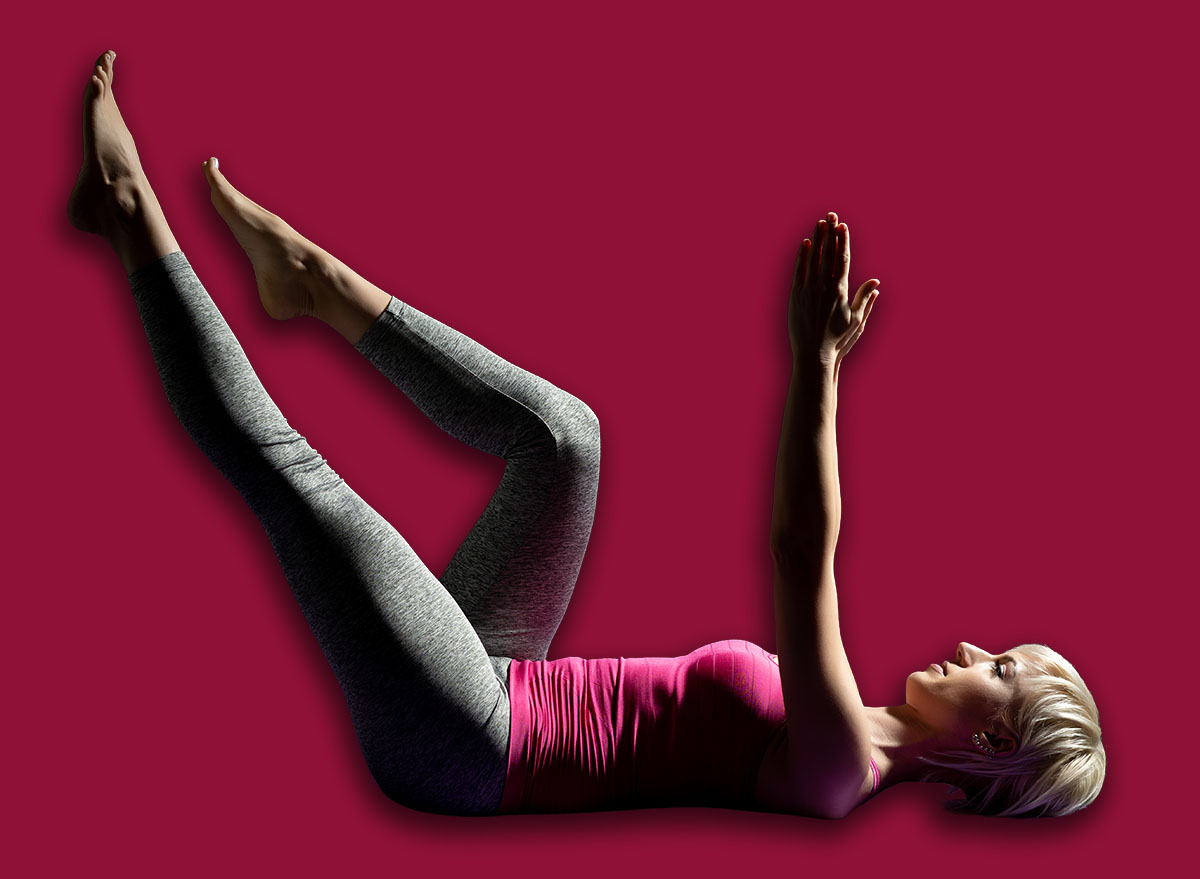
- How to do it: Lie on your back with hands under your glutes for support. Keep your legs straight and alternate small, rapid kicks. Ensure the movement is generated from the hip, not the knee.
- Why it works: It builds the stamina required for walking, hiking, and standing for long periods.
4. Bear Hold with Shoulder Taps
The Bear Hold is an excellent transition into weight-bearing exercises that don’t involve the wrist or shoulder strain of a traditional push-up position.
- How to do it: Start on all fours. Lift your knees just one inch off the ground, keeping your back flat like a tabletop. While holding this position, lift one hand to touch the opposite shoulder. Minimize any rocking of the hips.
- Why it works: It integrates the shoulders and the core, fostering the type of full-body coordination that prevents trips and falls.
5. The Hollow Hold
This is the "gold standard" for core tension. It teaches the entire abdominal wall to work as a single unit.
- How to do it: Lie on your back, extending your arms above your head and legs straight out. Lift your shoulder blades and legs slightly off the floor, forming a "banana" shape. Hold this tension for 10-25 seconds.
- Why it works: It creates a massive amount of internal pressure, strengthening the deep core muscles that support the spine during heavy lifting or sudden movements.
Supporting Data and Scientific Context
The shift toward these types of movements is backed by recent studies in geriatric physiology. Research published in journals such as the National Library of Medicine suggests that "trunk control" is the primary determinant of mobility in older adults. When the core is weak, the body compensates by over-relying on the joints of the lower back and hips, leading to chronic inflammation and degenerative conditions.
Furthermore, a study regarding bodyweight training indicates that by removing external weights, practitioners can focus more on their proprioception—the body’s ability to sense its position in space. For those over 55, this is critical, as it directly correlates to improved balance and reduced risk of injury during everyday tasks.
Official Perspectives: The Professional Consensus
Physical therapists and exercise physiologists have largely moved away from the "no pain, no gain" mentality of the 1980s. The current consensus is that "pain-free" movement is the ultimate goal. If a movement causes sharp pain, the nervous system will "down-regulate" the muscles involved, effectively shutting them off. By choosing exercises that allow for scaling—such as shortening the reach in a Dead Bug or keeping the knees bent in a Hollow Hold—you allow your nervous system to stay engaged with the exercise, leading to faster strength gains.
Implications for Long-Term Health
The implications of adopting a consistent, core-focused routine are profound. A strong core acts as a natural corset, reducing the load on the lumbar spine. This reduces the prevalence of chronic back pain, which is the leading cause of activity limitation in people over the age of 60.
Beyond pain management, a strong core improves:
- Balance: A stable torso allows for better weight distribution.
- Respiratory Efficiency: When the abdominal muscles are strong, they assist in more efficient breathing patterns.
- Confidence: The "hollow" posture often associated with aging is a direct result of weak posterior and core muscles. Strengthening these areas promotes a more upright, youthful stance.
In conclusion, you do not need to spend hours in the gym or endure grueling, static holds to maintain a strong core after 55. By focusing on the five movements detailed above—Dead Bugs, Reverse Crunches, Flutter Kicks, Bear Holds, and Hollow Holds—you are investing in a future of mobility, independence, and comfort. Start small, focus on the quality of your movement, and remember: the goal is not to be the strongest person in the room, but the most resilient.
