

For many individuals, crossing the threshold into their sixties brings about more than just a milestone birthday; it often heralds a noticeable change in body composition. Perhaps the most common—and most frustrating—of these changes is the emergence of a "tummy roll." While it is easy to dismiss this as an inevitable consequence of aging, fitness experts and medical professionals argue that this midsection shift is a signal that your body requires a new, proactive approach to movement and metabolism.
The Physiology of the Midsection After 60
The development of abdominal fat after 60 is not merely a cosmetic concern; it is a complex physiological phenomenon. As we age, a "perfect storm" of biological factors converges to change how our bodies manage weight.
According to Jacob Siwicki, founder of Siwicki Fitness and a leading voice in functional movement, the transition is driven by three primary factors: muscle loss (sarcopenia), hormonal shifts, and metabolic deceleration. "A tummy roll can become more noticeable after 60 because several things are happening at once," Siwicki explains. "People gradually lose muscle, which means they burn less energy and often move less throughout the day. Hormonal changes can also shift where the body prefers to store fat, with more of it settling around the abdomen."
Furthermore, the issue is often compounded by posture. When the posterior chain—the glutes, lower back, and deep core muscles—weakens, the pelvis tends to tilt forward. This creates a ripple effect: the ribs flare out, the lumbar spine arches, and the stomach is pushed forward, creating an illusion of increased girth even in those who haven’t experienced significant fluctuations in overall body fat percentage.
The Hidden Dangers of Visceral Fat
It is essential to distinguish between subcutaneous fat (the "pinchable" fat just under the skin) and visceral fat. Visceral fat is the hidden danger; it accumulates deep within the abdominal cavity, wrapping around vital organs like the liver, pancreas, and intestines.
Unlike subcutaneous fat, visceral fat is metabolically active. It releases inflammatory markers and hormones that can wreak havoc on the cardiovascular system. High levels of visceral fat are strongly correlated with elevated blood pressure, insulin resistance, and increased stress on the heart and lungs. Therefore, addressing the "tummy roll" is not just about aesthetics—it is a vital component of long-term health, longevity, and disease prevention.
The Chronology of Decline: Why Movement Patterns Shift
To understand how to reverse the trend, one must look at the progression of physical activity throughout adulthood.
- The 30s and 40s: During these decades, many individuals begin to shift toward more sedentary work environments. The decline in functional movement begins subtly, often starting with decreased mobility in the hips and thoracic spine.
- The 50s: As hormonal levels begin to fluctuate (particularly with the decline of estrogen in women and testosterone in men), the body’s metabolic rate begins to slow. Muscle protein synthesis becomes less efficient, making it harder to maintain lean mass without dedicated resistance training.
- The 60s and Beyond: Without intervention, the cumulative effect of reduced activity and decreased muscle mass leads to the structural changes Siwicki describes—pelvic tilt and core instability. This is the stage where the "tummy roll" becomes a persistent feature of the physique.
Rebuilding the Core: A New Approach
The traditional advice of "doing more crunches" is often ineffective and, in some cases, can exacerbate back pain in older adults. Instead, fitness experts are turning toward "functional standing exercises." These movements mimic real-life tasks, demand constant core stabilization, and improve balance—all while burning more calories than stationary floor exercises.
"Rebuilding muscle and improving posture will not stop aging, but it can change how the body looks, moves, and feels," says Siwicki. By training the body to remain upright under load, you force the deep abdominal muscles (the transverse abdominis) to engage, which helps pull the midsection in and realigns the pelvis.
Five Essential Standing Exercises for Core Transformation
1. The Suitcase March
The Suitcase March is a masterclass in anti-rotation. By holding a weight in one hand (like a suitcase) and marching in place, you force your core to fight against the tendency to lean toward the weighted side. This engages the obliques and the deep stabilizers of the spine.
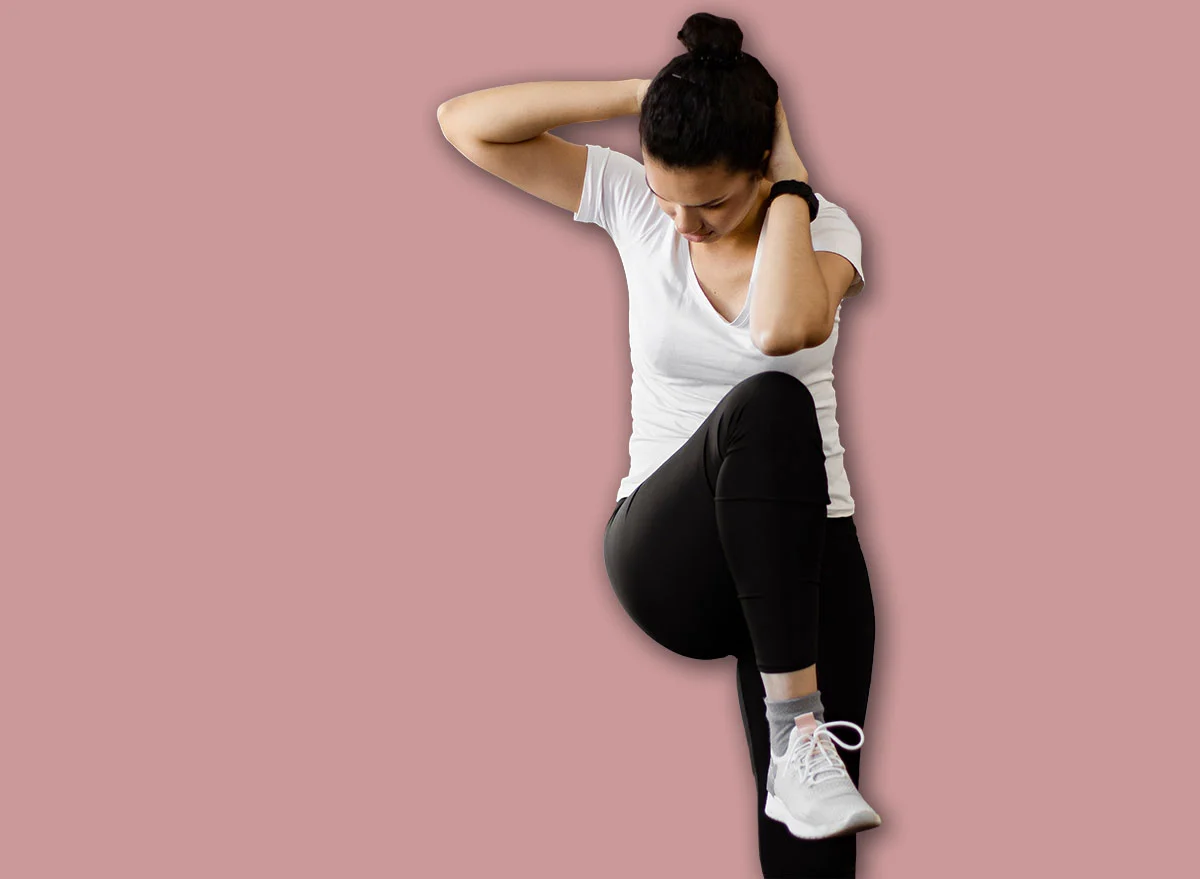
2. Standing Cross-Body Knee Drives
This movement integrates rotation with balance. By bringing the opposite elbow toward the opposite knee while standing, you create a controlled crunch in a vertical plane. This is significantly more effective for core definition than a traditional floor crunch, as it requires the stabilization of the standing leg and hip.
3. Dumbbell Woodchops
The Woodchop is a functional movement that mimics the act of swinging an object. By starting with a weight near one hip and rotating it diagonally across the body to the opposite shoulder, you activate the entire abdominal wall, particularly the obliques, which are crucial for creating a tapered waistline.
4. Standing Wall Bird-Dog
The classic bird-dog is typically performed on all fours, but performing it against a wall allows for better posture correction in those over 60. By pressing your hands against a wall and extending one arm and the opposite leg, you train your body to maintain a neutral spine while under tension, directly counteracting the "slump" that often accompanies aging.
5. Single-Arm Overhead Carry
Simple yet profound, the overhead carry requires you to hold a weight above your head in one hand and walk. This forces the core to work overtime to stabilize the torso against the uneven load. It is one of the best exercises for building shoulder stability and core strength simultaneously.
Supporting Data: Why Standing Matters
Recent research in geriatric fitness supports the shift away from floor-based exercises. Studies show that older adults who prioritize functional, weight-bearing exercises exhibit higher bone density, better balance scores, and a significant reduction in waist-to-hip ratio compared to those who rely solely on cardio or traditional machine-based gym routines.
The metabolic demand of standing exercises is also higher. When you involve multiple muscle groups—shoulders, back, glutes, and core—in a single movement, your body consumes more oxygen and burns more calories than it would during isolated, lying-down movements.
Official Recommendations and Expert Guidance
Health organizations like the American College of Sports Medicine (ACSM) suggest that adults over 60 should incorporate at least two days of muscle-strengthening activities per week. However, the quality of those movements is paramount.
"The goal is not to exhaust the body, but to retrain it," Siwicki notes. When performing these movements, focus on:
- Controlled Breathing: Never hold your breath. Exhale during the "effort" phase of the movement to engage the deep core.
- Mind-Muscle Connection: Visualize pulling your belly button toward your spine during every repetition.
- Consistency over Intensity: Start with light weights or body weight. The goal is to master the form so that these patterns become your default posture throughout the day.
Implications for a Healthier Future
The implications of taking control of your midsection after 60 extend far beyond the mirror. A stronger core leads to better balance, which significantly reduces the risk of falls—the leading cause of injury among older adults. Improved posture reduces chronic back pain, allowing for more active participation in hobbies, travel, and daily life.
By shifting the focus from "spot reducing" belly fat to "building a functional, resilient core," you are effectively resetting your metabolic thermostat. The "tummy roll" is not an inevitable sentence of aging; it is a challenge to reclaim your physical potential. With the right movements, consistency, and a focus on core stability, the sixties can truly be a decade of renewed strength and vitality.
