

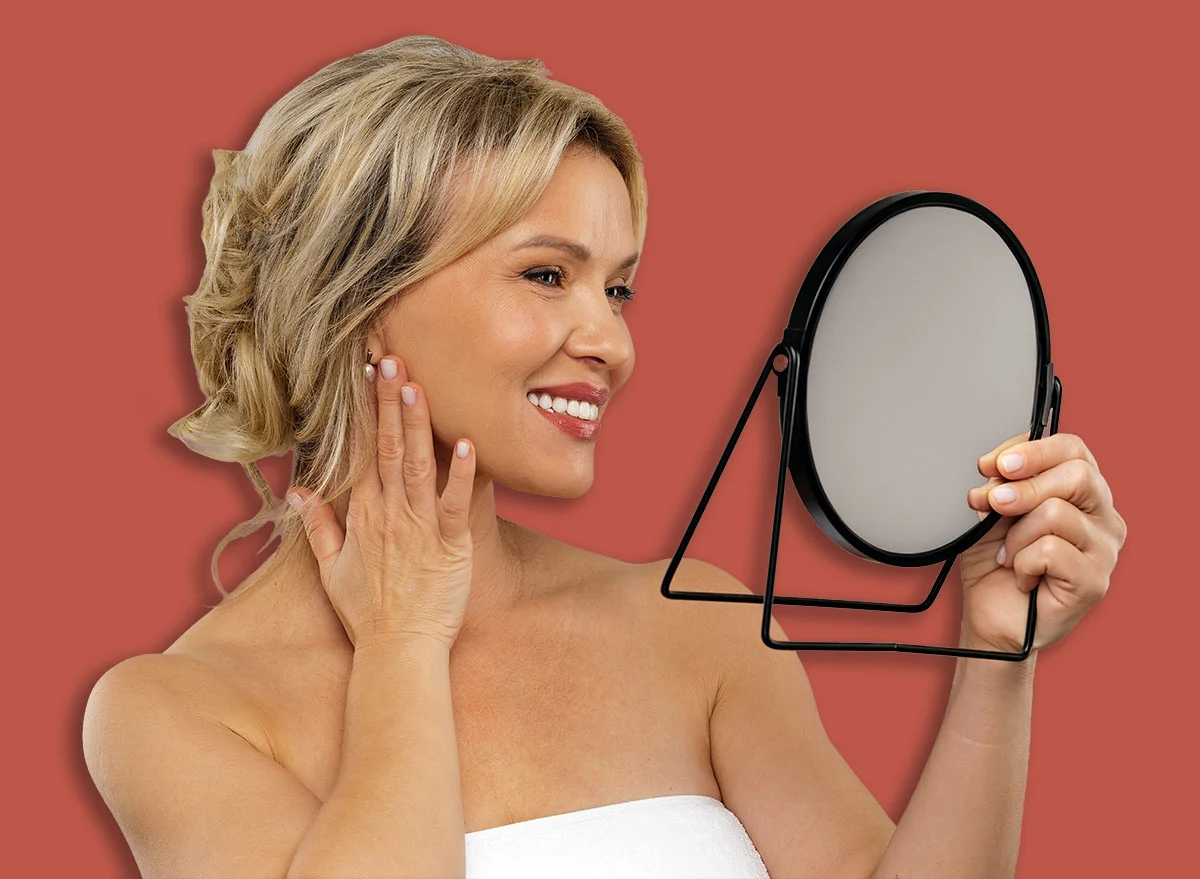
As we navigate our sixth decade and beyond, many of us find ourselves becoming increasingly conscious of the subtle shifts in our facial architecture. For many, the "selfie era" has brought a newfound awareness of the profile. It is a common sentiment shared by my clients over 60: they find themselves avoiding side-angle photos or becoming frustrated with the appearance of a "softer" jawline or a subtle, lingering wattle.
While the beauty industry often promises miracle creams and invasive procedures to "lift" the face, the reality is far more grounded in biology and biomechanics. As a personal trainer with nearly four decades of experience—and as the director of TRAINFITNESS, the UK’s leading provider of personal training education—I have spent the last 25 years observing how the body changes with age.
The softening of the jawline is not a single-factor issue. It is a combination of physiological decline—specifically the reduction of collagen and elastin, which compromises skin elasticity—and the redistribution of subcutaneous fat. However, there is a third, often overlooked component: the weakening of the underlying musculature and the chronic adoption of "forward-head posture." By addressing the latter two, we can genuinely improve the appearance of the neck and jawline.
The Anatomy of the Aging Neck
To understand how to improve your profile, we must first be honest about what exercise can and cannot do. No amount of facial yoga or neck resistance training will tighten skin that has lost its structural integrity. If you are seeking the results of a surgical lift, exercises will not provide that outcome.

However, exercise can do what no cream can: it can fundamentally alter the mechanical carriage of your head and the tone of the muscles that support your neck. The primary target is the platysma, a broad, thin sheet of muscle that spans from the upper chest to the lower jaw. When this muscle loses tone, the neck skin appears looser. Furthermore, when we spend hours hunched over computers or smartphones, our heads naturally drift forward. This posture creates a mechanical slackening of the skin under the chin, creating the illusion of a double chin even in individuals who are at a healthy weight.
Chronology of Change: What to Expect
Consistency is the engine of change. If you commit to these movements, you are essentially engaging in a "re-education" of your cervical posture and facial musculature.
- Weeks 1–2 (The Postural Shift): You will likely notice a change in your habitual head position. By practicing neck retraction, you begin to undo the "tech-neck" slump. This alone can make the jawline appear more defined, as you are pulling the tissue back into a more advantageous alignment.
- Weeks 6–12 (The Tonal Shift): The platysma and the deep cervical flexors begin to respond to the isometric and dynamic loads. You will notice a slight tightening of the neck line as these muscles gain modest, functional strength.
- Long-term Maintenance: Once the new posture becomes your "new normal," the goal shifts from active correction to maintenance. The routine becomes as second-nature as brushing your teeth.
The Three Essential Movements
These exercises are designed to be performed in five minutes or less. By tethering them to an existing morning ritual—like standing in front of the mirror after brushing your teeth—you eliminate the friction that usually stops people from maintaining a fitness routine.
1. The Chin Tuck (Neck Retraction)
This is the "gold standard" for correcting the forward-head posture that exacerbates the look of a double chin.

- The Execution: Stand tall, looking straight ahead. Without tilting your chin up or down, slowly draw your head straight back as if you are trying to make a "double chin" intentionally. You should feel a gentle stretch at the base of your skull.
- Common Pitfalls: Avoid nodding. If your gaze shifts from the horizon to the floor, you are flexing your neck rather than retracting it.
- The Prescription: 10 repetitions, holding each for 3 to 5 seconds.
2. The Chin-to-Ceiling Platysma Press
This move focuses on the superficial muscle layer of the neck.
- The Execution: Look up toward the ceiling. While keeping your shoulders down and relaxed, slowly bring your lower lip up over your upper lip. You will feel a distinct tightening sensation along the front of your neck. Hold this contraction.
- Common Pitfalls: Do not over-extend your neck. This is not about how far you can lean back; it is about the contraction of the muscle at the front of the throat.
- The Prescription: 8 to 10 repetitions, holding each for approximately 5 seconds.
3. Isometric Resisted Neck Holds
This strengthens the stabilizer muscles, ensuring your neck remains upright throughout the day.
- The Execution: Place your palm against the side of your head. Attempt to push your head into your hand, but provide enough resistance with your hand so that your head does not move. Hold for 5 seconds. Repeat on the other side, then on the forehead and the back of the head.
- Common Pitfalls: If your head shifts or rotates, you are pushing too hard. The key is "isometric"—meaning the muscle is working, but there is no visible movement.
- The Prescription: 3 holds in each of the four directions, 5 seconds per hold.
Supporting Data and Professional Perspective
While the fitness industry is saturated with "face yoga" gurus, the scientific community remains cautious. There is limited, mixed evidence regarding the long-term impact of facial exercises on skin rejuvenation. However, the evidence regarding posture is unequivocal. A study published in the Journal of Physical Therapy Science highlights that forward-head posture significantly contributes to the structural alteration of the cervical spine and the surrounding soft tissue.
By correcting the alignment of the cervical spine, we are not just changing how we look; we are potentially reducing the strain on the neck muscles that leads to chronic tension headaches and stiffness. This is a functional health approach, not merely a cosmetic one.

Official Guidance on Realistic Expectations
It is critical to manage expectations. If you are expecting these exercises to eliminate loose skin, you will be disappointed. As we age, the dermis thins, and the underlying fat pads migrate. These are biological constants.
However, my professional advice is to shift the goalpost from "perfection" to "optimization." By optimizing your posture and strengthening the platysma, you are presenting the best possible version of your current anatomy. Furthermore, body fat percentage plays a significant role in the fullness under the chin. If you are concerned about a double chin, ensure that your diet and cardiovascular health are also being addressed, as these are far more effective at reducing localized fat than any specific neck exercise.
Implications for Your Daily Routine
Why do these exercises work best in the morning? It is all about the habit loop. The human brain is prone to decision fatigue; by the time you reach the evening, your willpower to start a new routine is often depleted.
By performing these movements while you are already in front of the mirror, you are utilizing "habit stacking." You are brushing your teeth—a non-negotiable daily task—and immediately following it with your five-minute neck protocol. This consistency is far more important than the intensity of the workout.

In conclusion, while we cannot stop the clock, we can certainly choose how we carry ourselves through the years. Improving your posture is one of the most effective ways to reclaim a sense of vitality and confidence. It is a subtle change, but one that is visible to others and, more importantly, felt by you. Stand tall, keep your gaze level, and remember: your posture is the frame for your face. When the frame is strong, the portrait changes for the better.
