

As we cross the threshold of 50, the definition of "fitness" undergoes a necessary shift. While the high-intensity performance metrics of our twenties and thirties—such as sprinting speed or maximum heavy-weight output—often dominate the conversation, the real barometer of health in middle age is functional longevity. It is no longer just about how much you can lift in a gym; it is about how effectively you can navigate the world using only your own body.
Can you push, pull, squat, and balance with precision? These movements are more than just exercises; they are the fundamental building blocks of independent living. If you can perform these tasks with control and confidence, you are demonstrating a level of relative strength that acts as a powerful hedge against the natural decline in muscle mass and bone density associated with aging.
The Case for Calisthenics: Why Relative Strength Matters
Relative strength—the amount of strength you possess in relation to your own body weight—is the true currency of physical capability as we age. Unlike training with external loads like barbells or machines, calisthenics (bodyweight training) forces you to stabilize your own frame through every plane of motion.
The beauty of bodyweight training lies in its scalability. Whether you are a fitness enthusiast or someone just beginning a journey into strength training, there is always an entry point. A push-up can start against a wall, progress to an incline on a countertop, and eventually reach the floor. A squat can be supported by a chair until your range of motion and joint stability allow for a deeper, unsupported movement. By mastering these basics, you build a foundation of core stability and functional mobility that makes every other physical activity—from gardening to traveling—safer and more enjoyable.
The Five-Move Fitness Test: A Diagnostic Tool
To provide a comprehensive picture of your current fitness level, we have developed a five-move diagnostic test. This is not a medical examination, but rather a benchmark for "functional age." The goal is not to race through these exercises, but to evaluate the quality of your movement and the endurance of your muscles.

1. The Push-Up (Upper Body Pushing Strength)
The Standard: 20 clean repetitions.
The push-up is the gold standard for testing upper-body pressing power. It engages the chest, triceps, and shoulders while demanding a rigid core to maintain a straight line from head to heels. Achieving 20 reps with proper form—maintaining at least a 90-degree bend at the elbows—indicates that your upper body has the capacity to support your weight and manage load effectively.
- Form Tip: Ensure your chest and hips descend as a single unit to avoid sagging in the lower back.
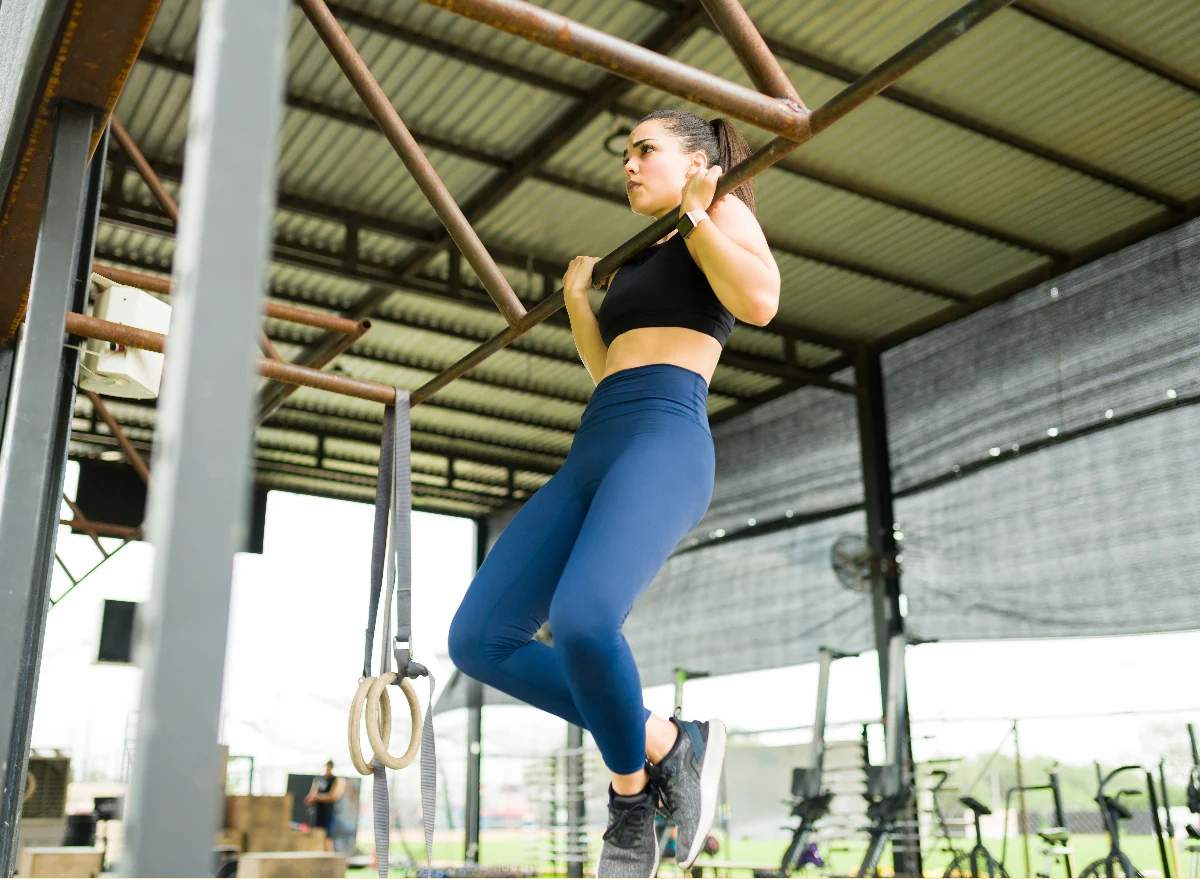
2. The Pull-Up (Upper Body Pulling Strength)
The Standard: 5 clean repetitions.
The pull-up is arguably the most challenging movement for many, as it requires moving your entire body weight against gravity without the benefit of a leverage-based machine. Five reps demonstrate significant back and bicep strength, as well as robust grip strength.
- Form Tip: Avoid the temptation to kick or swing. Imagine you are pulling your elbows down toward your hips to engage the latissimus dorsi.
3. Bodyweight Squats (Lower Body Endurance)
The Standard: 25 repetitions.
The squat is the functional king of lower-body movements. It requires mobility in the ankles, knees, and hips. Performing 25 repetitions tests not just your strength, but your muscular endurance. Reaching parallel depth with every rep ensures you are utilizing the full range of your muscles.
- Form Tip: Keep your heels firmly planted on the ground throughout the movement. If your heels rise, shorten your range of motion until your mobility improves.
4. Walking Lunges (Stability and Unilateral Strength)
The Standard: 20 total repetitions (10 per leg).
Moving forward in a lunge forces each leg to handle your entire body weight individually. This exercise highlights imbalances between your left and right sides and tests your dynamic balance—a critical skill for preventing falls as you age.
- Form Tip: Take a long enough stride so that your front shin remains vertical at the bottom of the movement.
5. Single-Arm Plank Hold (Core Stability)
The Standard: 20 seconds per side.
The final test shifts from movement to stabilization. By removing one point of contact, you force your obliques and transverse abdominis to prevent your torso from rotating. This is the ultimate test of trunk control under tension.
- Form Tip: Keep your hips square to the floor. If you feel your pelvis tilting, place your feet wider apart to create a more stable base.
Supporting Data and The Science of Aging
The rationale for this testing framework is backed by significant research in geriatric health and exercise physiology. Studies published in journals such as The Journals of Gerontology consistently suggest that functional movement patterns are the primary predictors of "healthy aging."
As we pass the age of 50, we encounter the onset of sarcopenia—the age-related loss of muscle mass. However, research indicates that resistance training, particularly that which involves compound bodyweight movements, can significantly mitigate these effects. By maintaining high levels of relative strength, older adults can preserve metabolic health, insulin sensitivity, and bone mineral density, all of which are essential for long-term health outcomes.
Implications for Your Training Routine
If you find that you cannot hit these standards today, do not view it as a failure. Instead, view it as a roadmap. If you are strong in your squats but struggle with your pull-ups, your programming for the next three months is clear: prioritize vertical pulling.
A Structured Approach to Improvement
- Frequency: Aim for 2–3 full-body sessions per week.
- Progressive Overload: If you cannot perform a full push-up, utilize an incline. Once you can do 15 reps on a high bench, move to a lower surface.
- Recovery: As we age, recovery becomes just as important as the stimulus. Ensure you are getting adequate protein (approximately 1.2 to 1.6 grams per kilogram of body weight) and 7–9 hours of sleep.
Professional Perspective
Coaches often emphasize that the most dangerous aspect of aging is not the lack of weightlifting, but the lack of movement variety. By incorporating these five movements, you are ensuring that your joints move through their full range and that your stabilizing muscles are recruited regularly.
"The goal," says sports physiologist Dr. Elena Vance, "is to ensure that the body remains a tool for life, not a hindrance. When you lose the ability to push, pull, and squat, you lose the ability to perform basic daily tasks independently. These tests are not about vanity; they are about autonomy."
Conclusion: Revisiting the Benchmark
This test is a living document of your physical journey. It is not intended to be a one-time event. Revisit this benchmark every quarter. You may find that after six weeks of consistent practice, the pull-ups that felt impossible are now within reach, or the plank that felt like an eternity now feels manageable.
Consistency is the ultimate driver of fitness. By focusing on these fundamental movements, you are not just checking a box on a list—you are actively investing in the quality of your future years. Stay patient, stay consistent, and keep moving.
