

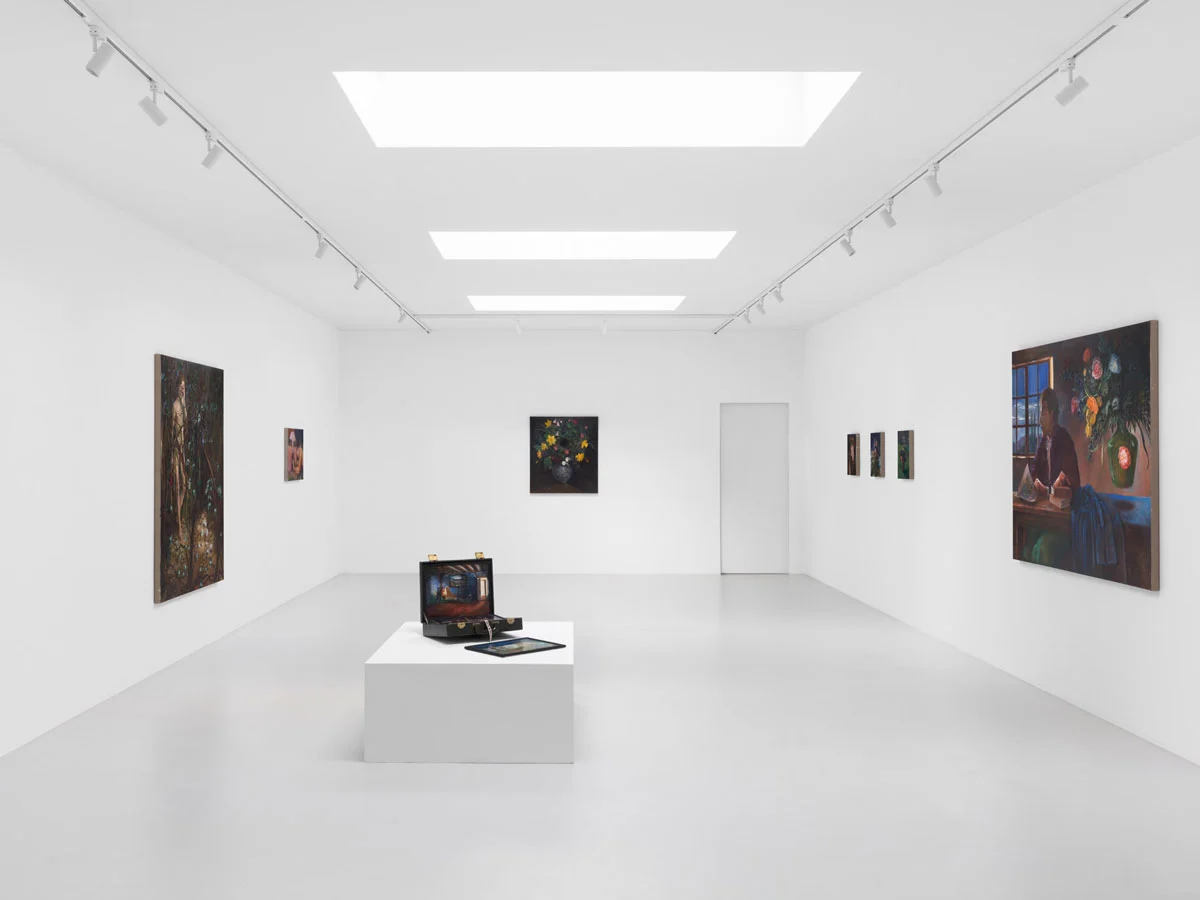
The landscape of the international art market is undergoing a profound structural metamorphosis. In the latest sign of this shifting paradigm, the Brussels-based gallery Super Dakota has announced that it will permanently close its doors at the end of October. The news marks the end of a 15-year chapter for the institution, which served as a critical nexus for contemporary art in Belgium and beyond.
For founder Damien Dakota (born Damien Bertelle-Rogier), the decision is not a retreat from the art world, but a strategic pivot. By closing the physical commercial gallery, Dakota is signaling a broader discontent with the traditional white-cube business model, opting instead for a more fluid, research-based approach to supporting artistic practice. As the gallery prepares for its final curtain call—concluding with a solo exhibition by Adrian Geller on October 16—the art community is reflecting on the legacy of a space that famously bridged the gap between historical weight and digital-age innovation.
A Legacy of Juxtaposition: The Super Dakota Chronology
Founded in September 2013, Super Dakota emerged with a distinct mandate: to showcase cutting-edge, provocative contemporary work that remained deeply rooted in the historical continuum of art.
The Formative Years (2013–2015)
The gallery’s inaugural exhibition, "Void," set the tone for what was to follow. Featuring a roster of ten artists—including Joachim Bandau, Baptiste Caccia, and the late, seminal photographer Jan Groover—the show established a precedent for the gallery’s curatorial ethos. The gallery’s commitment to Groover, who passed away in 2012, was particularly notable. By dedicating its third-ever exhibition to a solo show for the late photographer, Super Dakota demonstrated an early interest in archival reverence, cementing its reputation as a space that respected the masters while nurturing the new.
The Peak Years (2016–2020)
Throughout the mid-2010s, Super Dakota became known for its daring group exhibitions. These shows were characterized by a sophisticated dialogue between the "blue-chip" established guard and the emerging generation. Two exhibitions stand out as defining moments:
- "Masha" (2016): A sprawling, ambitious exhibition that placed legends like John Cage, Yvonne Rainer, and Lawrence Weiner in conversation with contemporary voices like Lydia Gifford and GL Rogier.
- "The Scales of Persona and Possibility" (2018): This exhibition pushed the boundaries of institutional dialogue, featuring icons such as Fischli & Weiss, Douglas Gordon, Wade Guyton, and Robert Rauschenberg alongside contemporary peers like Alex Clarke and Mitchell Syrop.
By the end of its first decade, Super Dakota had firmly secured its place on the international circuit, participating in prestigious fairs such as Independent, NADA Miami, Liste Basel, Frieze London, and Art Basel Miami Beach.
Shifting Models: Why the Gallery is Closing
In an email disseminated to the gallery’s listserv, Damien Dakota offered a candid assessment of his decision. "This has been a great journey, but after 15 years the model of a commercial art gallery doesn’t match my ambitions anymore," he wrote. "I want to continue supporting artists through other platforms and models."
This sentiment reflects a growing trend among mid-sized galleries, which are increasingly finding the high-overhead, fair-driven gallery model unsustainable—or simply unfulfilling—in the current climate. Dakota’s transition is not a closure born of financial failure, but of creative evolution.
From Commercial Space to Curatorial Research
Moving forward, Dakota plans to utilize his decade of experience as a private collector advisor to transition into a more bespoke consulting and research role. He describes the future iteration of his work as a "space for curatorial research." This entity will work closely with artists, collectors, and public institutions to develop projects that prioritize "historical relevance and theoretical aesthetics" over the rapid-fire sales cycles of the primary market.
The Launch of MeatSpace Institute of Arts
Perhaps the most ambitious component of his post-gallery future is the launch of the MeatSpace Institute of Arts. Described by Dakota as an institution at the intersection of "art and gaming," the project aims to rethink the physical and digital boundaries of the museum. The goal, according to Dakota, is to make culture "radically accessible to anyone, anywhere," while challenging the traditional, often gatekept role of art institutions in the future.
The Roster: A Final Snapshot
At the time of its closing, Super Dakota represents 16 artists, many of whom have seen significant career milestones under the gallery’s wing. The roster includes:
- Adrian Geller: The artist currently holding the gallery’s final solo exhibition.
- !Mediengruppe Bitnik: Known for their experimental, tech-focused interventions.
- Julia Wachtel: An artist of significant standing who featured in the 2026 edition of Greater New York and is currently included in the inaugural Aldrich Decennial.
- Alex Clarke, John Divola, Chris Dorland, Tabor Robak, and LaRissa Rogers.
The closure leaves these artists to find new representation, but many are expected to continue working with Dakota in his new curatorial capacity, underscoring the deep professional bonds formed over the last fifteen years.
Market Implications: A Trend of Consolidation
The closure of Super Dakota is part of a wider, often somber trend sweeping the global art market. Over the past 18 months, numerous galleries in Europe and the United States have announced closures, scaling-back operations, or pivots to alternative business structures.
Earlier this week, the Zurich-based gallerist Eva Presenhuber confirmed that she would shutter her Vienna outpost, citing changing market conditions. Last month, Viennese dealer Emmanuel Layr announced a significant reduction in his gallery’s scope. Perhaps most notably for the Brussels scene, the legendary gallery Dépendance announced in June that it would close after 23 years, signaling the end of an era for the city’s contemporary art ecosystem.
These closures suggest that the "middle-market" gallery is facing a period of intense pressure. Rising operational costs, the exhaustion of the international art fair circuit, and a shift in how collectors acquire art have forced many dealers to re-evaluate their roles. When long-standing institutions like Super Dakota and Dépendance close, it serves as a bellwether for the industry: the era of the traditional, physical-first gallery is being tested by the demands of an increasingly digital and globalized economy.
A Final Gratitude
In his closing correspondence, Damien Dakota struck a tone of profound appreciation. He acknowledged the foundational support of his mother and partner, and extended a personal note of gratitude to the collectors who sustained the gallery’s vision for a decade and a half.
"I also want to express my gratitude to the collectors who have been with us all these years supporting our vision and the practices of our artists," Dakota wrote. "And of course, I want to thank all the artists who have shown their works in our gallery. To all, I’m forever grateful."
As Super Dakota prepares to empty its walls, the legacy of the space remains in the archives of its exhibitions—the dialogues it fostered between the masters of the 20th century and the digital natives of the 21st. While the physical address in Brussels may no longer host the Super Dakota sign come November, the gallery’s pivot toward curatorial research and the experimental MeatSpace Institute of Arts suggests that the vision itself is not dying—it is merely moving into a different dimension of the art world.
The closure serves as a poignant reminder that in the art world, as in art itself, the only constant is change. For now, the focus remains on Adrian Geller’s final exhibition, a fittingly reflective end to a journey that has consistently challenged the definition of what a gallery can be.
