

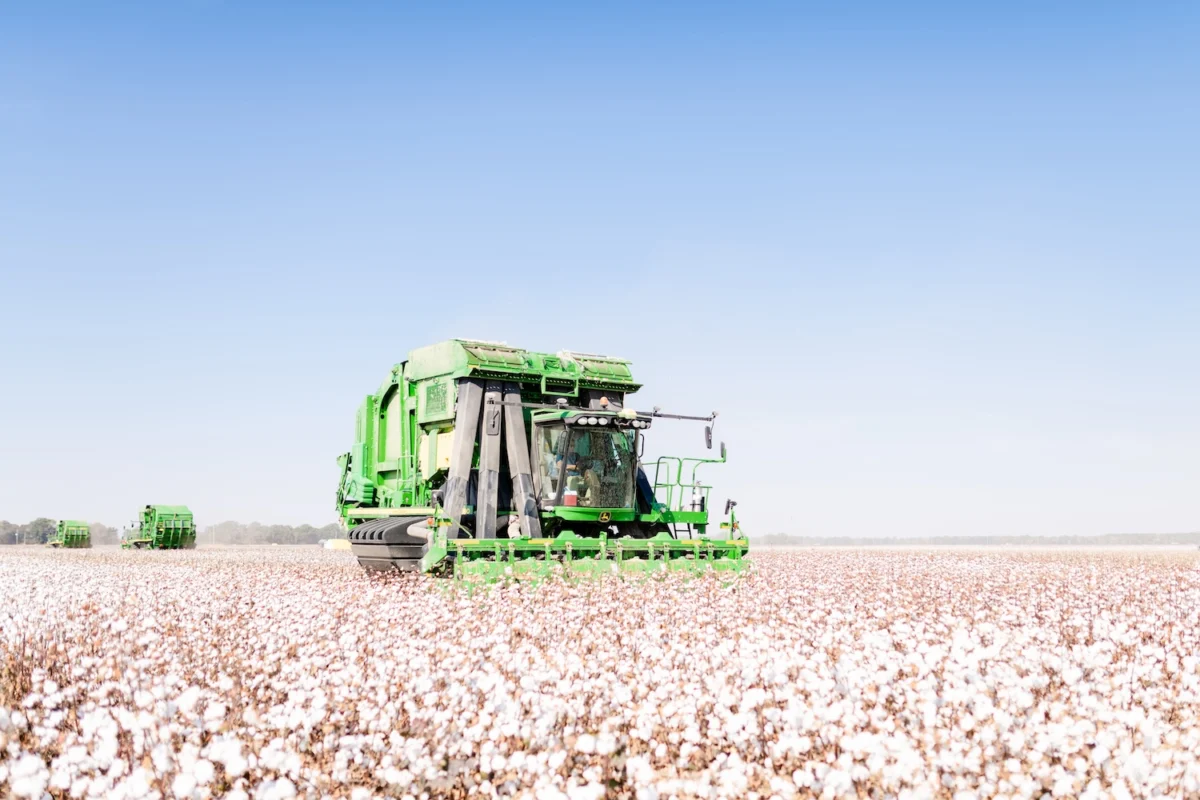
While it is a well-worn adage that U.S. farmers "feed the world," a compelling new narrative is emerging: American growers are equally vital in clothing the world. As the global fashion industry faces a reckoning regarding its environmental footprint—grappling with mountains of textile waste and a reliance on petroleum-based synthetics—the U.S. cotton sector is positioning itself as the gold standard for responsible agriculture. By blending legacy stewardship with cutting-edge precision technology, American farmers are offering brands and consumers a rare commodity in today’s market: a natural, traceable, and scientifically verified sustainable fiber.
The Evolution of Stewardship: A Four-Decade Transformation
To understand the current state of U.S. cotton, one must look at the measurable, long-term trajectory of the industry. For forty years, U.S. growers have been engaged in a quiet revolution of efficiency and conservation. According to the 2023 National Resource Survey—a comprehensive analysis conducted by Cotton Incorporated—the industry has achieved remarkable benchmarks.
Soil loss has been curtailed by 45 percent, while irrigation water-use efficiency has improved by 58 percent. Perhaps most significantly for climate-conscious stakeholders, greenhouse gas emissions from cotton production have dropped by 25 percent, all while land-use efficiency has climbed by 30 percent.
These aren’t merely accidental improvements; they are the result of a deliberate adoption of modern agronomic practices. Today’s cotton farmers are increasingly moving away from traditional, intensive farming methods. Instead, they are utilizing cover crops to protect soil integrity, adopting no-till or strip-till systems to minimize soil disturbance, and integrating precision agriculture tools such as flow meters, automated irrigation scheduling, and soil moisture sensors.
The Life Cycle Assessment: A Scientific Paradigm Shift
The most groundbreaking development for the sector arrived with a new, data-driven Life Cycle Assessment (LCA) commissioned by Cotton Incorporated and conducted by WSP USA Inc. This report provides the most granular view of U.S. cotton fiber production to date.
The findings are stark: cotton’s natural, plant-based composition enables biogenic carbon dioxide storage—a physiological reality that places it in direct opposition to petroleum-based synthetics. When these biogenic flows are calculated, the cradle-to-gate (field-to-gin) emission profile for U.S. cotton is a net-negative -0.264 kilograms of CO2 per kilogram of fiber.
This scientific validation is a crucial differentiator for the fashion industry. As brands face increasing pressure from regulators and activists to report Scope 3 emissions and reduce reliance on virgin plastics, U.S. cotton provides a "science-backed" natural fiber choice. It is no longer a matter of opinion; the data indicates that cotton functions as a carbon-storing asset, provided the industry continues to invest in circularity and long-term soil health.
Consumer Sentiment: The Demand for "Better"
The disconnect between the fashion industry’s supply chain and consumer demand is widening. According to the 2025 Global Lifestyle Monitor—a massive research initiative surveying over 13,000 respondents—75 percent of consumers now prioritize sustainability in their clothing purchases.

Furthermore, there is a clear psychological divide in how shoppers perceive fiber sources. A staggering 83 percent of respondents classify cotton and other natural fibers as environmentally safe. Conversely, fewer than half of those same consumers view man-made fibers—including polyester (46 percent), rayon (48 percent), and Tencel (41 percent)—as safe for the planet.
When asked about preference, 75 percent of global shoppers prefer apparel made of cotton, cotton blends, or denim. This preference isn’t just about ethics; it is about performance and comfort. Consumers cite cotton as the most comfortable, softest, and longest-lasting option. Critically, 59 percent of global consumers explicitly state they are willing to pay a premium for apparel made from natural fibers, with that sentiment reaching 85 percent in markets like India and 66 percent in Mexico.
The Hidden Cost of the Synthetic Addiction
The fashion industry has long leaned on polyester for its low cost and versatility. However, the environmental bill for this reliance is coming due. The U.S. Environmental Protection Agency (EPA) reports that 85 percent of all textiles in the United States end up in landfills annually.
The problem is exacerbated by the fact that roughly 70 percent of global textile fibers are now synthetic. These petroleum-derived materials do not biodegrade; instead, they fragment. Through every wash cycle and every day of wear, these garments shed microplastics into the air and water systems. These particles persist for centuries, creating a global pollution crisis that synthetic fiber producers have yet to solve.
"There’s a gap between how the fashion industry talks about responsible, regenerative agriculture and what’s actually been happening on U.S. cotton farms for years," says Liz Hershfield, executive director of Cotton USA™ and co-director of the U.S. Cotton Trust Protocol. "Responsible cotton stewardship is something that growers have built their business around, because without it, there is no business."
The Human Element: Protecting Family-Owned Futures
While sustainability is often discussed in terms of carbon parts-per-million and water metrics, there is an often-overlooked human element: the farmer. There are more than 15,000 cotton farms across 17 U.S. states, and 98 percent of them are family-owned and operated.
These farms represent generational knowledge, but that heritage is vulnerable to market volatility. When brands prioritize ultra-cheap synthetics, they inadvertently erode the infrastructure of these multi-generational agricultural enterprises.
"Growers have been absorbing difficult market conditions for several years now," Hershfield notes. "Infrastructure built over generations erodes when demand isn’t there to support it. That’s something brands have more influence over than they often realize."

The Path Forward: Technology and Transparency
The future of cotton is not just about the soil; it is about the "smart" farm. Growers have become early adopters of high-tech interventions, including satellite imagery and AI-driven agronomic management. These tools allow farmers to optimize their yields while simultaneously reducing inputs like water and fertilizer. By "doing more with less," they are proving that high-volume production does not have to come at the expense of the environment.
For brands, the message from the industry is clear: the sustainability story of a garment begins long before it reaches the design studio or the factory floor. It starts with the fiber.
"U.S. cotton gives brands a natural, trusted and data-backed fiber with a real story of continuous improvement from the farm forward," says Jesse Daystar, Ph.D., vice president and chief sustainability officer at Cotton Incorporated.
Conclusion: A Call to Action for Fashion Leaders
The evidence provided by the 2023 Natural Resource Survey and the latest LCA data presents an undeniable opportunity for the apparel sector. As brands scramble to meet ESG (Environmental, Social, and Governance) targets and satisfy a growing consumer base that equates synthetic fibers with pollution, the pivot back to U.S. cotton appears not only logical but essential.
The industry is at a crossroads. It can continue to rely on a synthetic model that generates waste, releases microplastics, and ignores consumer preferences for natural, sustainable materials, or it can align its supply chain with a fiber that is actively improving its environmental performance. With 75 percent of shoppers favoring cotton, the path to profitability and planet-positive impact is one and the same. For retailers, the challenge is no longer about finding a sustainable material—it is about choosing to support the farms and the fiber that have been doing the hard work of regeneration all along.
For those interested in the ongoing research into fiber performance and consumer trends, further insights can be found through the Cotton Incorporated Lifestyle Monitor™ and at CottonWorks.
