

By Viknesh Vijayenthiran | March 21, 2025
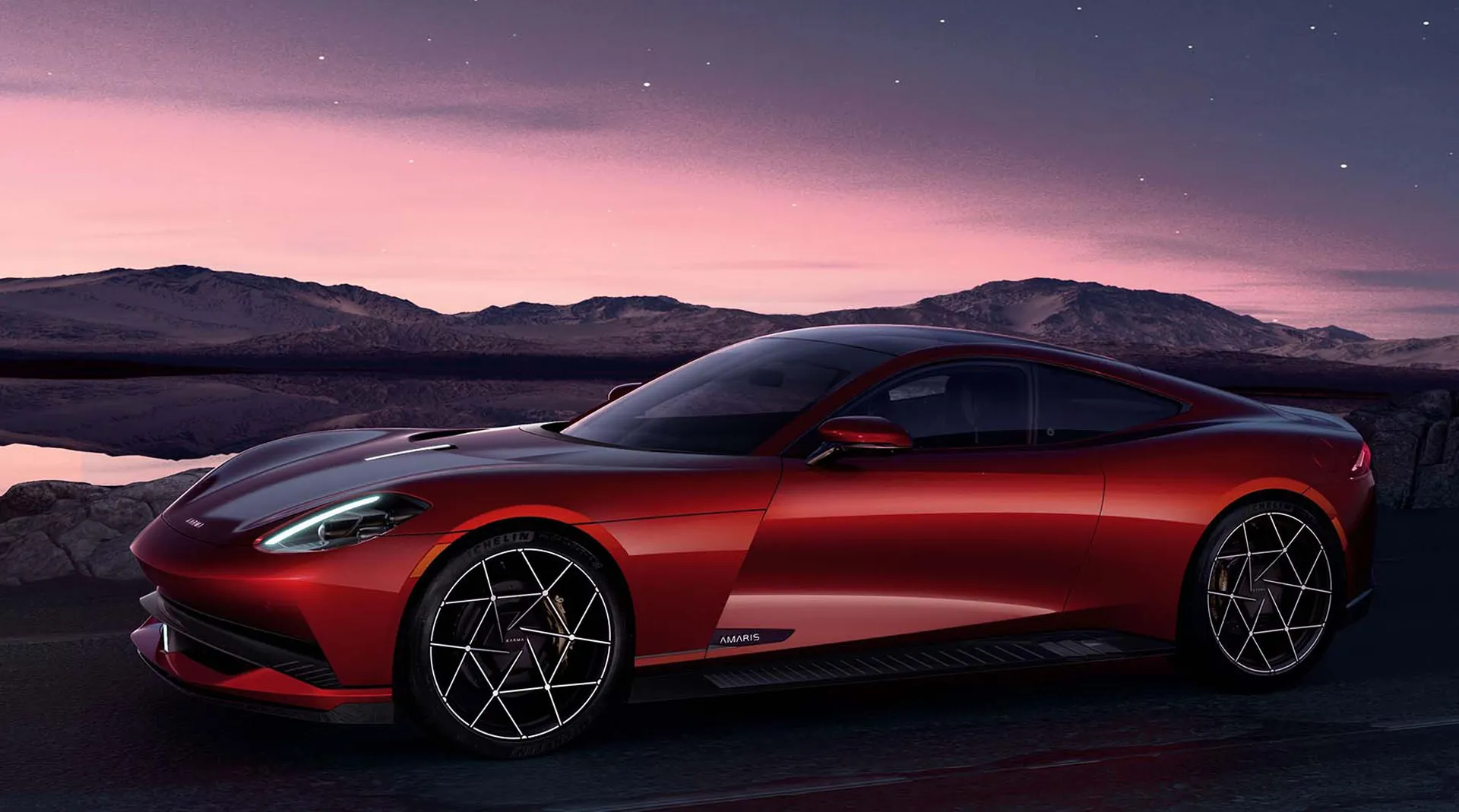
In a pivotal moment for the boutique luxury automotive sector, Karma Automotive has unveiled a significant shift in its long-term product roadmap. During the inaugural "Create Karma" presentation held in Irvine, California, the manufacturer pulled the covers off its latest creation: the Amaris series plug-in hybrid coupe. This announcement, however, was framed within a broader strategic pivot, as the company adjusts its portfolio to better align with the evolving demands of the high-end electric vehicle (EV) market.
The Main Facts: A New Direction for Karma
The centerpiece of the event was the Amaris, a sleek, performance-oriented coupe designed to bridge the gap in Karma’s future lineup. While the automotive industry has spent the last five years racing toward pure electrification, Karma has opted for a more nuanced approach. By focusing on "series plug-in hybrids"—a technology often described as extended-range electric vehicles (EREVs)—Karma aims to offer the instant torque and silent operation of an electric motor without the "range anxiety" associated with traditional battery-electric vehicles (BEVs).
Key performance metrics for the Amaris are ambitious. The company claims the coupe will achieve a 0-60 mph sprint in under 3.5 seconds and reach a top speed of 165 mph. These figures signal that while Karma is moving toward hybrid powertrains, it has no intention of abandoning the high-performance ethos that defined its origins.
Chronology of Change: From Fisker to the Future
To understand the significance of this shift, one must look at the historical trajectory of the company. Karma Automotive emerged from the wreckage of the original Fisker Automotive, which declared bankruptcy in 2013. The company’s current offerings, specifically the Revero sedan, still utilize a platform that traces its lineage back to the original Fisker Karma of the early 2010s.
The company’s recent timeline has been one of high aspirations and necessary tactical adjustments:
- 2017: The Revero sedan enters the market, serving as the flagship model for the "new" Karma.
- 2023: Karma teases the Kaveya, a high-powered, fully electric coupe, and the Ivara electric SUV, signaling an aggressive push toward a pure BEV future.
- Early 2024: The Gyesera electric sedan is teased, initially presented as a purely battery-powered evolution of the brand.
- March 2025: At the "Create Karma" event, the company announces a delay for the Kaveya (from 2026 to 2027) and a pivot for the Gyesera, which will now launch as a series plug-in hybrid. The Amaris is introduced as a new 2026 model to fill the resulting product vacuum.
This chronology reflects a company that is acutely aware of the "changing demand dynamics" within the luxury sector. While enthusiasm for EVs remains high among early adopters, high-end buyers are increasingly prioritizing long-distance utility and infrastructure flexibility, areas where series-hybrid systems excel.

Supporting Data: The Mechanics of the Series Hybrid
The technical foundation of the Amaris and the refreshed Gyesera represents a significant upgrade over the outgoing Revero. Whereas the Revero utilizes a turbocharged 3-cylinder engine as a generator to feed its rear-axle electric motors, the new generation of Karma vehicles will feature a more robust turbocharged 4-cylinder engine.
How the Powertrain Operates
A series plug-in hybrid differs from a traditional parallel hybrid (such as a Toyota Prius). In a series setup, the internal combustion engine (ICE) is never physically connected to the wheels. Instead, the engine serves exclusively as an onboard generator. It converts gasoline into electricity, which either charges the high-voltage battery or powers the electric drive motors directly during high-load scenarios.
This configuration allows the vehicle to benefit from:
- Instant Torque: The electric motors provide immediate acceleration, avoiding the lag inherent in traditional transmissions.
- Worry-Free Range: By utilizing a fuel tank, the vehicle removes the need for frequent charging stops on long road trips.
- Weight Optimization: Because the system relies on a smaller battery pack than a long-range BEV, the vehicle can remain lighter and more agile, a critical factor for a sports coupe like the Amaris.
While specific battery capacity and total range figures for the Amaris are still pending, the current Revero sets a baseline with a 28-kwh battery capable of 80 miles of pure electric range. Expectations are that the new architecture will improve upon these numbers, ensuring the vehicles remain competitive in an increasingly crowded luxury segment.
Official Responses: The Rationale Behind the Pivot
Marques McCammon, President of Karma Automotive, provided a clear rationale for this strategic redirection. During his address in Irvine, he emphasized the company’s commitment to "worry-free" luxury.
"We’re building a range of vehicles that will deliver exceptional EV torque and performance paired with worry-free cruising range," McCammon stated. "That is a combination that only series plug-in hybrids can deliver."
This statement is a direct acknowledgement of the current state of the luxury market. Many high-net-worth consumers have expressed frustration with the limitations of charging infrastructure and the significant weight penalties imposed by the massive batteries required for 400+ miles of range. By positioning itself as the leader in "extended-range performance," Karma is carving out a niche that sits between the legacy internal combustion engine and the pure EV.

Implications for the Industry and Consumers
The delay of the fully electric Kaveya is perhaps the most telling aspect of the announcement. By pushing the flagship EV to 2027, Karma is prioritizing cash flow and market relevance over the prestige of being a "pure" EV manufacturer. This is a pragmatic, survival-oriented move that many boutique manufacturers are currently grappling with.
The Impact on the Portfolio
- The Gyesera: By transitioning to a hybrid powertrain and updating its styling, the Gyesera is being repositioned as a more accessible, everyday-capable replacement for the aging Revero. Its release later this year will be the first test of whether consumers accept this design evolution.
- The Amaris: This coupe is the "gap-filler." By utilizing a modified version of the existing Revero platform, Karma can bring the Amaris to market much faster and more affordably than if they had to develop a new chassis from scratch. It will essentially be the brand’s "halo" car for the next few years.
- The Ivara: The electric SUV remains on the horizon for 2027. Whether it follows the hybrid path of its siblings or remains a pure BEV will be a major indicator of Karma’s long-term confidence in battery technology.
Manufacturing and Economic Impact
Production will remain anchored at the company’s facility in Moreno Valley, California. By keeping manufacturing domestic, Karma maintains a level of quality control and brand identity that resonates with its target demographic. However, the reliance on a legacy platform—even a modified one—raises questions about the company’s ability to compete with newer, dedicated EV platforms from legacy giants like Porsche or Mercedes-Benz.
Conclusion: A Measured Bet on Hybridization
Karma Automotive’s latest announcements paint a picture of a company in transition. By leaning into series plug-in hybrid technology, the company is betting that the luxury market is not yet ready to abandon the internal combustion engine entirely, provided that the engine is used in a way that prioritizes the driving experience.
The success of the Amaris and the Gyesera will depend heavily on the final pricing and the real-world refinement of the new 4-cylinder generator system. If Karma can deliver on the promise of "electric-first" driving without the compromise of range, it may find itself in a unique position of strength. As the company moves toward its 2026 and 2027 product milestones, all eyes will be on whether this "Create Karma" strategy proves to be the key to long-term stability or merely another hurdle in the company’s storied, complicated history.
For now, the automotive world waits to see these machines on the road, testing whether a California-made hybrid can truly redefine the luxury sports coupe experience.
