

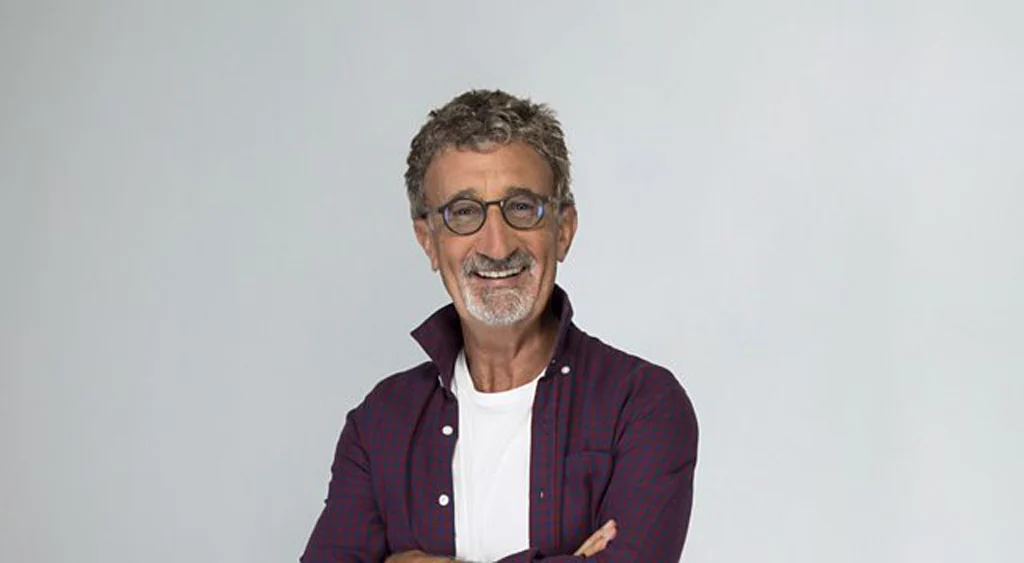
By [Your Name/Editorial Staff]
March 20, 2025
The world of motorsport is in mourning today following the passing of Eddie Jordan, the irrepressible Irishman who transformed the landscape of Formula 1 from a closed-shop aristocratic pursuit into a vibrant, high-octane spectacle. Jordan, who served as a team principal, entrepreneur, and television personality, died peacefully in Cape Town, South Africa, at the age of 76. He is survived by his wife, Marie, and their four children.
Known for his flamboyant fashion, razor-sharp wit, and an uncanny ability to spot raw talent, Jordan’s influence on the sport extended far beyond the pit lane. He was a quintessential "racer’s racer"—a man who navigated the treacherous waters of F1 finance with the same audacity he once displayed on the track as a driver.
The Life and Legacy of a Motorsport Titan
Born in Dublin in 1948, Edmund "Eddie" Jordan’s entry into the world of motorsport was anything but conventional. Before he was a household name in the F1 paddock, Jordan spent his early twenties working as a bank clerk in Ireland. It was a mundane start to a life that would eventually be defined by the roar of V10 engines and the cutthroat politics of Grand Prix racing.
His transformation began in 1970 when he entered a karting race in Dublin. The experience ignited a fire that saw him ascend through the ranks of Formula Ford and Formula Three. While he was a capable driver, Jordan’s true genius lay in his ability to assemble talent, secure sponsorship, and manage the complex logistics of team ownership.
Chronology: From Banking Clerk to F1 Icon
- 1948: Born in Dublin, Ireland.
- 1970s: Begins his racing career in karting, moving into Formula Ford and Formula Three.
- 1980: Founds Eddie Jordan Racing (EJR), finding early success in junior formulas.
- 1991: Jordan Grand Prix makes its debut in Formula 1.
- 1991: Michael Schumacher makes his F1 debut for the team at Spa-Francorchamps.
- 1998: Damon Hill leads the team to a historic 1-2 finish at the Belgian Grand Prix.
- 2005: Sells Jordan Grand Prix to the Midland Group.
- 2009: Joins the BBC’s F1 broadcast team as a lead analyst.
- 2016: Joins the revamped Top Gear hosting lineup.
- 2025: Passes away in Cape Town, South Africa.
Jordan Grand Prix: A Disruptor in the Paddock
When Jordan Grand Prix arrived on the grid in 1991, the sport was dominated by established giants like McLaren, Ferrari, and Williams. Jordan entered the fray with a limited budget and an infectious enthusiasm that forced the establishment to take notice.
Perhaps his most significant contribution to the history of the sport occurred at the 1991 Belgian Grand Prix. With Bertrand Gachot sidelined, Jordan gave a young, unknown German named Michael Schumacher his break. Although the car failed early, Schumacher’s qualifying pace was enough to trigger a poaching war. While Jordan lost Schumacher to Benetton almost immediately, the "Jordan" brand had been established as the ultimate proving ground for future world champions.
Under his leadership, the team became a magnet for talent. The likes of Rubens Barrichello, Damon Hill, Heinz-Harald Frentzen, and Giancarlo Fisichella all drove for the team. Jordan Grand Prix achieved four Grand Prix victories, including a memorable 1-2 finish in the rain-soaked 1998 Belgian Grand Prix, a result that cemented the team’s status as a giant-killer.
Beyond the Pit Wall: Media and Personality
After selling his team in 2005, Jordan successfully pivoted to a second career that made him a global television icon. His move to the BBC’s F1 coverage in 2009 was met with skepticism by some, but his unfiltered, "tell-it-like-it-is" style quickly won over a new generation of fans. He became known for his "Eddie’s Analysis" segments, often wearing colorful shirts and challenging team bosses with uncomfortable, yet necessary, questions.
In 2016, his charisma led him to a starring role on the BBC’s Top Gear. Alongside Matt LeBlanc, Chris Harris, and the late Sabine Schmitz, Jordan brought a sense of seasoned automotive knowledge mixed with a unique ability to act as the "elder statesman" of the group. His presence on the show introduced him to a mainstream audience that may never have watched a Grand Prix, further expanding his legacy beyond the racetrack.

Supporting Data: The Jordan Impact
| Metric | Achievement |
|---|---|
| F1 Team Ownership | 1991–2005 |
| Total Grand Prix Wins | 4 |
| Highest Constructor Finish | 3rd (1999) |
| Key Drivers Mentored | Michael Schumacher, Damon Hill, Rubens Barrichello |
| Media Tenure | 2009–2020 (BBC, Channel 4, Top Gear) |
Jordan’s tenure as an owner was defined by high-risk, high-reward decision-making. He was a master at navigating the financial complexities of the sport, often securing sponsorship deals that defied the logic of the time. His team was the last of the "independent" outfits to truly challenge the works manufacturers, a feat that is arguably impossible in the modern era of Formula 1.
Official Responses and Tributes
The racing world has reacted with profound sadness. Formula 1 CEO Stefano Domenicali issued a statement early Friday morning:
"Eddie was a giant of our sport. He brought a sense of fun, passion, and, most importantly, a belief that anyone could succeed if they were brave enough to try. He gave Michael Schumacher his start and he gave us all a lifetime of memories. The paddock will be a much quieter, less colorful place without him."
Former driver and colleague David Coulthard shared a personal reflection on social media:
"Eddie was my mentor, my boss, and eventually my friend. He taught me that in this sport, you have to be as sharp off the track as you are on it. He lived life at full throttle."
Implications: The End of an Era
The passing of Eddie Jordan marks the end of a specific chapter in Formula 1 history. He represented an era of "garagista" team ownership—where the team principal was a hands-on operator rather than a corporate executive.
As F1 moves toward a future defined by massive corporate backing and strict budget caps, the "Jordan way"—characterized by audacity, gut instinct, and a willingness to gamble on talent—is becoming a relic of the past. However, the blueprint he created for spotting talent and building a brand remains a cornerstone of how modern teams, like Red Bull Racing or Haas, attempt to navigate the sport.
Eddie Jordan’s death is not merely the passing of an individual; it is the closing of a book on the romantic, chaotic, and utterly thrilling era of Formula 1 that he helped build. He leaves behind a sport that is wealthier, more professional, and more global than the one he entered in 1991, but one that undeniably possesses a little less soul today.
For the millions of fans who grew up watching his post-race analysis or cheering for the yellow-and-black cars, Jordan’s legacy is secure. He proved that with enough belief and a little bit of Irish luck, you could take on the world’s biggest manufacturers and win.
He was, in every sense, the heart of the paddock. Rest in peace, Eddie.
