

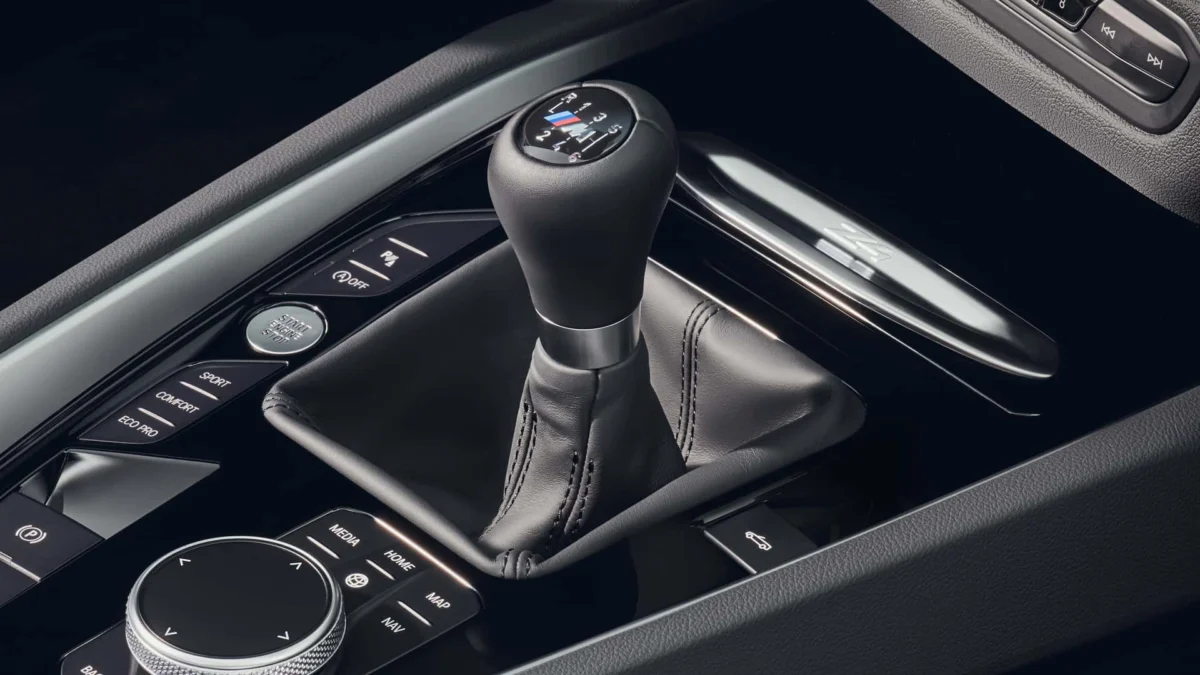
For decades, the manual transmission was the beating heart of the BMW M division. It was the mechanical bridge between man and machine, a tactile testament to the "Ultimate Driving Machine" philosophy. However, the automotive landscape is shifting with unprecedented speed, and the future of the three-pedal gearbox within BMW’s high-performance M lineup has never been more precarious.
In a recent, candid exchange with BMW Blog, Frank van Meel, the CEO of BMW M, provided the most transparent insight to date regarding the fate of the manual transmission. While he offered a glimmer of hope by confirming that the technology is "not off the table," he pointedly refused to offer any ironclad guarantees. As the industry pivots toward electrification and automated efficiency, the manual gearbox is fighting for its life against a tide of torque, hybrid complexity, and a dwindling supply chain.
The State of the Union: Between Passion and Practicality
The dialogue surrounding the manual transmission at BMW has become a high-stakes balancing act. For enthusiasts, the manual is not merely a transmission; it is a cultural artifact that defines the M driving experience. For engineers, it is an increasingly difficult puzzle to solve.
Frank van Meel’s stance is a notable departure from his commentary several years ago, when he famously suggested that the manual transmission struggled to align with the performance and efficiency metrics of modern BMW M vehicles. Today, that narrative has evolved from a hard "no" to a pragmatic "perhaps."
"It is going to be really difficult," van Meel admitted, acknowledging the mechanical and financial hurdles. Yet, he also validated the emotional resonance of the platform. He noted that BMW is acutely aware of the "high demand" for manual options, a sentiment that is not merely anecdotal but backed by hard sales data. In the United States, arguably the most important market for the brand’s performance division, approximately half of all G87 M2 buyers are choosing the six-speed manual. This statistic serves as a powerful argument for the continued existence of the stick shift, acting as a buffer against the corporate drive toward pure electrification and automated performance.
A Chronology of the Decline
To understand why the manual transmission is under such immense pressure, one must look at the historical trajectory of BMW’s engineering choices over the last decade.
- The Era of Purity: For years, the BMW M3 and M4 were the standard-bearers for the manual transmission in the luxury segment. During this period, the power outputs of the S55 engine were within the comfortable mechanical tolerances of manual gearboxes.
- The Torque Threshold: As BMW transitioned to the S58 twin-turbocharged inline-six, the torque figures climbed into territory that pushed the structural limits of existing manual transmissions. This led to a split in the lineup: the "base" models retained the manual, while the high-output "Competition" variants were exclusively mated to the ZF-sourced eight-speed M Steptronic transmission.
- The Hybridization Push: The introduction of 48-volt mild-hybrid systems, designed to improve fuel economy and fill in torque gaps, has added another layer of complexity. Integrating electric motors and sophisticated control software with a traditional manual clutch assembly is a significant engineering challenge that requires bespoke development for a shrinking market.
- The "Handschalter" Last Stand: The announcement of the 2027 BMW M3 CS Handschalter marked a significant milestone. Priced north of $107,000, this limited-run, rear-wheel-drive machine is essentially a final love letter to the manual transmission. Its rapid sell-out at dealerships proves that the demand for these cars is not just present—it is fervent.
Engineering the Impossible: Why the Manual is Fading
The struggle to keep the manual transmission alive is not rooted in a lack of desire, but in the harsh reality of mechanical limitations and supply chain economics.
The Torque Barrier
The modern M-engine produces staggering levels of torque. Manual gearboxes rely on physical gears and synchros that must withstand immense rotational force. As engine performance increases, the size and weight of a manual transmission capable of handling that power must also increase. Eventually, the gearbox becomes too large to package effectively within the chassis of a compact or mid-size performance sedan without compromising the vehicle’s weight distribution and balance.
The Hybrid Integration Hurdle
The industry-wide move toward 48-volt mild-hybrid systems is arguably the final nail in the coffin for many manual enthusiasts. A hybrid system requires the drivetrain to communicate seamlessly with an electric motor-generator. In an automatic vehicle, this is handled by sophisticated electronic control units (ECUs) that manage the power split in milliseconds. Creating a system that allows a driver to manually operate a clutch while simultaneously managing the nuances of a mild-hybrid electric assist is a massive, costly engineering endeavor that provides little return on investment for the manufacturer.

The Shrinking Supplier Base
BMW M does not manufacture its own gearboxes; it relies on specialized Tier-1 suppliers. As the global automotive industry moves away from the manual transmission, the number of suppliers willing to produce high-torque, manual-specific components is plummeting. When BMW approaches these suppliers for a custom-built unit, they lack the leverage of volume. Without the ability to spread development costs across hundreds of thousands of units, the per-unit cost of a manual transmission becomes prohibitively expensive, eventually forcing the brand to choose between massive price hikes or the retirement of the technology.
Official Responses and Strategic Implications
BMW M finds itself in a strategic bind. On one hand, the brand’s identity is built on the engagement of the driver. On the other, it must meet stringent global emissions regulations and compete with electrified rivals that offer superior acceleration and fuel efficiency.
Frank van Meel’s refusal to make promises is a calculated move. By keeping the conversation open, he maintains the loyalty of the enthusiast base. If he were to kill the manual tomorrow, the backlash from the M community would be severe. By framing it as a "difficult" but "not off the table" challenge, he manages expectations while leaving the door ajar for future developments, perhaps involving new, more compact transmission technologies or specialized, limited-edition runs similar to the M3 CS.
The implications for the consumer are clear: the manual transmission is becoming a luxury-tier item. As standard models move toward full automation and hybrid/electric architectures, the "stick shift" will likely be relegated to top-tier, low-volume, enthusiast-focused models. It is moving from being a standard transmission choice to a collector’s feature.
Looking Ahead: The Future of the M Driving Experience
The next generation of the BMW M3 is widely expected to fully embrace the mild-hybrid inline-six, and industry insiders believe that this shift will likely mark the end of the manual transmission for that specific nameplate. While the M2 will hold the line for a few more years, the writing on the wall is clear.
BMW M is preparing for a world where the "Ultimate Driving Machine" is defined by the precision of its torque vectoring, the responsiveness of its electric motors, and the efficiency of its automated gear changes. The manual transmission will be remembered as the era of analog engagement, a period where the driver’s physical connection to the car was the primary metric of performance.
For now, the enthusiast still has a window of opportunity. The M2 remains a bastion of manual shifting, and the limited-run CS models provide a fleeting glimpse into what happens when engineers are given the freedom to prioritize passion over pure, cold efficiency.
As we move toward 2027 and beyond, the legacy of the manual transmission will depend on the very thing that has kept it alive thus far: the unwavering passion of the BMW customer. As long as those customers continue to vote with their wallets, and as long as visionaries like Frank van Meel remain in positions of influence, there is always a chance—however slim—that the stick shift will endure, even if it is only as a rare, highly coveted piece of automotive history.
For the purists, the message is simple: enjoy the clutch while it lasts. The mechanical symphony of a perfectly executed heel-and-toe downshift is a sound that, in the halls of modern engineering, is growing increasingly faint.
