

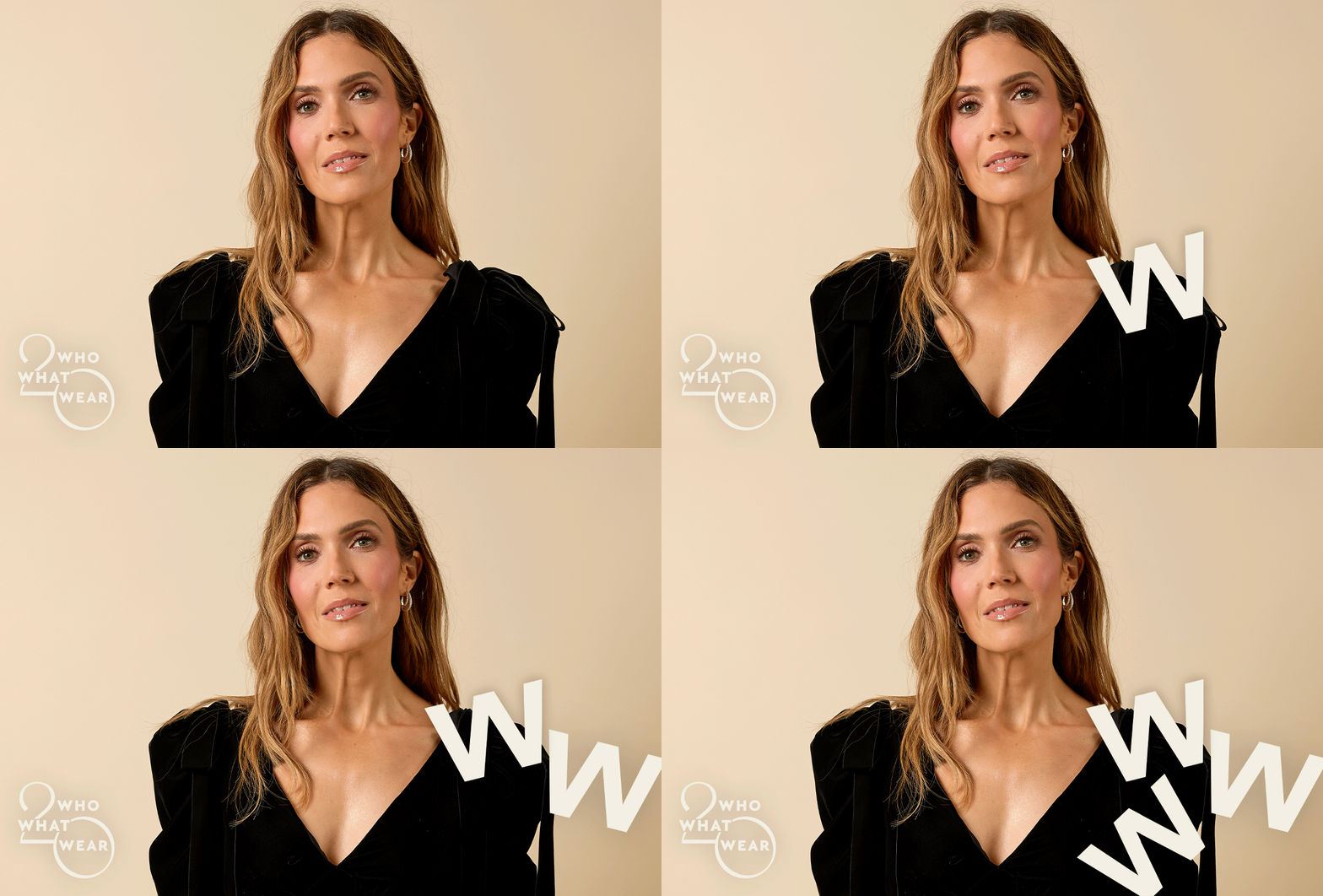
In the rapidly shifting landscape of Hollywood, few stars have managed to navigate the transition from teen pop sensation to respected, critically acclaimed actress with the grace and consistency of Mandy Moore. As Who What Wear marks its milestone 20th anniversary this month, the publication invited Moore to sit down with host Hillary Kerr for an expansive episode of The Who What Wear Podcast. The conversation serves as a retrospective not just on Moore’s personal career trajectory, but on the cultural shifts in fashion, celebrity, and industry expectations over the last two decades.
The Genesis of a Star: A "Dorky" Beginning
To understand Mandy Moore’s longevity, one must look back to the late 1990s, an era defined by the meteoric rise of bubblegum pop. Moore’s discovery story is, by her own admission, a chaotic blend of serendipity and sheer perseverance. Growing up in the suburbs of Orlando, Florida, Moore describes herself as a "dorky musical theater kid" with a singular, somewhat unconventional obsession: singing the national anthem.
"I remember seeing a young woman my age sing the national anthem at an Orlando Magic basketball game, and I was like, ‘You can do that?’ It was such a huge light-bulb moment for me," Moore told Kerr. This realization spurred a grassroots effort. Moore began sending in demo tapes, eventually becoming a local staple for sporting events.
The path from the arena floor to the recording studio was a classic case of industry networking. A demo tape, passed through a chain of connections—including a contact at FedEx—eventually landed on the desk of an A&R executive at Epic Records. At just 14 years old, Moore found herself in a high-stakes audition in New York. By the winter of 1998, she had signed a record deal, setting in motion a career that would see her opening for icons like NSYNC and the Backstreet Boys before she was even old enough to drive.
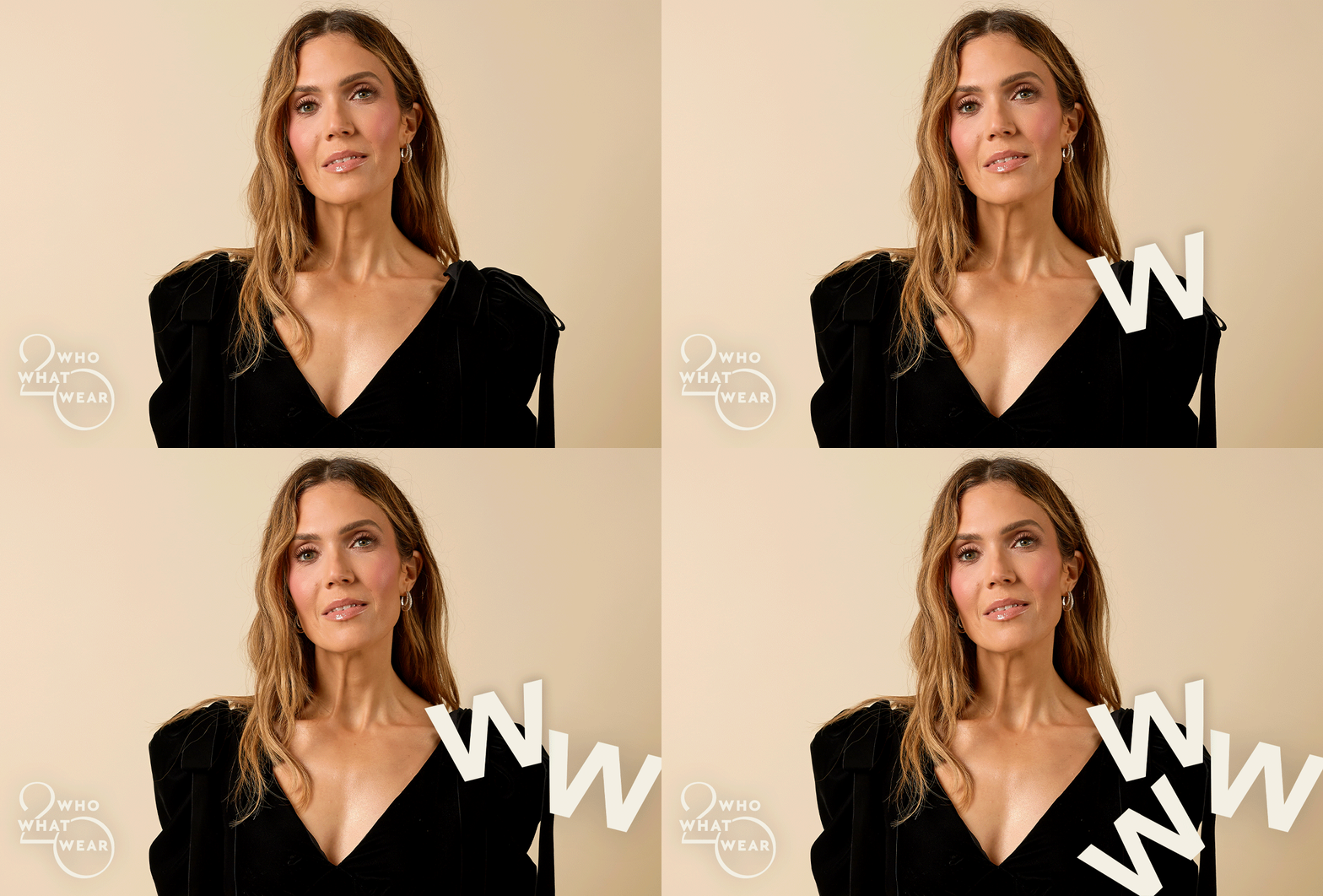
Navigating the Transition: From Pop Star to Actor
While many of her contemporaries struggled to shed the "pop star" label, Moore’s shift into acting was deliberate and grounded in her roots. "I think because I grew up doing theater, it was always in the back of my mind," she explained. "I knew that if I could tiptoe into the acting world, it was something I wanted to try."
Her breakout role came with the 2001 hit The Princess Diaries. Rather than being intimidated by the high-profile set, Moore found a mentor in director Garry Marshall. She describes the experience as "summer camp," noting that the project allowed her to work alongside peers in an environment that felt collaborative rather than competitive.
However, the real test of her range arrived with A Walk to Remember (2002). Stepping into a lead role required a transformation that was as much aesthetic as it was professional. "The dark hair really helped," she noted, acknowledging the strange, hyper-focused media scrutiny regarding her image change. She credits her relative "outsider" status in the music world at the time for her ability to disappear into the character of Jamie Sullivan. Unlike pop titans like Britney Spears or Madonna, whose public personas were so massive they often eclipsed their acting performances, Moore was able to reinvent herself without the weight of an inescapable brand.
Chronology of an Evolving Aesthetic
Moore’s fashion journey is a mirror of the last twenty years of trends. During the podcast, she offered a candid retrospective on her evolving personal style, moving from the experimental, sometimes questionable choices of the early 2000s to her current, curated "cool mom" uniform.

The Early Aughts: Acid-Wash and "The Choice"
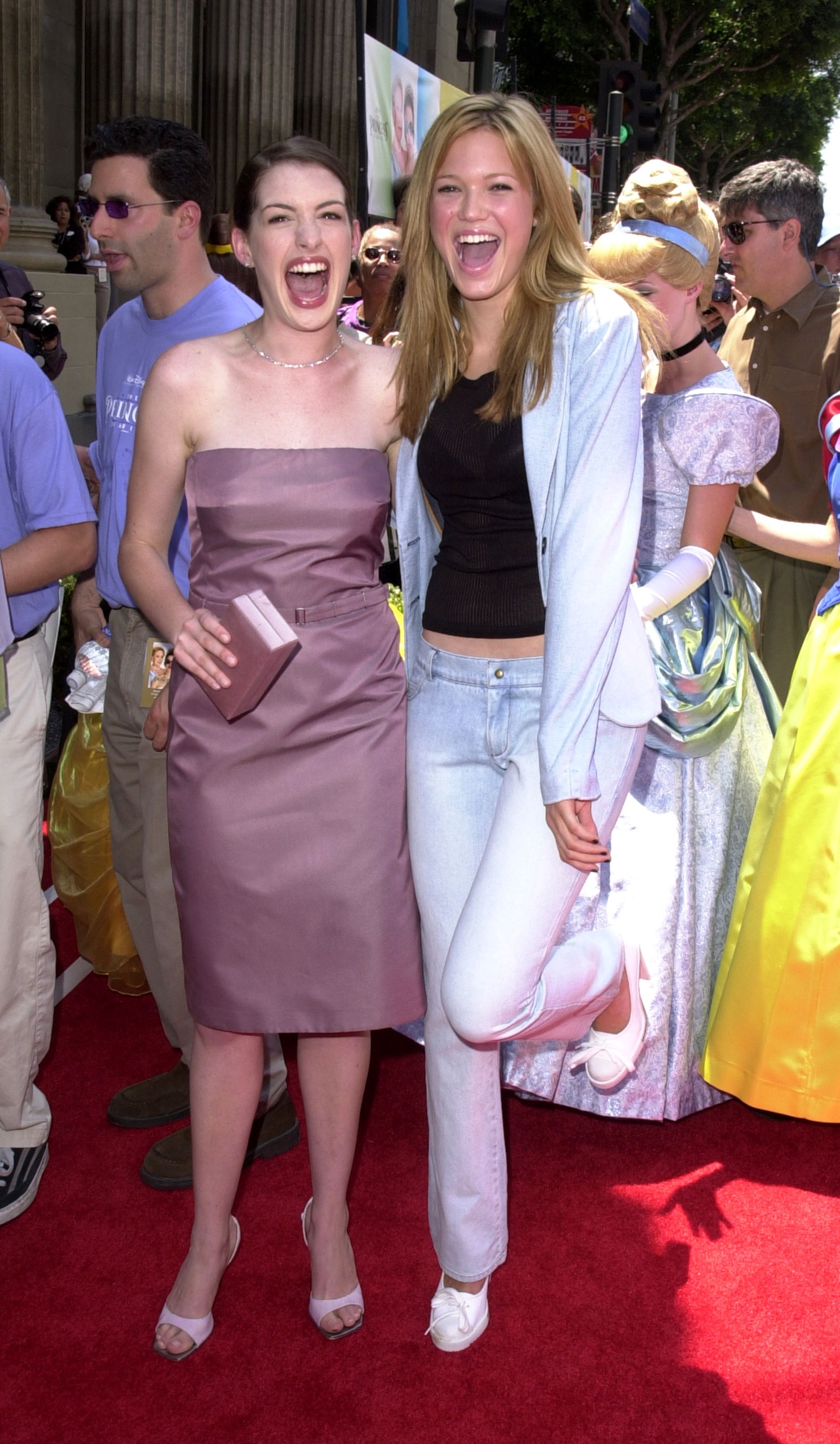
Looking back at the Princess Diaries premiere, Moore recalls wearing an acid-washed denim suit paired with a black tank top and white sneaker pumps. "It was a choice," she laughed. "It was the era for sure." She noted that at the time, she was attempting to balance being a musician with the desire to be taken seriously as an actor. Her style was experimental, reflecting a young woman finding her footing in an industry that demands constant visual reinvention.
The Mid-2000s: The Bohemian Uniform
By 2006, Moore’s style had shifted toward the quintessential mid-aughts look: Citizens of Humanity jeans, sheer tank tops layered over visible bras, and an abundance of accessories. "Multiple necklaces, maybe a skinny scarf," she recalled. During this period, she became a fan of designer Phillip Lim, embracing a style that felt more adult but still very much anchored in the trends of the time.
The Present Day: Comfort and Curated Minimalism
Today, Moore’s approach to fashion is defined by functionality. As a mother, she prioritizes pieces that are effortless and "put together" without requiring significant effort. She cites designer Jamie Haller as a major influence, praising the brand’s ability to cater to women in her age range who want to look polished while maintaining maximum comfort. "Whatever she does and makes is my uniform," Moore stated, cementing her transition from the avant-garde experiments of her youth to the refined, practical aesthetic of a modern working mother.
Industry Implications and Cultural Shifts
The conversation between Moore and Kerr highlights a critical shift in how the entertainment industry treats "crossover" talent. In the early 2000s, there was a palpable skepticism toward musicians who attempted to pivot to acting. The industry often viewed them as "musicians posing as actors."
Moore’s success in the transition—culminating in her Emmy-nominated work on This Is Us—demonstrates how the barriers between creative mediums have eroded. Her ability to navigate longevity is attributed not just to talent, but to a lack of ego regarding her roles. She was willing to take a supporting part in The Princess Diaries to learn the craft before jumping into lead roles, a strategy that allowed her to build credibility.
Looking Ahead: The Next Chapter
As Moore looks toward the future, her focus remains on storytelling that resonates. With her upcoming show, The Land, she continues to seek projects that challenge her and allow for the same level of depth that defined her tenure as Rebecca Pearson in This Is Us.
Her longevity is a testament to her adaptability. Whether she is in a recording studio, on a film set, or navigating the red carpet, Moore’s career has been marked by a refusal to be defined by a single decade or a single role. By remaining authentic—admitting to the "dorky" beginnings and the fashion faux pas of her youth—she has maintained a connection with her audience that is rare in the age of curated celebrity.
Summary of Key Takeaways
- Authenticity is Key: Moore’s ability to remain grounded—from her days as a teenager in Orlando to her current status as a Hollywood veteran—has been the anchor of her career.
- Evolution of Style: Her transition from the "denim-on-denim" era of the early 2000s to a refined, functional aesthetic highlights a broader trend toward sustainable, wearable fashion.
- Strategic Growth: Her approach to acting, starting with smaller roles to gain experience, provided the foundation for her later successes in prestige television.
- Industry Longevity: Moore’s career serves as a case study for how to successfully manage a transition between multiple creative disciplines while maintaining relevance over two decades.
As Who What Wear celebrates 20 years of influence, Mandy Moore’s presence on the podcast serves as the perfect encapsulation of two decades of progress. She remains a fixture of the cultural landscape, not by chasing the spotlight, but by continuing to evolve alongside it.
