

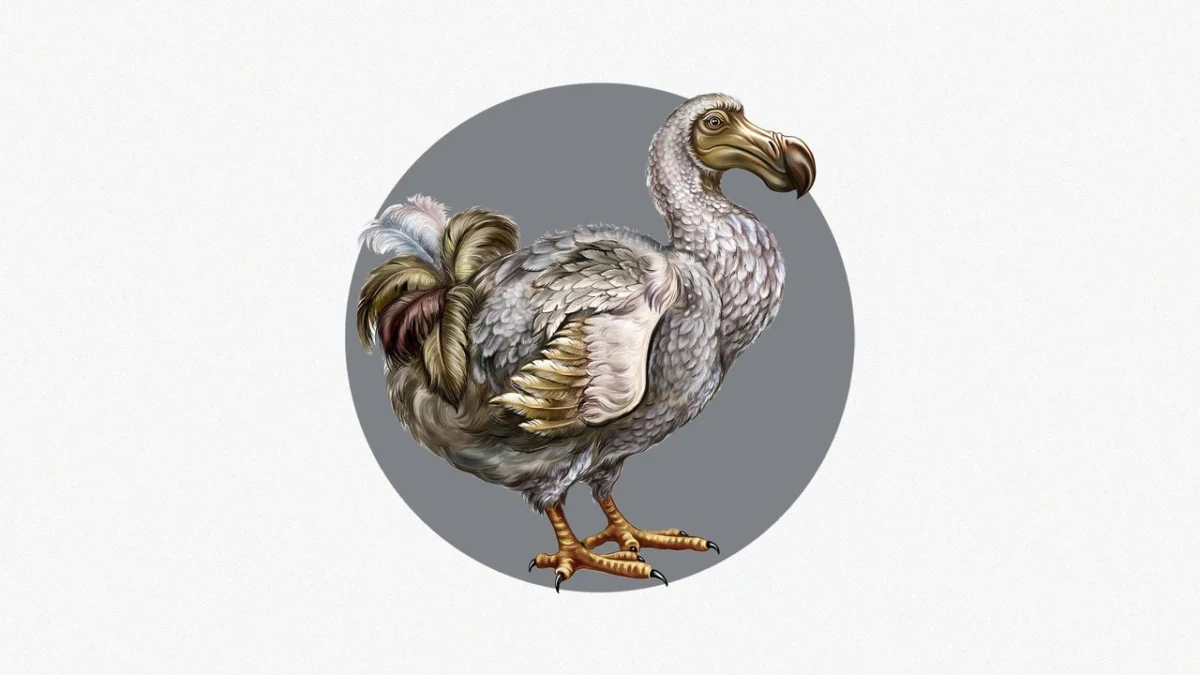
In the annals of natural history, few creatures occupy as precarious a place in the human consciousness as the dodo (Raphus cucullatus). Since the 17th century, the flightless bird of Mauritius has served as a global shorthand for extinction—a tragic symbol of human impact on fragile ecosystems. Now, Dallas-based healthtech genetics firm Colossal Biosciences is attempting to flip the script on this historical narrative. By leveraging cutting-edge artificial intelligence and advanced gene-editing techniques, the company is aiming for the ultimate feat of de-extinction: bringing the dodo back to life.
The Genesis of a Bold Ambition
Founded in 2021, Colossal Biosciences has quickly positioned itself as the vanguard of the "de-extinction movement." While the company’s portfolio includes high-profile projects like the woolly mammoth and the thylacine (Tasmanian tiger), the dodo project represents a unique set of evolutionary hurdles.
The dodo was first documented by Portuguese sailors in the 16th century, finding a flightless, docile creature that had evolved in complete isolation. Unaccustomed to mammalian predators, the birds were ill-equipped for the arrival of invasive species—rats, pigs, and monkeys—brought by human vessels. Within a century of its discovery, the dodo was effectively erased from the Earth.
Recreating such an animal requires more than just a “Jurassic Park” fantasy; it demands a sophisticated recalibration of genetic science. Colossal’s current methodology relies on bridging the gap between the dodo’s limited preserved DNA and the genome of its closest living relative: the Nicobar pigeon.
Chronology of a Genetic Restoration
The roadmap to de-extinction is paved with iterative scientific milestones. Colossal’s progress has been marked by several key phases:
- 2021: Colossal Biosciences is founded with the mission of leveraging genetic engineering to address biodiversity loss and species restoration.
- 2022–2023: The company secures significant funding and begins the arduous process of sequencing fragmented ancient DNA samples. The scientific team focuses on identifying the “functional” genome—the portions of DNA responsible for the dodo’s defining physical characteristics.
- 2024: Development of "GenoMorph," a proprietary AI tool designed to analyze vast datasets of avian DNA.
- 2025–2026: Implementation of lipid nanoparticles for genomic editing within avian eggs, a milestone that bridges the gap between digital sequence design and physical embryonic manipulation.
The transition from theory to practice has been rocky. Unlike the dire wolf, which benefited from surrogate mammal gestations, the dodo must be developed within an egg. This logistical bottleneck requires precision engineering at a cellular level, a task Colossal is now tackling with the introduction of new delivery systems for genetic material.
The Engine of Innovation: GenoMorph and Lipid Nanoparticles
A significant breakthrough for the company occurred this Wednesday, as Colossal announced that its AI tool, GenoMorph, has successfully identified 2,300 specific DNA targets. These targets represent the "Dodo-ish" traits—the specific genetic markers for beak shape, plumage, and skeletal structure—that differentiate the bird from its pigeon relatives.
GenoMorph acts as a filter, trained on the genomes of various extant species to predict how specific DNA sequences manifest as physical traits. By isolating these 2,300 targets, the researchers have created a blueprint for a "functional" dodo.
Furthermore, the company has successfully utilized lipid nanoparticles to perform gene editing within an egg. This technique allows scientists to deliver molecular "packages" into the developing embryo, effectively rewriting the genetic instructions of the Nicobar pigeon to incorporate dodo traits. This is not cloning in the traditional sense; it is a sophisticated act of biological synthesis.
Redefining the Species: Official Responses and Perspectives
The project has ignited a firestorm of debate within the global scientific community. Critics argue that Colossal is selling a “Frankenstein” version of history—a creature that may look like a dodo but lacks the behavioral and ecological nuance of the original.
Colossal’s Chief Science Officer, Beth Shapiro, views these criticisms as a misunderstanding of how species are defined. In a recent interview with Fast Company, Shapiro addressed the skepticism surrounding the company’s work.
“It’s a species definition that’s based on an arbitrary threshold of sequence similarity,” Shapiro explains. “But that threshold is arbitrary. It’s going to be arbitrary no matter who you are.”
For Shapiro, the goal is not to produce an exact biological replica—an impossible feat given the entropy of ancient DNA—but to restore the ecological function of the species. By creating a functional proxy, Colossal hopes to restore the dodo to its native Mauritius, potentially reintroducing a vital component of the island’s ecosystem that has been missing for over 300 years.
Colossal CEO Ben Lamm echoes this sentiment, emphasizing that their work is not just about the “wow factor” of resurrection, but about developing technologies that can prevent current endangered species from following the dodo’s fate. “Our goal is to build the tools that allow us to intervene in the extinction crisis,” Lamm notes. “The dodo is our proof-of-concept.”
Implications: The Ethics of Resurrecting the Past
The implications of Colossal’s work extend far beyond the laboratory. If the company succeeds, it will force a profound societal reckoning with what it means to "own" the genetic history of a species.
1. Ecological Impact
The most immediate question is: what happens when you introduce a resurrected species into a modern, altered environment? Mauritius has changed drastically since the 17th century. A "functional dodo" would need to navigate a world that is no longer its own, raising questions about whether it would be an invasive species in its own home.
2. The Preservation Paradox
Critics argue that the resources poured into de-extinction—hundreds of millions of dollars—would be better spent on protecting species that are currently teetering on the brink of extinction. By "bringing back" the dead, are we signaling that extinction is no longer permanent, and therefore, less of a catastrophe? Colossal maintains that their work is additive, not subtractive, and that the breakthroughs in CRISPR and gene editing will provide a lifeline for current conservation efforts.
3. Philosophical Shifts
The dodo is the quintessential symbol of human negligence. To see it return is to witness a potential act of redemption. However, it also challenges our perception of the "natural order." If we can edit the genome of a bird to recreate an extinct species, we are essentially moving into an era of "curated evolution," where the boundaries between nature and technology become increasingly porous.
The Road Ahead
As Colossal Biosciences continues its work, the world remains divided between wonder and caution. The 2,300 DNA targets identified by GenoMorph are just the beginning. The company must now navigate the arduous process of validation, testing, and potential ethical oversight from international regulatory bodies.
For now, the dodo remains a ghost, a haunting memory of a world lost to time. But as the researchers at Colossal labor over their incubators and algorithms, that memory is becoming increasingly tangible. Whether this results in a biological marvel or a scientific controversy, one thing is certain: the conversation surrounding extinction has changed forever. We are no longer merely mourning the loss of the dodo; we are actively debating the mechanics of its potential return.
In the words of the project’s architects, this is not just about the past—it is a bold, high-stakes experiment in shaping the future of life on Earth. As we stand on the precipice of this new frontier, we are forced to ask: if we have the power to play architect with nature, what kind of world do we want to build? The answer may very well be written in the DNA of a bird that hasn’t walked the earth in centuries.
