

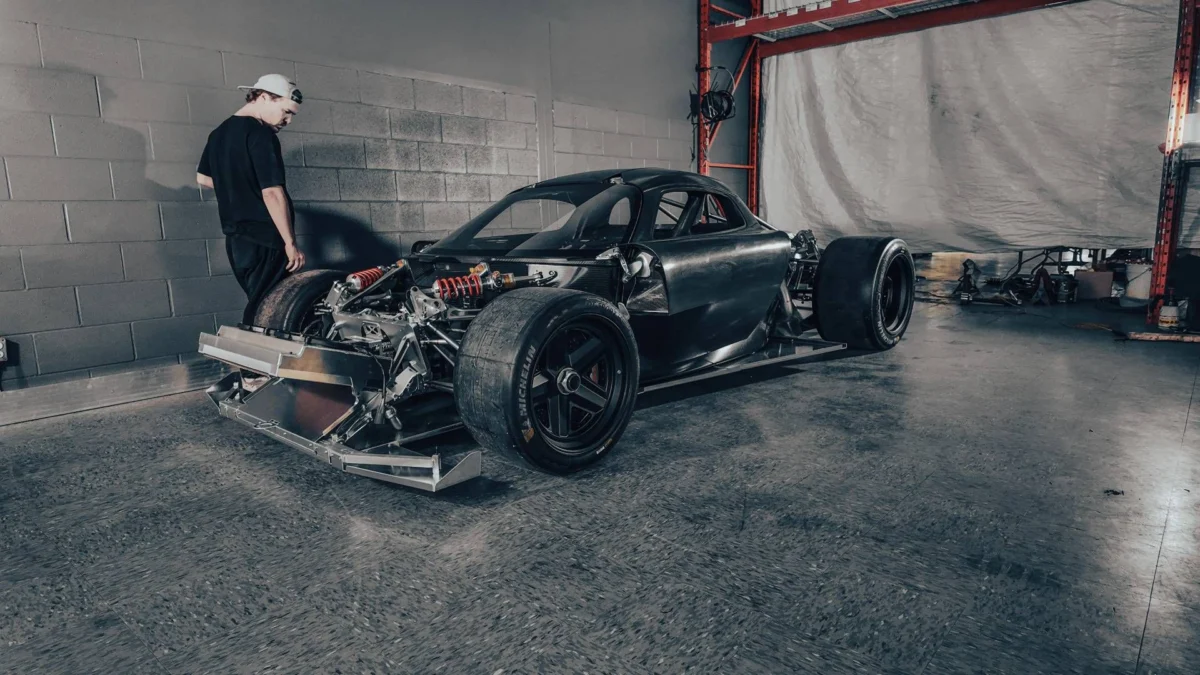
In the rarified air of high-performance automotive manufacturing, few entities have captured the imagination of enthusiasts as rapidly as Oilstainlab. Founded by the Bridan twins, the firm has spent the better part of the last few years transitioning from the boutique "hot rod" world to the hyper-competitive sphere of limited-production supercars. Their flagship project, the HF-11, is not merely a vehicle; it is a declaration of intent—a modular, uncompromising machine designed to exist at the intersection of analog soul and digital-age performance.
The Core Concept: A Powertrain-Agnostic Revolution
At the heart of the HF-11’s value proposition is its "Thunder-Volt" architecture. The vehicle is designed to be "powertrain-agnostic," a feat of engineering that allows owners to swap between a high-revving, gas-fed 4.5L flat-six engine and a formidable 800-horsepower electric motor.
For the traditionalist, the internal combustion option promises the visceral experience of a mechanical connection between driver and machine. For the early adopter, the EV variant provides instant, crushing torque. The most impressive aspect, however, is the modularity: the Bridans have designed the architecture so that a properly trained technician can perform the conversion in as little as an hour or two.
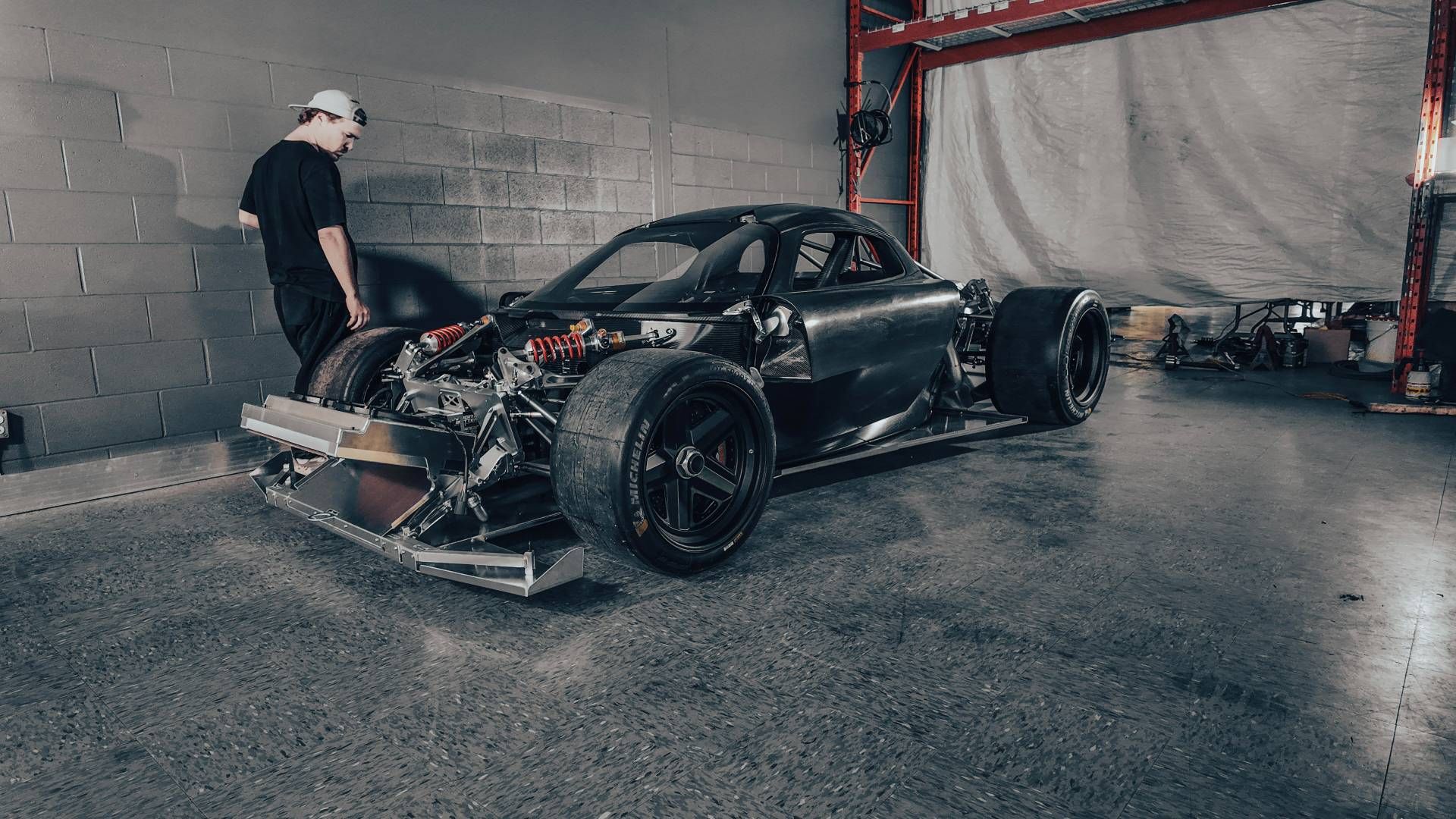
However, the path to such versatility is fraught with engineering hurdles. During initial testing conducted earlier this year, the team encountered the classic "EV weight penalty." The mass of the battery packs required to sustain high-performance output significantly impacts the chassis dynamics, forcing the engineering team to revisit their initial weight targets and structural distribution to ensure the EV variant retains the same agile handling characteristics as its internal combustion sibling.
Sounding the Alarm: The Quest for Authentic Noise
One of the most persistent criticisms of electric performance vehicles is the lack of auditory feedback. Recognizing that a supercar without a signature sound is a "soulless" experience, Oilstainlab is currently in the third iteration of a proprietary system designed to make the electric motor scream at 110 decibels.
Crucially, the team is eschewing the industry-standard path of "artificial" or synthesized cabin audio. Instead, they are developing a mechanical/acoustic solution that captures the genuine output of the motor and drive components, amplifying it to levels that evoke the raw, mechanical intensity of a racing engine. This pursuit of "authentic noise" highlights the firm’s philosophy: that performance is as much about the sensory experience as it is about lap times.

Project GRIN: Expanding the Horizon
While the HF-11 garners the headlines, the firm is quietly laying the groundwork for its second, wider-production vehicle, currently codenamed "Project GRIN." The name is a nod to the firm’s dedicated fanbase, who identify themselves as "maniacs."
Nikita Bridan notes that the project is in the active development phase, with the firm once again considering both internal-combustion and electric platforms. Unlike the bespoke, high-cost nature of the HF-11, Project GRIN is intended to reach a slightly broader (though still exclusive) audience. The final decision regarding the powertrain will likely be dictated by cost-to-performance efficiency, as the firm balances the need for market accessibility with their reputation for uncompromising engineering.
Chronology: The "European Vision" and Global Reach
The development of the HF-11 has been bolstered by the real-world performance of its predecessor, the Half11. This mid-engine hot rod has served as the testbed for the design language and technical systems found in the new supercar.

Over the past few weeks, the Half11 has been engaged in a "European Vision Tour," a high-visibility marketing and testing campaign that has seen the car make appearances at iconic venues across the continent. From Italy’s popular Tutto Bene hillclimb to appearances in Poland and Germany, the tour has been instrumental in gauging international interest.
The tour is far from over, with upcoming stops in Portugal and the Netherlands, followed by a highly anticipated debut in the Middle East around November 19. The Bridans have noted that the Middle Eastern market has shown significant enthusiasm for the HF-11, with prospective buyers specifically citing the "Canadian-built" label as a major draw—a testament to the growing prestige of boutique North American performance manufacturing.
Implications for the Luxury Market
The pricing of the HF-11—set at US$1.85 million (approx. CDN$2.5 million)—places it firmly in the ultra-luxury segment. This is not a car for the daily commuter; it is a "weekend toy" for the discerning collector.

Yet, the impact of Oilstainlab extends beyond the vehicle itself. Through their merchandise brand, "House dé Stains," the firm has effectively monetized the "maniac" lifestyle. By offering everything from high-end apparel to luxury home goods, they are building a brand identity that transcends the garage.
Items such as the CDN$3,434 "Maniac Chair"—a composite-shell piece patterned after the actual bucket seats of the HF-11—and the upcoming CDN$585 aluminum-and-wood coffee tamper, which mimics the shift knob of the supercar, serve as "entry-level" luxury items. These products allow enthusiasts to possess a piece of the engineering, even if they aren’t in the position to acquire the full vehicle. It is a brilliant strategy of brand integration, fostering a community that feels deeply invested in the success of the Bridan twins’ vision.
Supporting Data and Technical Challenges
The engineering team at Oilstainlab is currently navigating several critical technical milestones:

- Battery Density vs. Performance: Balancing the 800-hp output with a battery weight that does not compromise the "mid-engine" feel of the vehicle.
- Thermal Management: The 110-decibel audio project requires significant mechanical housing that must also effectively dissipate the heat generated by the high-output electric motor.
- Logistical Scaling: As the firm prepares for production, they are moving from a prototype-based environment to a manufacturing-ready workflow, a notoriously difficult transition for small-batch supercar manufacturers.
Official Stance: The Bridan Philosophy
Throughout their interviews and public appearances, the Bridans have maintained a consistent message: they are not interested in following the industry trend of homogenization. By keeping both ICE and EV options on the table for all future projects, they are insulating themselves against the volatility of the energy market while catering to the diverse preferences of their "maniac" clientele.
Their commitment to local production—maintaining a Canadian manufacturing base—is not just a patriotic choice but a strategic one. By keeping the design and assembly teams close, they maintain the agility required to iterate on complex components like the "Thunder-Volt" system, which requires tight integration between the electrical architecture and the chassis.
Conclusion: The Path Forward
As Oilstainlab looks toward the end of 2026 and into 2027, the stakes are undeniably high. The HF-11 is not just a car; it is the proving ground for a company that hopes to redefine what a boutique supercar can be. Whether through the sheer mechanical theater of their ICE engines, the promise of their modular electric motors, or the lifestyle brand that sustains the cult of the "maniac," the Bridans are crafting a legacy that values passion over pragmatism.

As they continue their global tour and move toward final production, the automotive world will be watching to see if this Canadian firm can deliver on its ambitious promises. If the response from the European and Middle Eastern markets is any indication, the world is more than ready for a new kind of supercar—one that screams, in every sense of the word.
