

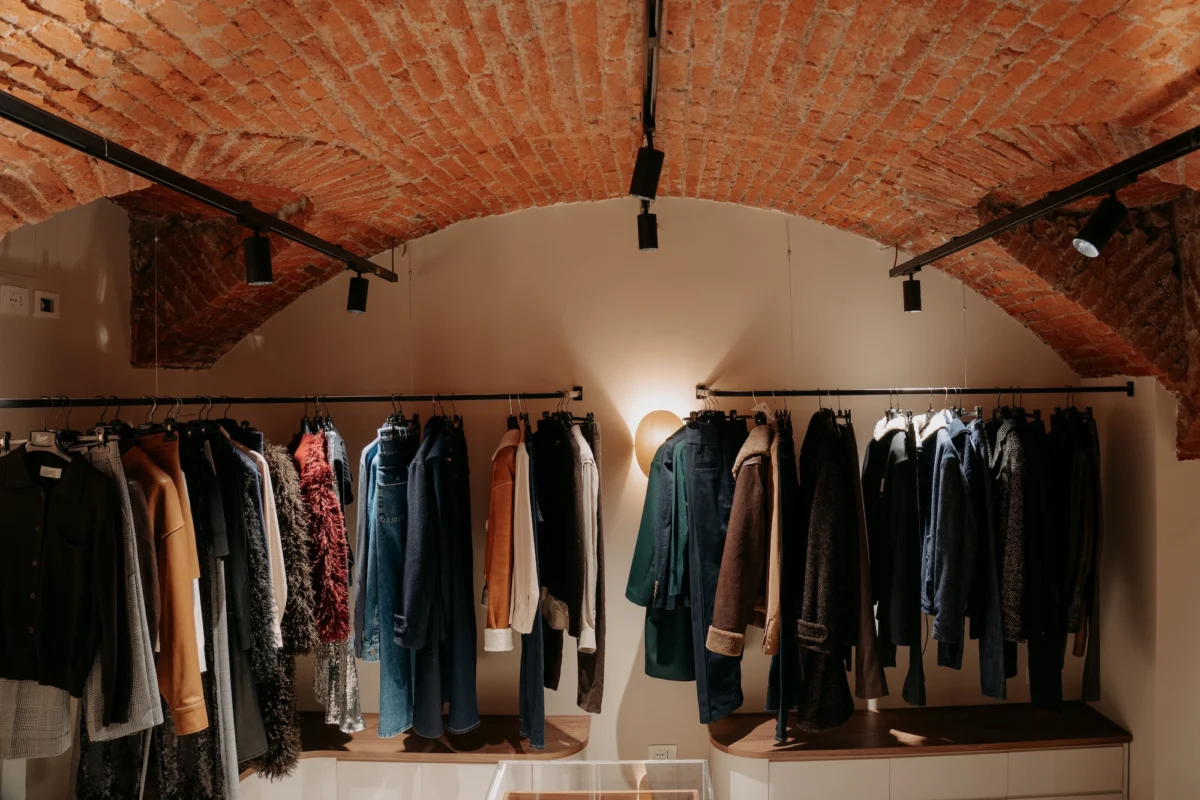
In the evolving landscape of global retail, the boundary between commerce and hospitality is becoming increasingly porous. While luxury conglomerates have long utilized the "lifestyle flagship" model to solidify their brand identity, smaller, high-end contemporary labels are now pivoting toward the same strategy to foster deeper consumer connections. The latest entrant to this experiential movement is the Italian label Pence 1979, which officially opened its first flagship boutique this past Thursday. Located in the heart of Milan’s vibrant, artistic Brera district, the store represents a bold experiment in "cross-pollination," seamlessly integrated into the lower level of Salotto Orsini, a high-end restaurant under the same parent umbrella, IPO SpA.
The Convergence of Fashion and Gastronomy: A New Retail Paradigm
The choice of location—Via San Carpoforo—is far from coincidental. While situated in one of Milan’s most prestigious and creative quarters, the boutique remains tucked away from the main thoroughfares, creating a sense of discovery for the visitor. By descending a striking black stone staircase from the restaurant, patrons are transported from the culinary theater of Salotto Orsini into a quiet, subterranean sanctuary dedicated to Italian craftsmanship.
The architectural language of the space reflects a harmonious marriage of history and modern design. The boutique features a vaulted ceiling of red brick, which provides a textured, warm backdrop to the curated selection of men’s and women’s ready-to-wear collections. Minimalist wooden displays and cabinets contrast against the sleek, beige marble flooring, creating an environment that feels more like an intimate private archive than a traditional retail store.
To ensure maximum engagement with the restaurant’s clientele, the boutique operates on an extended schedule, remaining open until 10 p.m. on weekends. This strategic timing is designed to capture the "after-dinner" browser, transforming a simple dining excursion into a holistic immersion in the brand’s lifestyle.
Chronology: From Venetian Pantmaker to Global Lifestyle Brand
To understand the gravity of this flagship debut, one must examine the trajectory of Pence 1979. Founded in 1979 by Otello Zecchin in the outskirts of Venice, the company initially gained prominence as a specialized men’s pantmaker. For decades, the brand thrived on technical expertise, focusing on the precision of cut and the quality of textiles.
However, the modern era of the brand began in earnest in 2021, when it was acquired by IPO Fashion & Design, a division of the holding company IPO SpA. This acquisition served as the catalyst for a comprehensive strategic overhaul. The subsequent years were marked by a systematic effort to modernize the brand’s identity, moving beyond its roots as a regional manufacturer to a global contemporary player.

The most significant shift occurred in 2024, when the company made the tactical decision to terminate its previous manufacturing license. By bringing production and operations in-house, the brand signaled a desire for full creative control—a move that culminated in the opening of the Milanese flagship. This store is not merely a point of sale; it is the physical manifestation of the brand’s current repositioning strategy, designed to engage directly with the market rather than relying on intermediaries.
The Strategic Vision: Why "Reclaiming Time" Matters
The partnership between Pence 1979 and Salotto Orsini is rooted in a shared philosophy of "slow luxury." Marco Tiburzi, the CEO of Pence 1979, views the flagship as a vehicle to export the Italian way of life. "The idea stemmed from a strong alignment of values, including the idea of reclaiming time for ourselves," Tiburzi noted during the opening. "When we talk about the Italian way of life, it’s something we take for granted, but it’s highly appealing elsewhere—and that’s what we’re offering here: a taste of it."
This sentiment is echoed by Bruno Lucisano, founder and CEO of Salotto Orsini. According to Lucisano, the integration of fashion and food is a natural evolution for a consumer base that values experience over mere acquisition. "We were really committed to bringing together two seemingly different worlds that aren’t so different, but rather both rooted in lifestyle and experience," Lucisano explained. "They move at the same pace, and we wanted to create a space where you could come in for a coffee and end up buying a piece of clothing, or vice versa."
The restaurant itself mirrors this ethos. Under the culinary direction of chef Gaia Giordano, the space features red brick arches, midcentury modern sconces, and plush beige armchairs, designed to encourage lingering. By placing the boutique beneath this atmosphere, the brand effectively converts potential restaurant patrons into brand ambassadors.
Supporting Data and Market Presence
Pence 1979 currently enjoys a strong footprint within Italy, where its heritage as a pantmaker has garnered a loyal following. However, the brand’s international expansion has been more measured. It maintains a limited presence in select European markets and Japan, where its emphasis on high-quality fabrics and "Made in Italy" craftsmanship resonates with niche audiences.
The decision to open a flagship in Milan is an attempt to elevate the brand’s visibility on the global stage. Milan remains the epicenter of fashion, and by establishing a presence in the Brera district, Pence 1979 is positioning itself alongside established luxury houses, while distinguishing itself through its hybrid service model.

Market analysts observe that such moves are increasingly common as brands struggle to justify the high cost of physical real estate. By sharing overheads with a restaurant, the brand mitigates risk while increasing foot traffic. The "cross-pollination" model allows the brand to capture the customer at a moment of leisure, rather than a moment of transactional errand-running, which research suggests leads to higher average basket values and increased brand loyalty.
Implications: The Future of Experiential Retail
The Pence 1979 flagship serves as a microcosm of a broader trend: the "third place" retail concept. As e-commerce continues to dominate the transactional side of retail, physical stores are being redefined as "experience centers." The ability to offer a customer a meal, a drink, and a curated fashion edit under one roof provides a sensory value that a digital screen cannot replicate.
This strategy has several long-term implications for the industry:
- Vertical Integration as a Competitive Advantage: By controlling its own manufacturing and now its own retail space, Pence 1979 is insulating itself from the volatility of wholesale markets. This allows for greater agility in design and a more direct feedback loop with the consumer.
- Hyper-Localism: The success of this model depends heavily on the "neighborhood" feel. By embedding itself into the local fabric of the Brera district rather than a high-traffic shopping mall, the brand creates a sense of exclusivity and authenticity.
- The Death of the "Pure" Boutique: We are likely to see more brands adopting the Salotto Orsini model. Retailers will increasingly look to partner with hospitality operators, creating multi-sensory destinations that extend dwell time.
Conclusion
The debut of the Pence 1979 flagship in Milan is more than just a store opening; it is a declaration of independence for the Italian contemporary brand. By successfully merging the worlds of culinary excellence and artisanal fashion, the company is proving that it has evolved from a historical manufacturer into a modern lifestyle curator.
As the industry continues to navigate a challenging economic landscape, the success of this venture will likely hinge on the brand’s ability to maintain the "cozy," intimate feel of the Brera space while scaling its operations internationally. For now, however, the message is clear: in the race to win the modern consumer, the most successful brands will be those that provide not just a product, but a place to pause, reflect, and enjoy the Italian way of life. Through the careful curation of space, time, and service, Pence 1979 has successfully crafted a flagship that feels less like a store and more like a destination.
