

By Matthew Sedacca
For residents of Lower Manhattan’s Chinatown, the quiet hours of the night have become a casualty of the city’s massive, $3.9 billion effort to reshape its criminal justice infrastructure. As the city pushes forward with the construction of a 335-foot-tall, 1,040-bed jail on the site of the former Manhattan Detention Complex—infamously known as "The Tombs"—the neighborhood is finding that the "progress" promised by City Hall comes at a deafening, sleepless price.
On Wednesday, a coalition of residents and local advocacy groups filed a lawsuit in Manhattan Supreme Court, seeking an immediate injunction to halt the after-hours construction that has transformed their neighborhood into an industrial work zone long after the sun goes down.
The Sound of Progress: Life Under the Drills
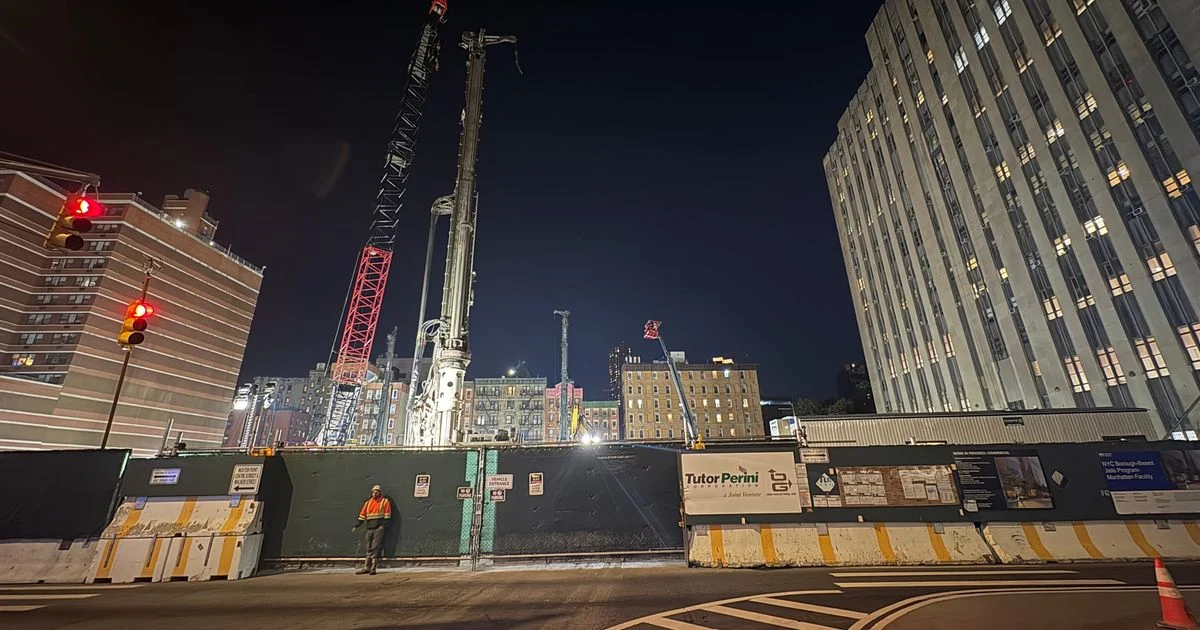
The scene on the corner of White and Centre Streets has become a nightly spectacle of urban disruption. Giant drill rigs bore into the earth, emitting a rhythmic, bone-rattling rat-rat-rat that echoes off the historic tenement buildings and modern glass towers alike.
For local residents, the noise is more than just a nuisance; it is an encroachment on their basic quality of life. Alexis, who resides in a rental building on Baxter Street, describes the experience not just as a sound issue, but a physical one. "It’s terrible," she says. "The ground shakes. We feel the trembling even if we don’t hear it."
This sentiment is shared across the neighborhood. Documentarians, bargoers, and long-term residents are documenting a landscape illuminated by harsh floodlights, where heavy machinery operates deep into the night. For those living in the shadow of the site, the nights have become a gauntlet of mechanical clamor and structural vibration.
A Chronology of Contention
The roots of this legal battle trace back to the city’s ambitious, albeit troubled, plan to shutter the notorious Rikers Island facility and replace it with four modern, borough-based jails. The initiative was designed to address the humanitarian crisis at Rikers, where endemic violence and systemic neglect have plagued the facility for decades.
However, the timeline for this transition has consistently slipped. Originally mandated to be completed by 2027, the project is now significantly behind schedule. The Manhattan jail, currently projected to be the final of the four to open, is not slated for completion until 2032.
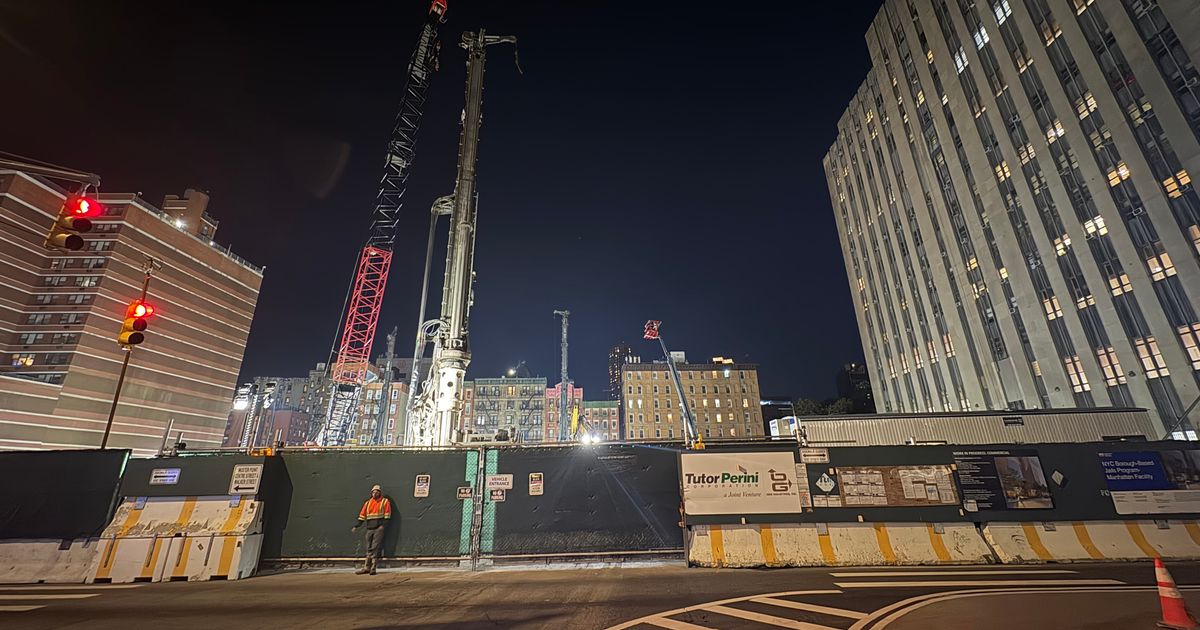
To bridge this five-year gap and satisfy a self-imposed, aggressive completion target, the city’s design-build team—led by Tutor Perini and O&G Industries—has implemented an intense construction schedule. Earlier this month, the city published an advisory indicating that work would officially span from 6 a.m. through midnight on weekdays, with additional deliveries occurring as early as 4 a.m. and Saturday work becoming the norm.
For the neighborhood, this shift from a standard work week to an around-the-clock operation represents a betrayal of community trust. Past attempts to block the project in court have largely failed, but this new filing pivots specifically on the illegality of the timing of the work, rather than the existence of the jail itself.
Supporting Data: The Human and Economic Toll
The lawsuit highlights a litany of "horror stories" from those living in the immediate vicinity of the construction site. The impact is felt most acutely by the elderly and the vulnerable.
Jon Alpert, a 77-year-old documentarian and resident of 87 Lafayette Street, provides a harrowing look at the cost of this schedule. Recovering from treatment for metastatic prostate cancer, Alpert requires consistent rest—a luxury he says has been stolen from him. "The only time that I am now able to sleep with no noise or disruption is for the four hours from midnight to 4 a.m.," he stated in an affidavit. "It is torture." His nonprofit media-arts center, DCTV, housed in the same building, has effectively seen its evening programming—including audio recording and classes—rendered impossible by the constant racket.
Similar accounts emerge from other residents. Betty Lee, also 77, finds herself trapped in her apartment, unable to open windows due to the noise, while forced to live in "daylight conditions" at night due to the high-intensity floodlights required for the evening shifts. Ping Ai Mei, an 88-year-old resident of the nearby Chung Pak senior housing facility, has already been forced to move units due to the dust and health issues exacerbated by the demolition and drilling phases.
The lawsuit posits that the city is prioritizing an "arbitrary" 2032 deadline over the health and safety of thousands of New Yorkers. While the city claims that a traditional, daytime-only schedule would push the completion date to 2034 and inflate the project’s $3.9 billion budget by an additional $340 million, the plaintiffs argue that these financial and temporal constraints do not grant the city license to degrade the local environment to such an extreme degree.
The Legal Argument: A Question of Compliance
At the heart of the litigation is the claim that the city is acting in violation of both state environmental law and municipal code. Under existing regulations, extended after-hours work is typically reserved for projects that directly address immediate public health and safety concerns.
The plaintiffs argue that the construction of a new jail does not meet this specific legal threshold for after-hours activity. Furthermore, they allege that the current, accelerated pace of construction represents an intensity level more than double what was outlined in the initial environmental impact study. By failing to conduct a supplemental environmental review that accounts for the 24/7 nature of the current operations, the city has allegedly bypassed necessary oversight, leaving the neighborhood to suffer the consequences of an unvetted plan.

Official Responses and the "Moral Imperative"
The city’s stance remains one of firm, if somewhat detached, resolve. Officials argue that the closure of Rikers Island is a "moral imperative." Dana Kaplan, the administration’s "Close Rikers" czar, has emphasized that the city must move as fast as possible to provide humane conditions for those in custody and to alleviate the immense strain on Department of Correction staff.
"Beginning the after-hours work allows us to be on the fastest timeline possible towards completion," Kaplan stated in a recent interview.
Sam Raskin, a spokesperson for the Mayor, confirmed that the city is reviewing the lawsuit’s claims but reiterated the administration’s "commitment to meeting our moral and legal obligations" to close Rikers.
However, even those on the ground—those directly tasked with managing the site—express a weary acknowledgment of the situation. One construction worker, tasked with monitoring noise levels, conceded to reporters, "It’s not going to be great. Especially if you’re trying to sleep at these hours."
Implications for the Future of NYC Development
The lawsuit represents a growing tension in New York City: the friction between the city’s urgent need to modernize its outdated infrastructure and the rights of the communities that surround these massive projects.
If the court rules in favor of the residents, the city may be forced to scale back the construction hours, which would inevitably trigger the delays and cost overruns the administration fears. If the court sides with the city, it will set a significant precedent for how much leeway public agencies have when balancing the "greater good" of criminal justice reform against the day-to-day welfare of residents.
For now, the people of Chinatown remain in a state of suspended animation, waiting for a ruling while the drills continue to turn. As Vic Lee, co-founder of the nonprofit Welcome to Chinatown, asks, "At what cost does this come?"
As the legal battle unfolds, the residents of White and Centre Streets are not just fighting for a quiet night’s sleep; they are fighting for the right to remain in a city that often feels as though it is being built—and rebuilt—entirely at their expense. The outcome of this case will likely echo far beyond the borders of Chinatown, shaping the dialogue on urban development, municipal accountability, and the limits of state power for years to come.
