

By Nicholas Maronese
News and Features Editor
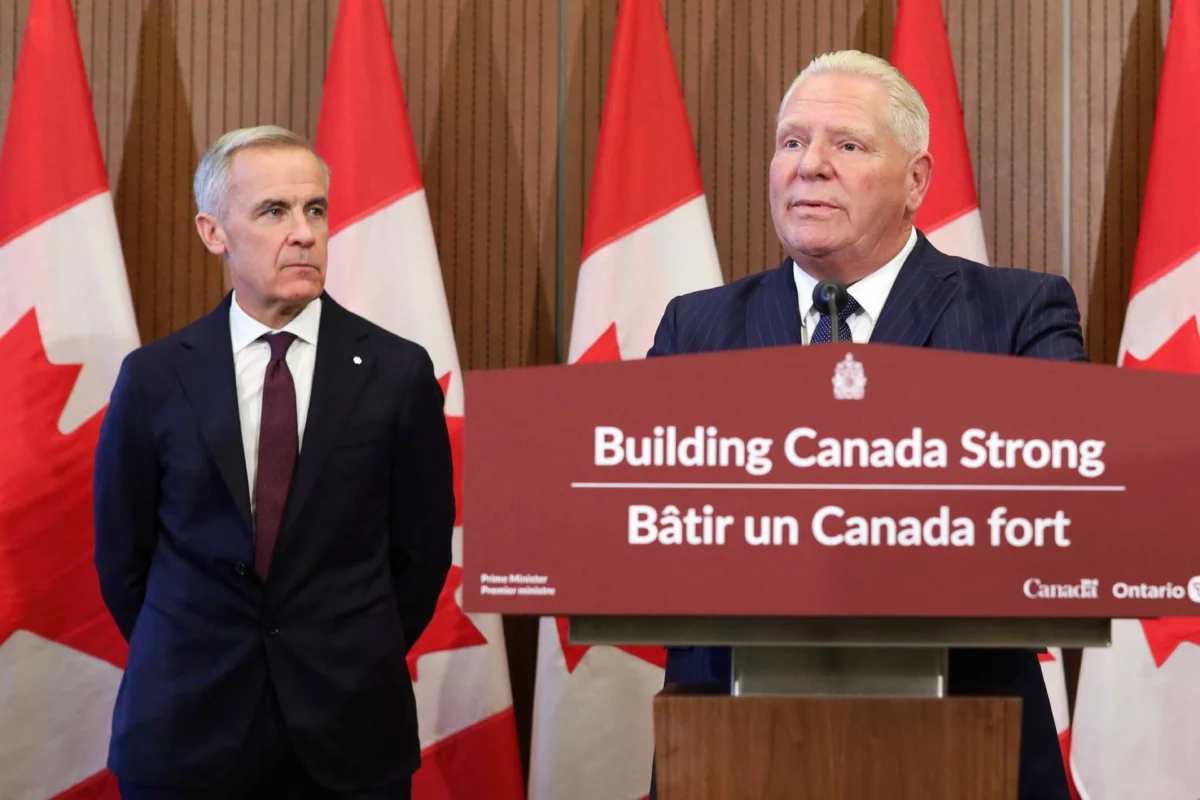
In a decisive move to shield the Canadian automotive sector from the escalating pressures of international trade protectionism, Prime Minister Mark Carney and Ontario Premier Doug Ford announced a landmark $2.5-billion joint investment on October 21, 2026. This capital injection, designed to stabilize the industry, represents a critical pivot in Ottawa’s economic policy, aiming to preserve thousands of manufacturing jobs while insulating the domestic supply chain from the volatile cross-border tariff landscape.
The funding is part of a broader $8.7-billion economic stimulus package, which also targets the steel and mining sectors—industries that serve as the bedrock of Canada’s automotive ecosystem. By combining federal capital with provincial support, the government hopes to maintain Ontario’s position as a global hub for electric vehicle (EV) production and advanced manufacturing.
The Core Facts: A Strategic Financial Injection
The $2.5-billion automotive-specific allocation is structured as a two-year recovery and growth plan. The federal government will provide $1.5 billion in direct capital support, while the Ontario provincial government will contribute $1 billion.
According to officials, the primary objective of this investment is to facilitate "large-scale automotive capital projects." These include the modernization of existing assembly plants, the expansion of battery-cell manufacturing facilities, and the development of specialized infrastructure required to transition internal combustion engine (ICE) production lines to electric platforms.
To oversee the deployment of these funds, the governments have established the "Canada-Ontario Automotive Task Force." This body is charged with ensuring that the capital is directed toward projects that not only secure short-term stability for workers but also bolster long-term international competitiveness.
Chronology of the Conflict: The Road to October 21
The necessity for this rescue package stems from a months-long deterioration in North American trade relations. The timeline leading to the October announcement reflects the fragility of the integrated automotive supply chain:
- Early 2026: Initial signs of trade friction emerge as protectionist rhetoric in Washington intensifies.
- Spring 2026: The implementation of U.S. tariffs on Canadian-made vehicles triggers a series of retaliatory measures from the Canadian government, targeting U.S.-built imports.
- Summer 2026: Automotive manufacturers report significant declines in cross-border trade volume. The uncertainty begins to stifle investment, with several major automakers pausing capital expenditures in Ontario.
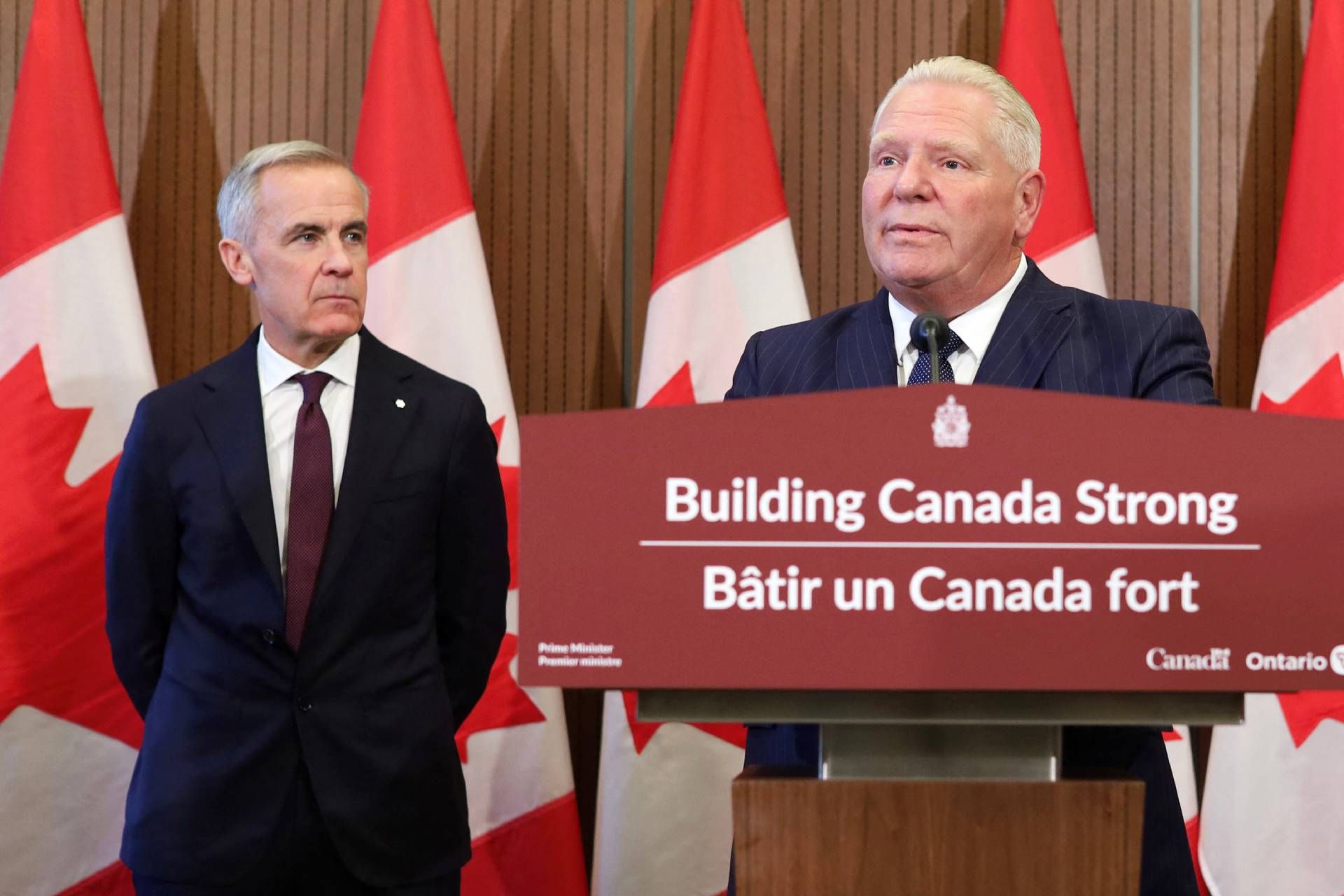
- October 21, 2026: Prime Minister Carney and Premier Ford hold a joint press conference on Parliament Hill. Following high-level discussions with U.S. counterparts earlier that morning, the leaders unveil the $2.5-billion package and a relaxation of regulatory timelines.
Easing the Burden: Emissions Standards and Regulatory Relief
Perhaps as significant as the direct financial investment is the government’s decision to pause the tightening of federal vehicle emissions standards. Prime Minister Carney confirmed that current standards—which cap light-duty vehicle greenhouse gas emissions at 172 grams per mile—will remain unchanged through to the end of 2029.
Industry analysts suggest this is a "lifeline" for automakers struggling with the dual pressures of market volatility and the massive capital expenditures required for electrification. By delaying the next phase of regulatory tightening, the government provides manufacturers with a "grace period" to retool their operations without the immediate threat of non-compliance penalties.
The government emphasized that this is not a retreat from environmental targets, but rather a strategic calibration. The stringent emissions trajectory will resume in the 2030 model year, explicitly designed to align with Canada’s mandate of 75% EV car sales by 2035.
Official Responses: Navigating the Tariff Reality
The tone of the press conference on Parliament Hill was one of cautious urgency. Prime Minister Carney was candid regarding the economic damage caused by the current tariff environment.
"Nobody wins from this," Carney remarked, directly addressing the standoff with the U.S. administration. "Tariffs make both our industries weaker and reduce choice for our families. That’s why Canada remains ready to negotiate a fair deal when the U.S. is ready to sit down in good faith."
Carney revealed that he had spent significant time on the phone with U.S. President Donald Trump on the morning of the announcement. While the nature of the negotiations remains largely confidential, the PM’s willingness to engage suggests a diplomatic track is being pursued concurrently with the domestic economic defense strategy.
Premier Doug Ford, often a vocal critic of federal policy, struck a tone of collaborative alignment. "This is a transformative action plan," Ford stated. "It is the next step in our ongoing partnership to provide tariff-impacted workers the certainty and stability they deserve." For the Premier, the deal is a victory for Ontario’s manufacturing heartland, which has borne the brunt of the trade disputes.
The Implications: What This Means for the Future
The implications of this $2.5-billion package extend far beyond the immediate financial relief. There are several key areas where this investment will define the landscape of the Canadian automotive industry for years to come:
1. Supply Chain Resilience
By targeting steel and mining in the larger $8.7-billion package, the government is signaling that it understands the importance of "upstream" security. Canada’s ability to refine the critical minerals necessary for EV batteries is essential to maintaining its competitive advantage. This investment ensures that Ontario remains an attractive jurisdiction for global battery manufacturers, who are increasingly looking for stable, reliable, and sustainable supply chains.
2. The EV Transition
The delay in emissions standards gives automakers a reprieve, but the pressure to reach the 2035 target remains. The funding will likely be funneled into projects that accelerate the "electrification of the workforce"—training technicians and engineers to handle the high-voltage systems and software-defined vehicles of the future. The government is essentially betting that if they provide the capital today, the industry will have the capacity to meet the aggressive environmental targets of the next decade.
3. Labour Stability
For the thousands of workers currently worried about plant closures or reduced shifts due to trade-induced production slowdowns, this funding offers a measure of security. By ensuring that "large-scale automotive capital projects" can proceed despite the current economic headwinds, the government is attempting to prevent the loss of specialized talent to foreign markets.
4. Trade Leverage
Finally, this investment serves as a signal to the United States. By demonstrating a willingness to subsidize its own industry, Canada is showing that it will not simply allow its manufacturing sector to be hollowed out by protectionist policies. It is a calculated move to show that Canada is prepared to play the long game, maintaining the viability of its industries until a more favorable trade environment can be established through diplomatic channels.
Conclusion
The October 21 announcement marks a watershed moment in the relationship between the federal government and the Ontario automotive sector. In the face of unprecedented international trade pressure, the decision to pair direct financial support with regulatory flexibility suggests a nuanced and pragmatic approach to governance.
As the Canada-Ontario Automotive Task Force begins its work, the eyes of the international trade community will be on Ottawa and Toronto. Whether this $2.5-billion investment will be enough to shield the industry from the ongoing turmoil remains to be seen. However, for a sector that has faced decades of cyclical change and modern disruption, this latest move is a clear declaration that Canada intends to remain a top-tier global player in the automotive world.
With files from the Canadian Press.
Sign up for our newsletter Blind-Spot Monitor and follow our social channels on X, Tiktok, and LinkedIn to stay up to date on the latest automotive news, reviews, car culture, and vehicle shopping advice.
