

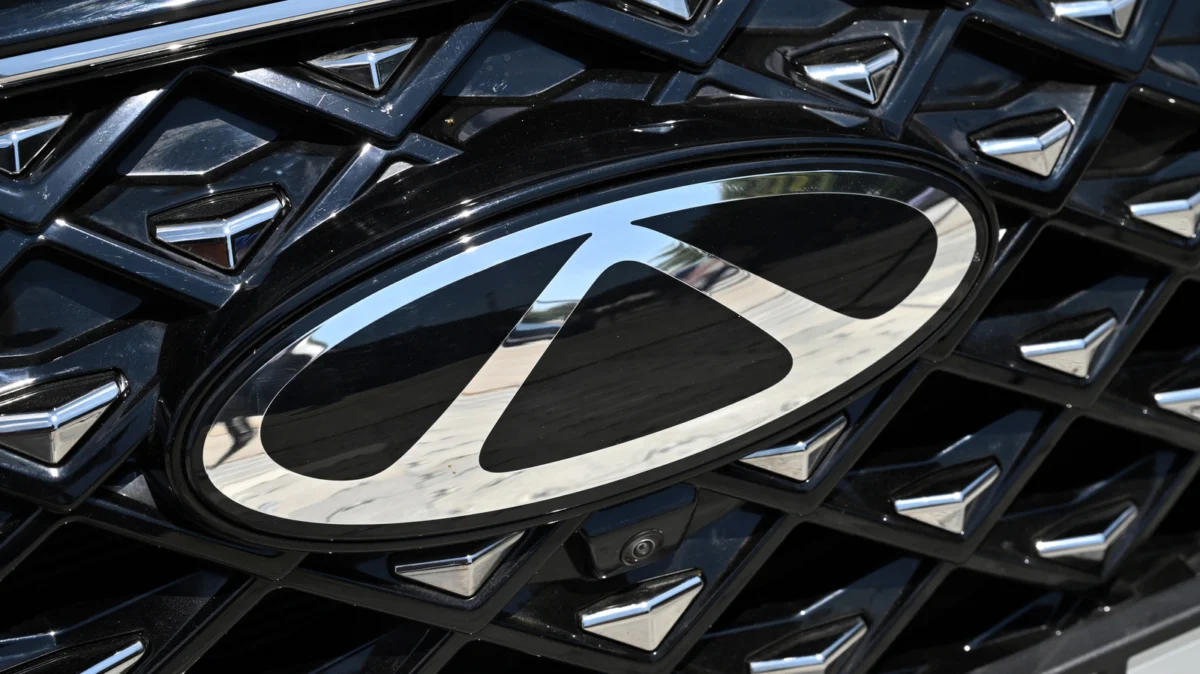
As the global automotive landscape undergoes its most radical transformation since the invention of the assembly line, a new geopolitical and commercial chess match is unfolding. Having already secured a firm foothold in Europe—where Chinese-manufactured vehicles now account for one in every ten new car sales—the industry’s eastern titans are setting their sights on the ultimate prize: the United States.
However, entering the U.S. market is no longer a matter of simple logistics. Between crippling 100% tariffs on Chinese imports and stringent federal bans on Chinese-developed vehicle software, the barrier to entry has become an iron curtain. In a surprising strategic pivot, Chery—one of China’s automotive heavyweights—is proposing a radical workaround: partnering with the very American legacy automakers they are currently competing against globally.
The State of Play: Chery’s North American Ambitions
Chery, which operates under its primary brand as well as the Omoda and Jaecoo nameplates, has made its intentions clear. According to Vice President Charlie Zhang, the company is moving forward with an aggressive expansion into Canada, slated for early next year, following a thawing of trade relations under Prime Minister Mark Carney’s administration.
While Canada provides a bridgehead, the United States remains the fortress that refuses to open its gates. Chery’s leadership acknowledges the gravity of the situation. "The U.S., obviously we are trying to look for different options there," Zhang stated in a recent interview with Reuters.
The primary obstacles are twofold: the prohibitive 100% tariff on Chinese vehicles and the federal mandate effectively banning Chinese software in connected vehicles—a regulation that forced Geely-owned Polestar to retreat from the U.S. market earlier this year. Zhang suggests that Chery is prepared to circumvent these hurdles through "China-free" technical solutions, essentially stripping their U.S.-bound vehicles of the hardware and software components that trigger national security concerns.
A Chronology of the Chinese Automotive Ascent
To understand why Detroit is nervous, one must look at the meteoric rise of Chinese manufacturers over the past five years.
- 2023-2024: The European Expansion: Chinese automakers began an aggressive push into the European Union, utilizing superior EV battery supply chains to undercut European prices.
- March 2026: The "Temu Range Rover" Phenomenon: The Jaecoo 7, a vehicle previously mocked by the British press for its aesthetic similarities to the Range Rover Velar, made history by becoming the first Chinese model to top U.K. monthly sales charts. This shattered the perception that Chinese cars were merely "budget" alternatives.
- January 2026: The Canadian Pivot: Following trade negotiations, the Canadian government signaled a willingness to accept Chinese investment and vehicle imports, providing a North American base of operations for brands like Chery.
- June 2026: The Software Clampdown: The U.S. government enacted strict prohibitions on Chinese automotive software, leading to the forced exit of brands like Polestar and setting a new, difficult standard for any foreign entrant.
- October 2026: The Partnership Proposal: Chery officially announces it is open to joint ventures with U.S. domestic automakers to find a way around the current trade impasse.
The Stellantis Blueprint: A Precedent for Collaboration
While Detroit’s "Big Three" (Ford, GM, and Stellantis) have historically viewed Chinese entry with hostility, the industry is already seeing a shift in philosophy. Stellantis, the parent company of Jeep, Ram, and Dodge, provided the industry’s most notable case study three years ago.
Instead of fighting the tide, Stellantis acquired a 21% stake in China’s Leapmotor. This joint venture, controlled 51% by Stellantis, allows the European-American conglomerate to sell and manufacture Leapmotor-designed vehicles in Europe. This "if you can’t beat them, join them" strategy has allowed Stellantis to capture a slice of the low-cost EV market without having to spend billions on redundant R&D.
For Chery, the Stellantis-Leapmotor deal is the gold standard. A similar arrangement in the U.S. would involve a domestic manufacturer building Chery-designed vehicles in American plants. This would fulfill local content requirements, bypass import tariffs, and—crucially—allow the American partner to provide a "vetted" software stack that satisfies U.S. regulators.
The Detroit Dilemma: Friend or Foe?
The internal debate within the halls of Detroit is intense. Ford CEO Jim Farley has been candid about the inevitability of the Chinese challenge. Speaking at a recent industry summit, Farley warned that the U.S. border is effectively porous in the long term, predicting that Chinese brands will secure a foothold in the U.S. market within the next 5 to 10 years, regardless of current policy.
The Arguments Against Partnership
- Labor Relations: The United Auto Workers (UAW) union remains a formidable political force. Partnering with a Chinese brand to build cars in the U.S. would be viewed as an existential threat to domestic jobs, despite the potential for new factory openings.
- Brand Dilution: Legacy brands like Ford or Chevrolet risk diluting their heritage by "rebadging" Chinese technology.
- Political Backlash: With trade protectionism at an all-time high, any U.S. automaker that opens the door to Chinese technology could face severe political fallout in Washington.
The Arguments For Partnership
- The "Honda" Parallel: In the 1980s, the U.S. auto industry fought tooth and nail against the influx of Japanese manufacturers. Today, Toyota, Honda, and Nissan are among the largest employers in the American South. If Detroit partners with Chery, they could dictate the terms of the relationship rather than being blindsided by a direct, independent entry.
- Technological Efficiency: Chinese firms currently lead in battery cost-efficiency and software integration. Access to this IP could save a U.S. manufacturer years of research and billions in capital expenditure.
- Market Preemption: If Ford or GM does not partner with a player like Chery, a competitor might. In a shrinking global margin environment, losing out on a high-growth partner could be a strategic failure.
Implications: The Future of the American Road
The potential entry of Chery—or any Chinese major—into the U.S. via partnership would fundamentally alter the American automotive market. Consumers, who have been struggling with the high prices of electric vehicles, would likely welcome lower-cost options. However, the regulatory environment remains the ultimate arbiter.
For the U.S. government, the challenge is to balance national security with the economic necessity of keeping the domestic auto industry competitive. If a U.S. automaker can build a "China-free" vehicle using Chery’s manufacturing expertise, it might be the only way for the American auto industry to avoid a slow decline.
As we look toward the 2030 horizon, the question is no longer if Chinese automotive DNA will arrive in the U.S., but how. Will it arrive as a hostile competitor forcing a brutal price war, or as a strategic partner tucked away behind a Detroit-badged grille? For the executives in Michigan, the decision is no longer just about engineering and sales—it is about the survival of the American auto industry in a globalized, yet increasingly fractured, economy.
