

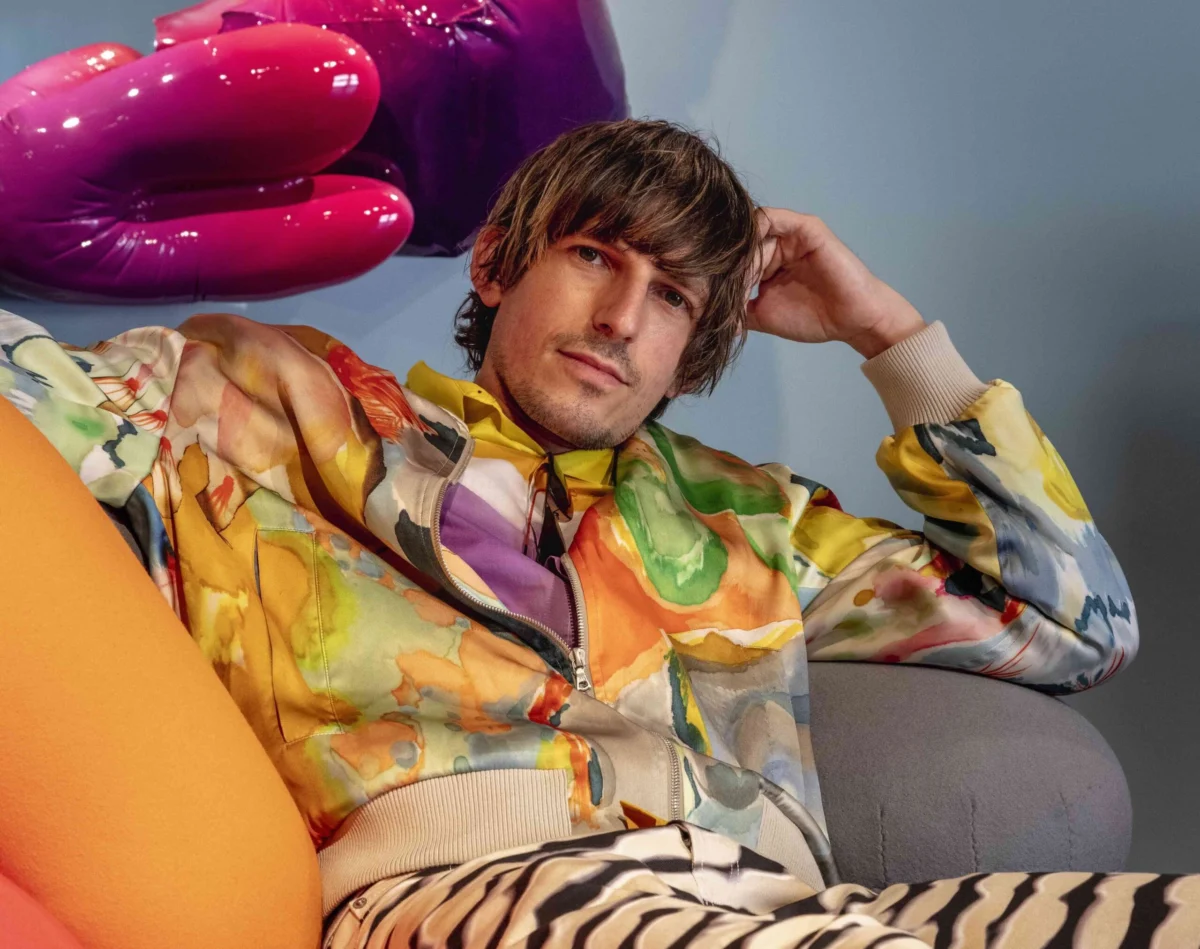
In the rarified world of contemporary collectible design, few figures have managed to bridge the gap between high-concept fine art and functional utility as fluidly as Misha Kahn. A visionary whose work often feels like it has been pulled from a fever dream or an alien landscape, Kahn has spent the last decade disrupting the stagnant norms of furniture design. Now, with a major solo exhibition at New York City’s prestigious Friedman Benda gallery and a recent surprise cameo in the cinematic landscape of The Devil Wears Prada 2, Kahn has solidified his position as one of the most defining creative voices of his generation.
The Intersection of Film and Form: A Surreal Moment
For many artists, the ultimate validation comes from the quiet approval of critics; for Misha Kahn, it came in the form of a Hollywood set. When the artist recently spotted his signature morphic furniture and lighting designs gracing the frames of the highly anticipated The Devil Wears Prada 2, the experience was, in his own words, “wild.”
“I feel like a lot of objects I make are unplaceable,” Kahn noted in a recent interview. “They occupy a space between reality and abstraction. To see them integrated into the narrative of a major motion picture was quite exciting. It validated the idea that these pieces aren’t just gallery artifacts—they have a presence that can command a room, even a room on a movie set.”
A Chronology of Creative Evolution
Kahn’s ascent has been meteoric, marked by a refusal to adhere to traditional industrial design constraints. His journey from a promising talent to a global design icon is rooted in a unique ability to synthesize high-tech digital fabrication with primal, tactile materials.
The Early Breakthrough (2014)
Kahn first garnered international attention in his mid-20s, when his work was selected for the Museum of Arts and Design’s (MAD) prestigious Biennial. His early aesthetic—often characterized by oozing, paste-like textures and gel-inspired silhouettes—immediately challenged the rigid, minimalist trends that dominated the early 2010s.
The Morphologica Period
Following his MAD debut, Kahn began a high-profile collaboration with the Italian design house Meritalia. Tasked with creating the Morphologica collection—a series of sofas and armchairs—Kahn stepped into a legacy previously occupied by legends like Gaetano Pesce and Mario Bellini. By injecting his signature, fluid, and often chaotic aesthetic into the disciplined world of Italian manufacturing, he bridged the gap between avant-garde expression and commercial furniture production.

Current Institutional Presence
Today, Kahn’s influence is truly global. His works are not merely decorative; they are cultural touchstones. This is best evidenced by his current exhibition at the Fondazione Dries Van Noten in Venice, where four of his seminal pieces are on display. This placement alongside the fashion-forward, textile-rich archives of Van Noten speaks to the inherent crossover appeal of Kahn’s work: it functions as both furniture and high-fashion sculpture.
"All Intensive Purposes": A New Chapter at Friedman Benda
On October 29, the New York City-based gallery Friedman Benda will host a milestone exhibition titled All Intensive Purposes. This show is designed to be more than just a collection of objects; it is a manifesto on the nature of structural integrity and creative struggle.
The exhibition features a radical departure in aesthetic tone. Where Kahn’s past works often leaned into the whimsical and the amorphous, this new body of work is underscored by a rigorous, almost architectural commitment to form. Utilizing a diverse material palette—ranging from raw paper and cast metal to exquisite onyx, marble, and Alpi plywood—Kahn is stripping back the "gel" to explore the skeleton of the object.
Technical Rigor and Materiality
The objects in All Intensive Purposes are a testament to the intensity of "getting there"—the creative process of transformation.
- The Onyx Tables: Kahn has pushed the medium of stone to its breaking point, forcing heavy, monolithic onyx to mimic the crude, fragile construction of temporary structures.
- The Metal Dining Table: A centerpiece of the show, this piece features a sprawling cast-metal frame accented by a sculpted, discarded "torn napkin" and a bite of food, complete with toothpicks. It is a hyper-realistic, yet surreal, capture of a fleeting moment.
- Alpi Plywood Sculptures: These pieces utilize multilaminar wood components, which Kahn has shaped into organic, tree-like forms. They represent a dialogue between the forest and the factory, between nature and the digital precision of modern carving.
The Philosophy of the Artist: In His Own Words
In a conversation with WWD, Kahn offered a glimpse into the headspace that birthed these new works. “Life is serious and funny at the same time,” he mused. This duality is the cornerstone of his practice.
Kahn’s process is a blend of the ancient and the futuristic. He employs manual hand-carving techniques alongside complex digital modeling software to ensure his pieces possess both structural integrity and a "soulful" surface finish. "I feel like we went so hard on this," he said, referring to the development of the new collection. "Everything has both the ingenuity and the structure—and the relationship with what’s happening on the surface is so intense. You can see the effort, the history of the making, in every ridge and cut."

Supporting Data: Why Kahn Matters Now
The significance of Misha Kahn’s work extends beyond the aesthetics of a gallery space. He represents a generational shift in how we value objects.
- Material Versatility: By working with everything from discarded fragments to precious marble, Kahn disrupts the hierarchy of materials. He argues that the value of an object lies in the narrative it tells, not the cost of the raw material.
- Technological Synthesis: Kahn’s ability to use digital techniques to simulate the "human error" of manual carving is a hallmark of the post-digital design era. He uses technology not to perfect an object, but to expand the vocabulary of what is possible.
- Cross-Disciplinary Reach: His presence in film, museum biennales, and fashion-adjacent foundations indicates that design is no longer siloed. Collectors are increasingly seeking pieces that hold the conceptual weight of fine art while maintaining the physical function of furniture.
Implications for the Future of Design
As All Intensive Purposes opens its doors at 515 West 26th Street, the design world is watching closely. Kahn’s movement toward "serious structure" suggests that the next wave of collectible design may favor a return to the tactile and the heavy, rejecting the light and ephemeral in favor of works that feel permanent and deeply considered.
The exhibition, which runs through December 12, serves as a litmus test for the industry. If Kahn’s career is any indicator, he is not merely following trends; he is setting the trajectory for the next decade of interior architecture. By forcing stone to behave like wood, and metal to capture the fragility of a discarded napkin, Kahn is asking us to reconsider our relationship with the objects that populate our lives.
He invites us to look closer—to see the "cruelty and wonder" of life embedded in the edges of a console or the grain of a table. For Misha Kahn, the object is never just an object. It is a record of human effort, a bridge between the funny and the serious, and a permanent anchor in an ever-shifting world. As the art world descends upon West 26th Street this October, it is clear that Kahn’s "wild" journey is only just beginning to reach its full, intensive purpose.
