

Introduction: A New Chapter in Newark’s Academic Landscape
In the heart of Newark, New Jersey, the summer of 2026 became a transformative period for a group of resilient and ambitious students. The "English Plus" summer program, serving pupils from Central High School and Malcolm Shabazz, concluded with a vibrant showcase of innovation, language acquisition, and community engagement.
For many of these students, the journey to the United States has been marked by significant transition, with a large percentage having resided in the country for fewer than two years. Far from being a traditional classroom-based summer school, the English Plus initiative served as a bridge between their past experiences and their future potential. By integrating rigorous language instruction with entrepreneurial training, the program challenged students to see themselves not merely as newcomers, but as active, contributing members of the Newark community.
The Core Objective: Language Through Innovation
The English Plus High School Curriculum is designed on the principle that language is best acquired when it is applied to real-world, high-stakes tasks. Rather than relying on rote memorization, the program tasked students with a comprehensive project: the conceptualization and development of a business model.
This process required students to navigate complex academic terrain. They were challenged to research market needs, develop a service or product, and articulate a business plan—all while simultaneously mastering the nuance, vocabulary, and grammar of the English language. This dual-track approach ensured that students were not only improving their communication skills but also developing the "soft skills" necessary for professional success, such as critical thinking, public speaking, and collaborative problem-solving.
Chronology of the Summer Experience
The success of the 2026 program was the result of a carefully structured multi-week schedule that moved from foundational learning to public presentation.
Weeks 1–2: Linguistic Foundation and Ideation
The program began with a focus on building a supportive cohort. Students from Central High School and Malcolm Shabazz engaged in team-building exercises that prioritized English-language immersion. During these early days, the curriculum focused on "Design Thinking." Students were asked to identify problems within their own neighborhoods or personal lives. This phase was crucial for fostering an environment where students felt comfortable taking risks with a language they were still mastering.
Weeks 3–4: Market Research and Development
As the students solidified their project ideas, the curriculum shifted toward the mechanics of business. Instructors facilitated workshops on basic economics, consumer needs, and the importance of community impact. Students conducted interviews and gathered data to see if their business ideas held water. During this phase, the classroom transformed into a laboratory of ideas. Students learned how to draft business mission statements, create budgets, and outline marketing strategies.
Week 5: The Culmination – The End-of-Program Showcase
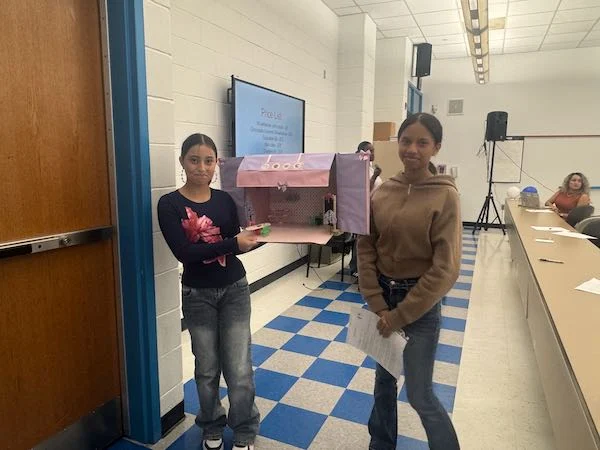
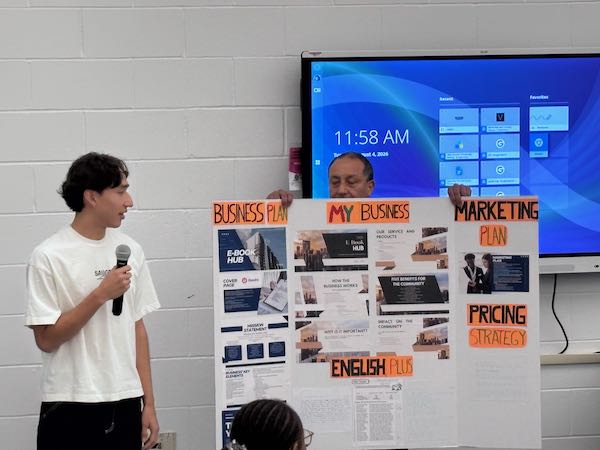
The program reached its zenith with the end-of-program event, where students stood before peers, educators, and community members to present their work. The atmosphere was one of celebration and achievement. Projects ranged from community service initiatives aimed at food security to creative digital services designed to support local small businesses. The showcase was the final examination of their linguistic progress, proving that when students are given the tools to create, the language barrier becomes a hurdle to be overcome rather than a wall to block their path.
Supporting Data: The Impact of Experiential Learning
While the qualitative success of the program is visible in the confidence and pride exhibited by the students during their presentations, the underlying pedagogical framework is supported by modern educational research.
Studies into English Language Learner (ELL) education consistently show that "content-based instruction"—the practice of teaching a language through meaningful subjects—yields higher engagement rates than traditional language-only instruction. By focusing on entrepreneurship, the English Plus curriculum taps into the intrinsic motivation of the students.
- Student Demographic: A majority of the cohort consists of students with less than 24 months of residency in the U.S.
- Skill Acquisition: The curriculum covers four key pillars: Academic English, Entrepreneurial Literacy, Financial Planning, and Civic Engagement.
- Retention and Engagement: Programs that incorporate social-emotional learning and community-focused projects have been shown to increase student attendance rates by up to 30% compared to traditional summer school models.
The Philosophy of Community Impact
A unique component of the English Plus curriculum is the requirement that each business idea must include a plan for giving back to the community. The educators behind the program recognized that these students, despite being newcomers, possess a unique perspective on the needs of their neighborhoods.
By forcing students to consider their impact on others, the program achieves two objectives:
- Civic Integration: It fosters a sense of belonging. Students stop viewing themselves as "outsiders" and start viewing themselves as active agents of change within Newark.
- Professional Responsibility: It teaches the fundamental principle of modern business—that profitability and social responsibility are not mutually exclusive.
During the final presentations, students spoke passionately about their desire to help their peers, assist the elderly, or support local environmental initiatives. This focus on "giving back" transformed the classroom into a hub of civic discourse.
Official Responses and Educator Insights
The sentiment among the faculty and administration involved in the English Plus initiative is one of profound optimism.
"What we witnessed this summer was nothing short of extraordinary," said one lead instructor. "These students came to us with a variety of backgrounds and a range of English proficiency levels. By the end of the program, they were not just communicating in English; they were debating complex business strategies and defending their ideas with confidence. The transition from ‘learning English’ to ‘using English to change the world’ is the ultimate goal."
Administrators from both Central High School and Malcolm Shabazz have noted that the success of this program provides a blueprint for future curriculum development. There is a growing consensus that the traditional, isolated model of teaching English as a Second Language is becoming obsolete. The "Plus" in English Plus represents the "value-add" of real-world application, and the administration is currently reviewing how these methodologies can be integrated into the standard academic year.
Implications for the Future of Newark Education
The English Plus program is more than a summer activity; it is a signal of the changing priorities in urban education. As Newark continues to welcome diverse populations, the education system must be agile enough to provide these students with the tools to succeed in a competitive, globalized economy.
1. The Need for Integrated Curricula
The success of this program suggests that schools should move away from siloing academic subjects. When language learning is integrated with STEM, business, or the arts, students develop a more holistic skill set that prepares them for higher education and the modern workforce.
2. Preparing for the Modern Workforce
Entrepreneurship is a critical skill for the 21st century. By teaching students to develop their own projects, the Newark Public Schools are encouraging an entrepreneurial mindset. Whether these students go on to launch their own companies or enter the corporate world, the ability to identify a problem, research a solution, and present a plan is invaluable.
3. Strengthening the Social Fabric
When students from diverse backgrounds engage in community-focused projects, they build connections that strengthen the city as a whole. The English Plus program demonstrates that the newcomers of today are the innovators and community leaders of tomorrow. By providing them with the platform to be heard and the training to lead, the school district is making a long-term investment in the social and economic health of Newark.
Conclusion: A Milestone of Achievement
The photos from the end-of-program event tell a story that goes beyond the classroom walls. They capture the smiles of students who have navigated the challenges of relocation and language acquisition with grace and grit. They capture the pride of families who see their children excelling in a new environment.
As the summer of 2026 comes to a close, the participants of the English Plus program return to their regular academic schedules with more than just improved vocabulary. They return with a sense of purpose. They have learned that their voices matter, their ideas have value, and that they possess the tools to shape their own futures.
The Newark Public Schools, through the English Plus initiative, have reaffirmed their commitment to equity and excellence. By fostering an environment where innovation is celebrated and every student is given the opportunity to shine, the district is setting a standard for how schools can support, inspire, and empower the next generation of global citizens. The journey for these students is far from over, but with the foundation laid this summer, the path ahead looks brighter than ever.
