

In the rugged, mist-shrouded terrain of the Sierra Norte de Puebla, Mexico, archaeologists have unearthed a testament to the sophisticated intellectual life of pre-Hispanic civilizations. A team from the National Institute of Anthropology and History (INAH) recently announced the identification of a monumental structure at the Teteles de Ávila Castillo archaeological site, which functioned as a complex solar observatory approximately 2,500 years ago. This discovery not only provides a new window into the lives of the Middle Preclassic peoples but also recalibrates our understanding of how early Mesoamerican societies integrated astronomical precision into their civic and religious architecture.
The Discovery: A Calendar Carved in Stone
The structure, which has been the subject of intensive excavation and analysis by INAH researchers since 2015, represents a significant leap in the study of early Mesoamerican urban planning. Unlike structures that served purely ceremonial or defensive purposes, this building was engineered as a functional instrument.
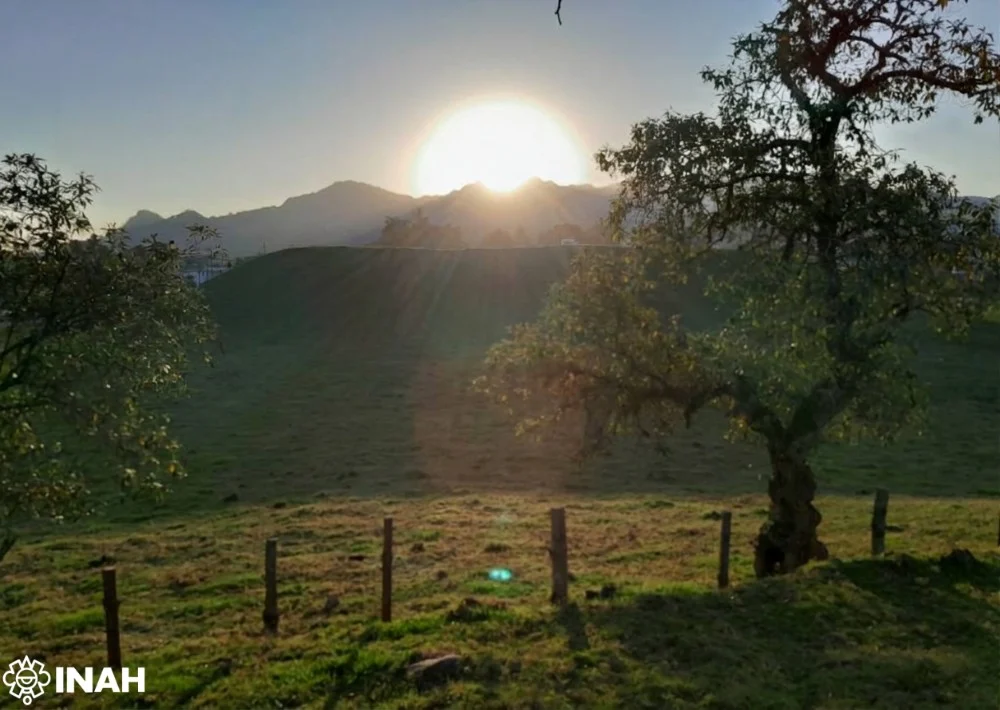
According to Alberto Diez Barroso Repizo, the director of the archaeological project at Teteles, the eastern base of the complex acts as a precise solar calendar. By meticulously tracking the trajectory of the sun, the inhabitants of this ancient site were able to align the structure with the solar events critical to their survival and governance. Observations have confirmed that during the equinoxes and solstices, the rising sun aligns perfectly with the front of the structure, serving as a beacon that signaled the commencement of vital agricultural and ritual cycles.
This architectural ingenuity allowed the ancient inhabitants to track the beginning of the Mesoamerican calendar in February—a period tied to the preparation of land—and the harvest cycles in October. The alignment of the stonework with celestial movements suggests that the architects possessed a highly developed mastery of geometry and observational science, far preceding the more famous astronomical feats of the later Aztec or Maya civilizations.
Chronology of a Lost Civilization
To understand the magnitude of this discovery, one must place Teteles de Ávila Castillo within the broader timeline of Mesoamerican development. The site reached its zenith during the Middle Preclassic period, roughly between 900 BC and 600 BC. During these three centuries, the site served as a vital hub of commerce and spiritual life in the Sierra Norte region.
The researchers believe that the settlement began a gradual decline around AD 100. This shift is widely attributed to the regional ascendancy of the massive city-state of Cantona. As Cantona expanded its political and economic hegemony, the smaller satellite settlements in the Sierra Norte saw their influence wane.
Crucially, the archaeological record at Teteles provides evidence of its extensive trade networks. The discovery of green obsidian beads is particularly revealing. This specific material was sourced from quarries controlled by the great metropolis of Teotihuacan. Its presence at Teteles confirms that the site was not an isolated mountain village, but rather a significant node in a vast economic web that connected the highlands of Mexico to the wider Mesoamerican world. The flow of such high-value luxury goods suggests that the elite at Teteles maintained long-distance relationships, perhaps exchanging agricultural surplus or local knowledge for the prized obsidian of the central highlands.
Supporting Data: Decoding the Architectural Blueprint
The sophistication of the site’s design is not merely a matter of conjecture; it is rooted in the physical reality of the site’s orientation. The INAH statement highlights that the structure’s placement was no coincidence. By anchoring the physical landscape to the celestial, the architects of Teteles transformed the site into a "living clock."
The reliance on solar observation was a hallmark of Mesoamerican culture, but the precision evidenced at Teteles suggests an earlier development of these techniques than previously recorded in this region. The interplay between the structure’s eastern base and the horizon demonstrates a deep-seated cultural obsession with timekeeping.
For the agrarian societies of the Preclassic period, the ability to predict the seasons was a matter of life and death. The observatory provided a reliable mechanism to govern the planting of maize, beans, and squash. The alignment with the February date, in particular, indicates a sophisticated understanding of the solar cycle’s relation to the growing season, effectively allowing the community to coordinate labor and ritual to maximize yields.
Official Responses and Cultural Significance
The discovery has generated significant excitement within the international archaeological community and the Mexican government. Claudia Curiel de Icaza, Mexico’s Secretary of Culture, highlighted the profound implications of the site during a recent press briefing.
"The architecture of Teteles de Ávila Castillo tells us about societies that developed astronomical knowledge and incorporated it into the organization of their ceremonial spaces," Curiel de Icaza noted. She emphasized that the site serves as a vital bridge in the national narrative, illustrating that the intellectual tradition of Mexico is built upon millennia of scientific inquiry.
Alberto Diez Barroso Repizo has been instrumental in advocating for the site’s preservation. He envisions a future where the ruins serve as a hub for both education and tourism. INAH has confirmed plans to open the site to the public, with an ambitious long-term goal of establishing an on-site museum. Such an institution would not only house the artifacts recovered from the excavations—including the green obsidian beads and fragments of domestic pottery—but also provide the public with the tools to understand the astronomical alignments that once defined life at Teteles.
Broader Implications: Reimagining the Preclassic Mindset
The identification of this observatory challenges the traditional view of the Middle Preclassic period as a time of rudimentary development. By proving that the inhabitants of Teteles possessed the capacity for high-level astronomical calculation, the discovery forces a reassessment of how early Mesoamerican societies organized their power structures.
In these societies, knowledge was power. The ability to "predict" the sun’s position and control the calendar likely served to solidify the authority of the ruling class. When the priest-astronomers of Teteles declared the beginning of the planting season based on their alignment, they were effectively setting the rhythm for the entire community. This integration of science and governance underscores the complexity of ancient social structures.
Furthermore, the site’s connection to Teotihuacan through trade routes offers a tantalizing hint at the cultural diffusion that took place across the Mexican plateau. While Teteles eventually faded into the shadows of history—likely eclipsed by the sheer gravity of larger urban centers—its legacy remains etched in the stones that still track the sun.
As INAH continues its work, the scientific community anticipates that further excavation will yield more details about the domestic lives of the people who inhabited this site. The ongoing study of the residential sectors surrounding the observatory may eventually tell us more about the social stratification and daily routines of this ancient community.
Conclusion: Looking Toward the Future
The discovery at Teteles de Ávila Castillo is a reminder that the history of the Americas is still being written. Beneath the dense greenery of the Sierra Norte, centuries of silence are finally being broken by the meticulous work of modern archaeologists.
As the site prepares to open its gates to visitors, it offers a rare opportunity to stand where an ancient people once stood, gazing at the same sun and tracking the same celestial movements that governed their world 2,500 years ago. The observatory at Teteles is more than just a ruin; it is a monument to the human desire to understand the universe, a quest that remains as relevant today as it was in the heart of the Middle Preclassic period. Through the efforts of INAH and the continued study of this remarkable site, the legacy of these ancient celestial architects will continue to shine, illuminating the deep roots of human ingenuity in Mexico.
