

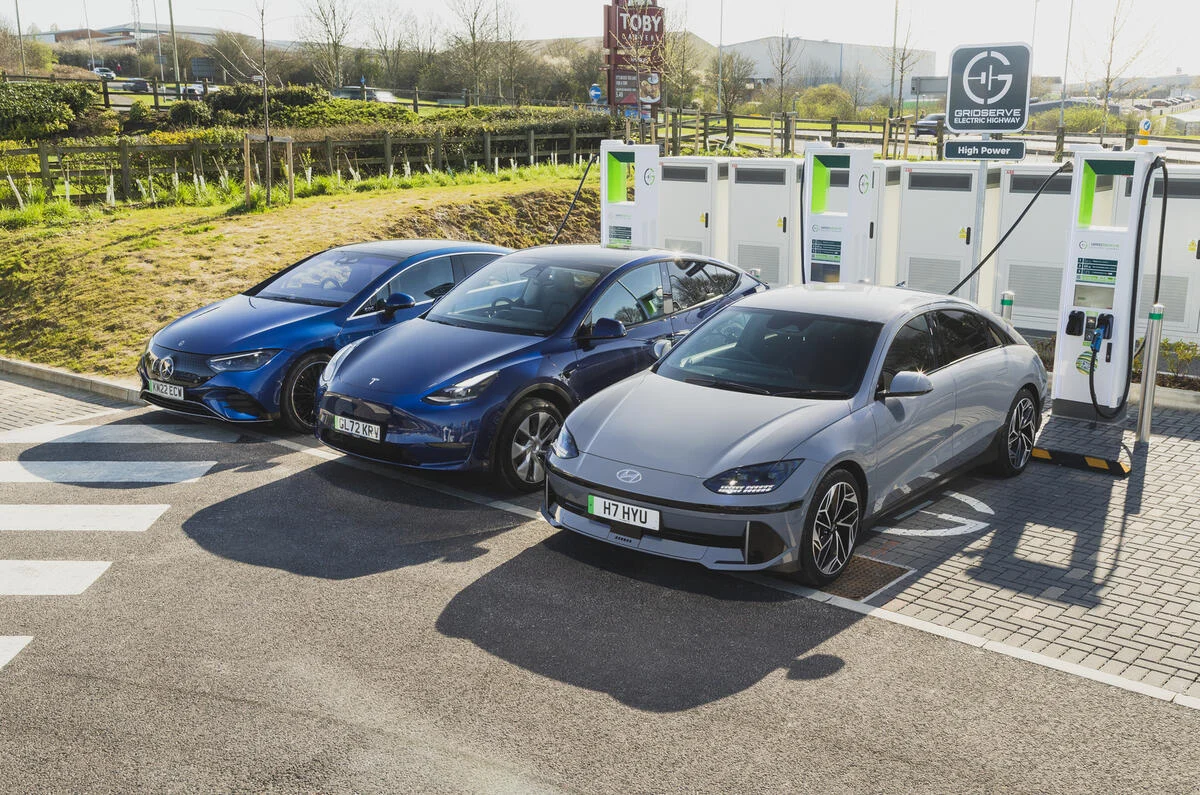
The British automotive industry stands at a crossroads as the government prepares to launch an intensive, six-week review of the Zero-Emission Vehicle (ZEV) mandate. This policy, which currently serves as the backbone of the UK’s transition to electric mobility, is facing unprecedented scrutiny amid concerns that the aggressive trajectory for EV sales targets between 2027 and 2035 is placing the financial viability of legacy manufacturers—and the thousands of jobs they support—at significant risk.
The impending review, the first major industrial policy intervention by the Andy Burnham administration, signals a potential recalibration of the UK’s net-zero roadmap. While the government maintains that all options remain on the table—ranging from minor adjustments to a comprehensive softening of annual quotas—the move acknowledges a growing chasm between legislative ambition and market reality.
The Chronology of a Mandate Under Pressure
To understand the urgency of this review, one must examine the rapid acceleration of the ZEV mandate since its inception in 2024. The policy was designed to enforce a steady, inevitable transition to electric power, but the "step-change" in annual requirements has proven increasingly difficult for manufacturers to navigate.
- 2024 (The Launch): The ZEV mandate officially began, requiring 22% of a manufacturer’s new car sales to be zero-emission.
- 2025 (The Escalation): The quota rose to 28%, testing the initial agility of supply chains and consumer appetite.
- 2026 (The Current Year): The target reached 33%, a threshold that many manufacturers are currently struggling to meet consistently.
- 2027–2030 (The "Cliff Edge"): The mandate prescribes a steep upward curve: 38% in 2027, 52% in 2028, 66% in 2029, and a staggering 80% by 2030.
- 2030–2035 (The Ambiguity): While 2035 remains the firm deadline for a 100% phase-out of combustion-engine vehicle sales, there is currently a policy void regarding the specific annual targets for the intervening years (2031–2034).
The upcoming six-week review will focus heavily on the period between 2027 and 2030, a window that industry leaders describe as the most perilous for business operations.
Supporting Data: The Disconnect Between Policy and Sales
The Society of Motor Manufacturers and Traders (SMMT) has provided the most sobering evidence for why a review is necessary. While the appetite for electric vehicles is undeniably growing—with EV sales rising by 44.5% year-on-year as of July 2025—the "run rate" of adoption is failing to keep pace with the government’s mandates.
Currently, one in four new cars sold is electric. However, the mandate requires one in three (33%) to be zero-emission. This disparity creates a "compliance gap." Manufacturers are forced to choose between aggressive discounting to drive demand—which erodes profitability—or paying substantial fines for failing to meet the quotas.
Previous Concessions and Regulatory Flexibility
This is not the first time the government has sought to soften the edges of the mandate. An earlier review resulted in:
- Reduced Financial Penalties: Fines for non-compliant vehicles were lowered from £15,000 to £12,000.
- Banking and Borrowing: Manufacturers were granted increased flexibility to trade "credits" for EV sales across different calendar years, allowing for better management of product launch cycles.
- Niche Protections: Low-volume manufacturers were granted exemptions or extended timelines.
- Hybrid Preservation: The government confirmed that hybrid vehicles would remain legal for sale until 2035, offering a vital bridge for consumers not yet ready to transition to pure battery-electric vehicles (BEVs).
Despite these adjustments, the current sentiment among legacy automakers is that the "structural" targets remain disconnected from the realities of the retail market.
Official Responses and Industry Sentiment
For the legacy car makers—brands that have sustained the UK manufacturing base for decades—the review is a long-awaited opportunity to have their concerns entered into the official record.
The Legacy Manufacturers’ Perspective
The prevailing view among established firms is that the current mandates do not accurately reflect the speed of consumer adoption. These companies have invested billions in UK facilities, supply chains, and workforce training. They argue that if they are forced to produce EVs that the market is not yet buying in sufficient numbers, the resulting financial losses could force them to scale back their UK operations, relocate production to more favorable jurisdictions, or potentially cut jobs to preserve overall corporate solvency.
The Challenge of New Market Entrants
A critical, often unspoken factor in the government’s review is the competitive imbalance between legacy manufacturers and new market entrants, particularly from China. These new players often have vertically integrated supply chains for battery production and lower historical overheads. They are not suffering from the "pivot pains" that legacy brands face, as their entire business model is built around the EV transition. Consequently, they are gaining market share while legacy brands are forced to manage a difficult, expensive, and potentially job-threatening transition.
Implications: The High Stakes of the Review
The implications of this review extend far beyond simple sales quotas. They touch upon the core of the UK’s industrial strategy and its commitment to the net-zero 2050 target.
The Jobs and Viability Argument
The government’s primary motivation for the review is the preservation of the UK automotive workforce. There is a "genuinely held fear" within Whitehall that the current ZEV mandate, if left unadjusted, could lead to a contraction of the manufacturing base. As the Burnham administration seeks to solidify the UK as a competitive destination for international capital, maintaining a healthy, profitable, and stable automotive sector is paramount.
The Regulatory Uncertainty
The review presents a double-edged sword. While it offers a chance for relief, it also introduces a period of regulatory uncertainty. Dealers and consumers may adopt a "wait and see" approach, potentially stalling EV sales further as they wait to see if the mandate will be watered down.
The 2035 Horizon
While the scope of the review is extensive, it remains unclear whether the 2035 deadline itself is up for debate. Experts largely agree that for the UK to meet its legally binding net-zero targets by 2050, the overwhelming majority of the car parc must be electrified by 2035. Any attempt to move this goalpost would not only risk the UK’s climate commitments but could also signal a retreat from the global green energy transition, potentially damaging the UK’s reputation as a leader in climate policy.
Looking Ahead: A Balanced Approach?
As the six-week consultation period looms, the government finds itself walking a tightrope. On one side are the environmental imperatives and the need to maintain a clear signal for investors in the green economy. On the other are the hard-headed realities of industrial economics, where excessive regulation threatens to undermine the very sector required to deliver that green transition.
The most likely outcome of this review will be a "re-phasing" of the intermediate targets. By perhaps smoothing the trajectory between 2027 and 2030—making the climb toward the 80% target less vertical—the government may find a middle ground that provides relief to manufacturers without abandoning the 2035 goal.
For the British consumer, the outcome of this review will determine the variety, availability, and pricing of vehicles in the coming decade. For the government, it represents a crucial test of their ability to manage complex, multi-stakeholder industrial transitions. Whether the review concludes with minor tweaks or a major policy shift, it marks the end of the "set-and-forget" phase of the ZEV mandate and the beginning of a more pragmatic, data-driven approach to the future of driving in the United Kingdom.
