

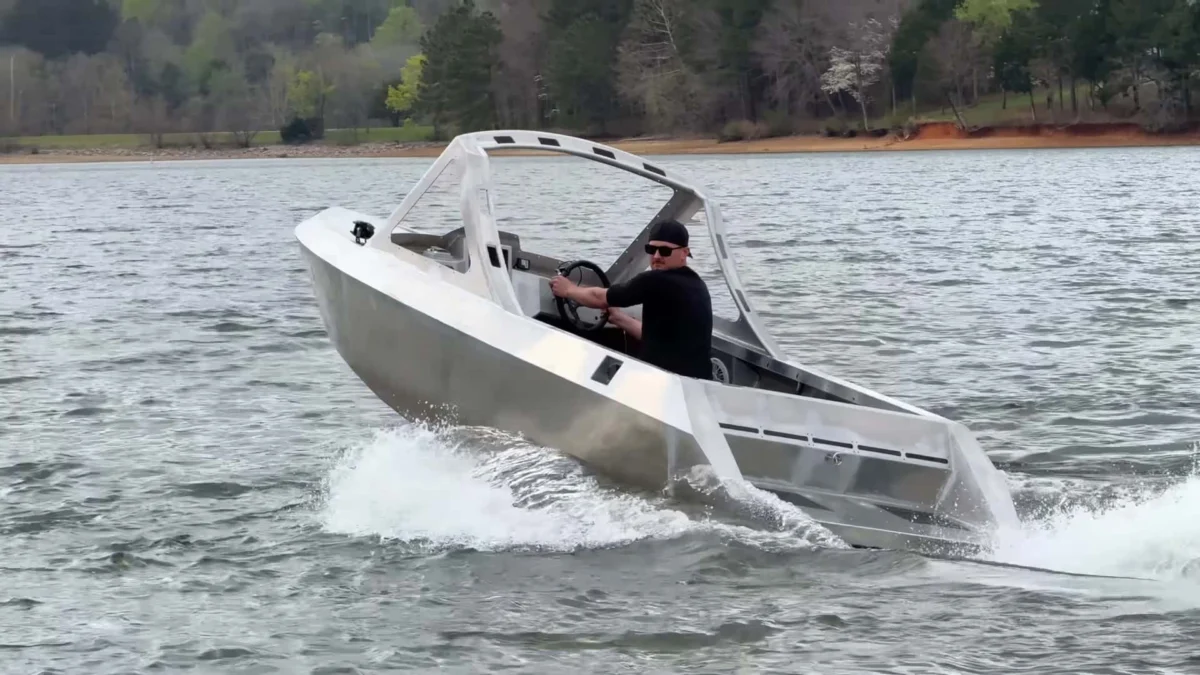
The electric vehicle (EV) revolution has largely been confined to the asphalt, with automotive giants and startups alike vying for dominance in the passenger car and truck markets. While the marine industry is slowly beginning to embrace electrification, the options available to the average consumer remain limited to either expensive, luxury-focused cruisers or sluggish, utility-grade platforms. For those craving the visceral, high-speed thrill of a personal jet boat, the market is essentially a desert.
However, necessity remains the mother of invention. The team behind the YouTube channel Prop Department recognized this void and decided that if a high-performance electric jet boat didn’t exist, they would simply have to engineer it themselves. What began as a bold experiment three years ago has evolved into a masterclass in custom engineering, pushing the boundaries of what is possible when high-density battery technology meets marine propulsion.
The Genesis of a High-Speed Dream
The project was born from a simple observation: existing electric marine options lacked the "bells and whistles" or the raw, adrenaline-pumping performance expected of a sport jet boat. The Prop Department team set out to construct a vessel that wasn’t just an experiment in efficiency, but a legitimate powerhouse.
Building a boat from the ground up is an undertaking that requires expertise in hydrodynamics, structural engineering, and electrical systems. The team opted to fabricate their own hull, ensuring the chassis was perfectly optimized for their specific propulsion requirements. This wasn’t a "kit bash" or a simple motor swap; it was a comprehensive ground-up build that included custom battery enclosures, bespoke motor mounts, and an integrated cooling system designed to survive the rigors of high-speed aquatic travel.
A Three-Year Chronology of Iteration
The development of the Prop Department jet boat has been a three-year journey of rapid prototyping, failure, and refinement.
Phase 1: The Foundation
Initially, the team experimented with a Tesla Model 3 drive unit. Known for its compact footprint and impressive power-to-weight ratio, the Model 3 motor offered roughly 280 horsepower—a figure that would be considered overkill for most recreational boats of this size. For a time, this setup proved to be a formidable powertrain, providing the boat with a speed profile that turned heads on the water.
Phase 2: Pushing the Limits
In the pursuit of even greater performance, the team eventually swapped the Model 3 unit for a custom-tuned Tesla Model S drive unit. This upgrade pushed the vessel’s output to over 350 horsepower. To accommodate this surge in power, the team faced significant hurdles in the energy storage department. The original battery pack—comprising four modules—suffered from "dead cells," causing the entire system to trigger safety shutdowns under heavy throttle.
Phase 3: System Optimization
The team meticulously replaced two of the four battery modules with fresh units and implemented an aftermarket Battery Management System (BMS). Each module was retrofitted with liquid cooling, mimicking the sophisticated thermal management found in Tesla’s road vehicles. Perhaps most impressively, they eliminated the traditional transmission by fitting a custom-machined stub shaft directly to the motor’s output, allowing for higher RPMs and more efficient power transfer to the jet drive.
The Technical Edge: Beyond the Safety Net
One of the most significant challenges in using automotive hardware for marine applications is the software. Tesla’s drive units are designed with rigorous safety protocols that expect the resistance and parameters of a road vehicle, not a jet drive.
To overcome this, the Prop Department team utilized an aftermarket controller board for the motor inverter. This modification is the "secret sauce" of the project; it allows the builders to bypass Tesla’s factory safety guards, giving them total control over the torque curves and power delivery. This level of granular control is essential when dealing with the fluid dynamics of water propulsion, where cavitation and load variations differ drastically from tire-to-road friction.
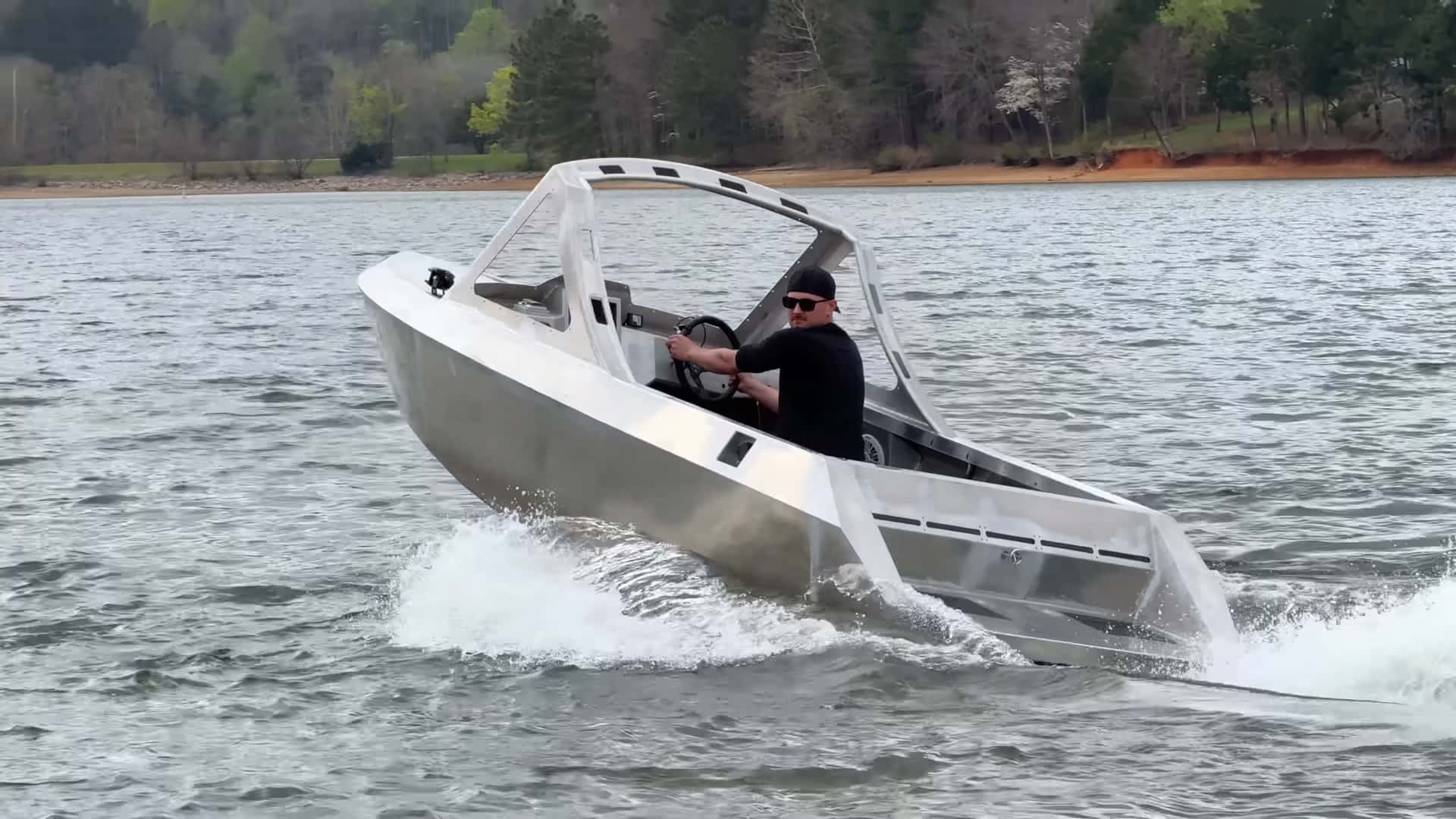
While the boat lacks the convenience of DC fast charging, opting instead for a standard J1772 charge port, the current iteration is a functional, high-performance machine. It represents a "hoot to drive," characterized by an power-to-weight ratio that is rarely seen in the electric marine sector.
Supporting Data: Why Customization Matters
The shift toward "DIY-EV" projects in the marine sector is not just a hobbyist trend; it is a response to the current state of the industry. As of 2024, the electric marine market is fragmented. Major players like Candela are producing hydrofoiling vessels that emphasize efficiency and range, while others focus on displacement hulls for slow cruising.
The Prop Department project highlights three key takeaways for the future of the industry:
- Drive Unit Versatility: Using salvaged Tesla components (which are increasingly available) provides a cost-effective, high-reliability path for custom builders.
- Thermal Management: The reliance on liquid-cooled battery modules proves that even in a marine environment, thermal stability is the key to sustaining high output.
- Software Accessibility: The use of aftermarket inverter controllers proves that there is a massive market for open-source or customizable EV software, as builders look to move beyond the limitations of OEM programming.
Implications for the Marine Industry
The implications of such projects are profound. By demonstrating that 350-horsepower electric propulsion is possible in a small, hand-built hull, Prop Department is effectively crowdsourcing the R&D that large marine manufacturers have been hesitant to pursue due to perceived market risks.
Traditional marine engine manufacturers, such as Mercury Marine or Yamaha, have historically been slow to pivot from internal combustion to full electric, citing the lack of energy density in current battery technology. However, when enthusiasts can achieve such high performance using existing automotive tech, it puts pressure on the establishment to accelerate their own electric offerings.
Furthermore, the DIY approach serves as a litmus test for component durability. The lessons learned from the team’s struggles—the dead battery cells, the shaft alignment issues, and the inverter communication errors—provide a roadmap for what happens when high-voltage systems are exposed to the corrosive and vibration-heavy environment of the water.
Looking Ahead: The Future of Electric Thrill-Seeking
While the boat is currently in a "finished" state, the team notes that there are always "small things to finish." This is the reality of custom engineering: the work is never truly done. Whether it is refining the BMS logic, improving the aerodynamics of the cooling intakes, or further weight reduction, the project continues to evolve.
For the wider public, the Prop Department build serves as an inspiring example of how electrification can be fun. It moves away from the narrative of "saving the planet" through compromise and instead focuses on the potential for superior performance. Electric motors offer instant torque and a power band that internal combustion engines simply cannot match, especially in a jet boat application where throttle response is everything.
As the industry moves forward, it is likely that we will see more "restomod" or custom electric builds that borrow from the automotive world. As long as there are enthusiasts willing to spend three years tinkering in a garage, the barrier to entry for high-performance electric boating will continue to drop. For now, the Prop Department boat stands as a testament to the ingenuity of the DIY community and a thrilling preview of the electrified, high-speed future of personal watercraft.
