


The skyline of Harrison, New Jersey, continues its rapid evolution as Advance Realty Investors advances the fourth phase of its landmark Riverbend District. The firm recently announced that it has successfully secured $173.4 million in construction financing and finalized a joint venture equity investment for “Block B2,” a massive mixed-use development set to redefine the local residential landscape.
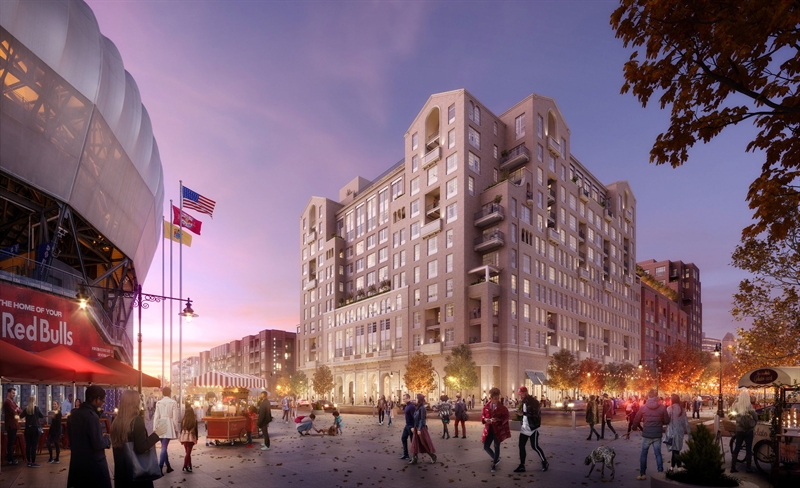
This latest injection of capital, facilitated by Cushman & Wakefield, underscores the ongoing transformation of a former industrial corridor into a premier transit-oriented hub. The Block B2 project is poised to add 524 luxury residential units, over 12,000 square feet of ground-level retail, and a 355-space parking garage to the area, further cementing Harrison’s status as a critical satellite to the New York City metropolitan core.
The Financial Architecture of Block B2
The capital stack for this ambitious project was assembled by the Cushman & Wakefield Equity, Debt & Structured Finance team, led by Executive Vice Chair John Alascio, Executive Director Chuck Kohaut, and Senior Associate Mitch Rothstein. Their efforts were bolstered by the Tri-State Capital Markets team, including Vice Chair Niko Nicolaou and Managing Director Ryan Dowd.
The financing package includes a significant joint venture equity investment from the Tel Aviv-based institutional investor Menora Mivtachim. While the specific terms of the agreement remain confidential, the deal is being hailed by industry analysts as a major vote of confidence in the Harrison market. By securing such substantial backing, Advance Realty Investors has ensured the project will move forward as the first true mid-rise product to hit the Harrison market, offering a distinct architectural alternative to the existing high-rise inventory.
John Alascio noted that the transaction stands as one of the most significant real estate moves in Hudson County this year. "The Harrison multifamily market continues to exhibit resilience via persistent rent growth, tight vacancy, and strong tenant demographics, bolstering investment viability," Alascio remarked.
A Chronology of Transformation: From Industrial Past to Residential Future
The success of the Riverbend District is not an overnight occurrence but the result of two decades of meticulous planning and remediation.
The Early Foundation (2002–2015)
The story of the Riverbend District began in 2002, when Advance Realty Investors first identified the potential in the underutilized industrial land along the Passaic River. At the time, the area was a collection of aging, vacant industrial brownfields. The firm undertook a massive assembly of approximately 35 acres, a process that required patience, foresight, and a deep commitment to environmental remediation.
Over the course of a single year, the company oversaw the demolition of more than 20 structures, clearing away 286,000 square feet of dilapidated industrial space. This period was characterized by extensive soil remediation and the development of new, modern infrastructure—roads, utilities, and streetscapes—that would eventually support a high-density, mixed-use community.
The Rise of the District (2016–2025)
Following the completion of the foundational work, Advance Realty began rolling out the residential phases of the project. The district has already successfully delivered three major residential assets:
- Cobalt Lofts: A landmark project that helped set the aesthetic and amenity standard for the district.
- Steel Works: A nod to the industrial history of the site, blending modern living with historic inspiration.
- The Wyldes: The most recent addition prior to Block B2, which further solidified the neighborhood’s residential density.
Combined, these three phases have introduced over 900 apartments to the market. The successful delivery of these units, paired with the 2019 opening of the modernized Harrison PATH station, created the "perfect storm" of convenience and lifestyle that has made the district a magnet for young professionals and commuters.
Supporting Data: Why Harrison Works
The economic rationale behind the Riverbend District’s success is supported by clear demographic and market data. Harrison, historically a blue-collar industrial town, has pivoted to become a high-demand residential destination.
Rental Market Performance
According to recent data from Apartments.com, the average monthly rent in Harrison sits roughly 61% higher than the national average of $1,663. This premium is driven by the town’s proximity to Manhattan and its direct connection to the PATH system, which provides commuters with a sub-20-minute trip to Jersey City or New York City.
Transit Connectivity
The proximity of Block B2 to the Harrison PATH station—a mere 10-minute walk—is the primary engine of value. For the modern urban renter, the trade-off between square footage and transit access is heavily weighted toward the latter. By situating 524 units within walking distance of the station, the project caters specifically to the "commuter-lifestyle" demographic that finds traditional New York City rents increasingly untenable.
The Sports Illustrated Stadium Factor
Adjacent to the development is the Sports Illustrated Stadium, home to the Red Bull New York soccer franchise. The presence of a major professional sports venue acts as a "neighborhood anchor," generating consistent foot traffic and creating a vibrant, high-energy atmosphere that appeals to retail tenants and prospective residents alike. The synergy between the stadium, the transit hub, and the new residential density has created a self-sustaining ecosystem that few other suburbs can replicate.
Official Responses and Strategic Vision
Alex Cocoziello, principal and chief investment officer at Advance Realty Investors, views Block B2 as the logical next step in a broader, long-term master plan.
"The successful capitalization of Block B2 reflects the confidence our investment and lending partners have in both our proven track record in Harrison and our long-term vision for the Riverbend District," Cocoziello said in a statement. "With three phases already delivered, this project continues the disciplined execution of our master plan, reinforcing Riverbend’s role in Harrison’s emergence as one of the region’s premier transit-oriented destinations."
The company’s vision is deeply integrated into the town’s own "Waterfront Redevelopment Plan." This local government initiative aims to transform the entire waterfront into a modernized, mixed-use environment. The master plan calls for a total of 3,300 residential units and approximately 100,000 square feet of retail and commercial space. Block B2’s 524 units and 12,100 square feet of retail are critical contributions toward meeting these broader municipal goals.
The Wider Implications: A Template for Brownfield Redevelopment
The Riverbend District serves as a primary case study for how New Jersey municipalities can successfully navigate the transition from a post-industrial economy to a service-and-residential-based one.
Economic Revitalization
The project has moved beyond simply building housing; it has acted as a catalyst for local tax base expansion. The remediation of brownfields—which often sit stagnant for decades—into high-value residential units provides the town of Harrison with a predictable, long-term stream of tax revenue that can be reinvested into schools, public safety, and infrastructure.
Urban Planning and Sustainability
By focusing on transit-oriented development (TOD), Advance Realty is aligning its projects with modern sustainability goals. High-density housing near transit hubs reduces reliance on automobiles, lowers carbon footprints, and promotes a walkable, human-scale environment. The inclusion of ground-level retail is equally important, as it ensures that the district functions as a neighborhood rather than a mere dormitory for city workers.
Market Resilience
The ability to secure $173 million in financing during a period of interest rate volatility and general economic caution speaks volumes about the perceived quality of the Harrison market. Institutional investors like Menora Mivtachim do not commit capital to speculative, unproven locations. Their participation suggests that Harrison has officially graduated from a "fringe" development market to a "core" market in the eyes of international capital.
Conclusion: The Road Ahead
As construction begins on Block B2, all eyes will be on the execution of the project. The success of previous phases suggests that Advance Realty is well-equipped to handle the challenges of this scale.
The Riverbend District is not merely a collection of buildings; it is a manifestation of the "New Jersey Renaissance." By leveraging transit connectivity, professional sports entertainment, and high-quality residential design, the district has effectively re-branded Harrison for the 21st century. As more phases are planned and realized, the district will likely continue to draw investment and residents, proving that with the right vision, even the most rusted industrial foundations can be polished into a vibrant, modern future.
