

Retail Dive
Published August 12, 2026
By Daphne Howland
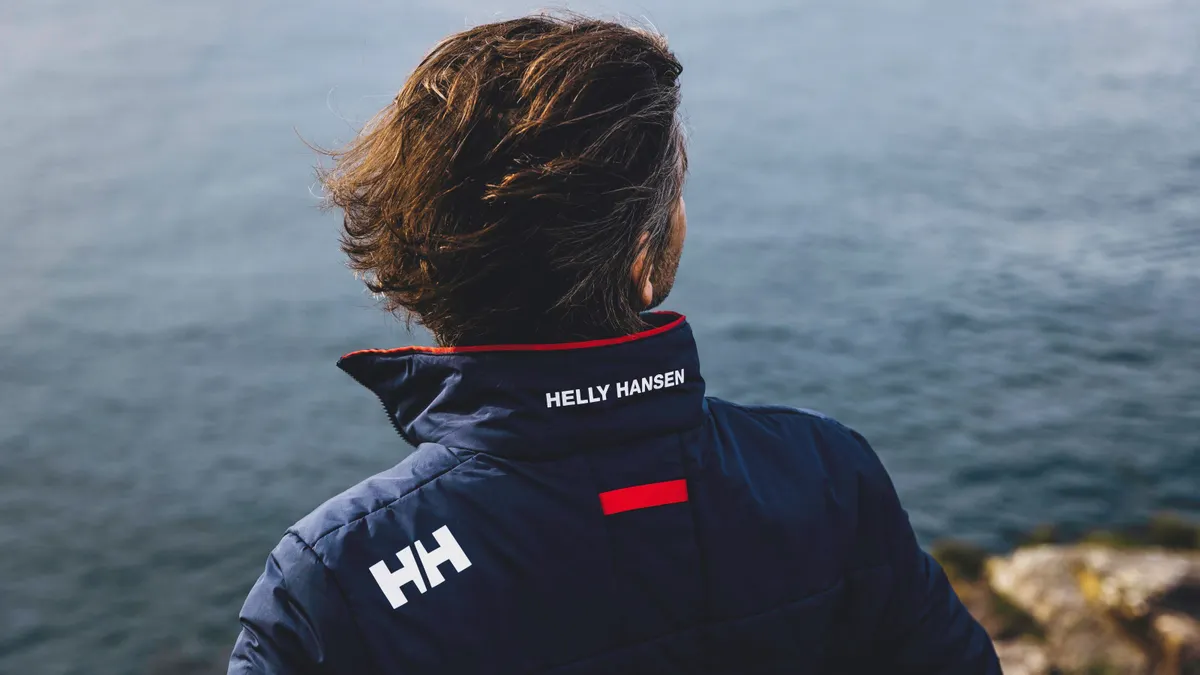
[Image: A person wearing a Helly Hansen-branded windbreaker looks out at the sea. Caption: Canadian Tire Corporation sold the Helly Hansen brand to Kontoor Brands last year. Courtesy of Kontoor Brands]
Kontoor Brands, the parent company of iconic denim labels like Wrangler and Lee, is placing significant strategic bets on its recently acquired outdoor brand, Helly Hansen, touting it as the company’s primary "growth engine." However, this optimistic outlook is met with a degree of caution from some financial analysts, who question the true growth potential of the Norwegian outdoor apparel and workwear specialist, especially in the wake of a potentially warmer winter and a broader DTC market that has seen mixed results for major players.
The acquisition of Helly Hansen, completed in late May 2025, marked a significant expansion for Kontoor beyond its denim heritage. While Kontoor executives have publicly championed Helly Hansen’s ability to drive future revenue and market share, independent financial observers are scrutinizing the brand’s performance and its ability to meaningfully contribute to Kontoor’s overall growth trajectory. This divergence in perspective highlights the inherent challenges and opportunities in integrating a new, distinct brand into an established portfolio, particularly within the dynamic and competitive apparel industry.
Kontoor’s Strategic Vision: Embracing Helly Hansen as a Catalyst for Growth
Kontoor Brands CEO Scott Baxter has been vocal about his vision for the company’s future, and Helly Hansen sits at the forefront of this strategy. In recent discussions with analysts, Baxter has repeatedly referred to the outdoor brand as the company’s "growth engine," a clear indication of the pivotal role it is expected to play in Kontoor’s expansion plans. This assertion is underpinned by the belief that Helly Hansen’s established reputation in the premium outdoor and workwear segments, coupled with its international presence, offers significant avenues for increased sales and profitability.
The acquisition was strategically positioned to diversify Kontoor’s brand portfolio and tap into the burgeoning outdoor and performance apparel market. Helly Hansen, with its heritage dating back to 1877, brings a rich history of innovation in waterproof and breathable fabrics, catering to a discerning consumer base of outdoor enthusiasts and professionals. Kontoor aims to leverage this legacy by investing in product development, expanding its global distribution network, and enhancing its direct-to-consumer (DTC) capabilities for the Helly Hansen brand.
The company’s financial projections reflect this confidence. Kontoor has maintained its full-year revenue outlook, anticipating year-over-year growth between 12% and 13%. A significant portion of this anticipated growth is attributed to the expected mid-single-digit revenue increase for both Helly Hansen and Wrangler in the second half of the fiscal year, excluding the impact of a 53rd week. This optimistic forecast suggests that Kontoor’s leadership team believes Helly Hansen is not only a strategic addition but a vital component in achieving its ambitious financial targets.
Divergent Analyst Perspectives: Questioning the "Growth Engine" Narrative
Despite Kontoor’s confident pronouncements, some financial analysts remain unconvinced about the extent to which Helly Hansen will truly act as a significant growth driver. A key concern revolves around the brand’s historical performance. As noted by analyst Vasilescu in a recent client note, Helly Hansen’s own financial filings suggest it has been a "no growth brand" prior to its acquisition by Kontoor. This historical context fuels skepticism about its immediate ability to shift gears and become a robust growth engine.
Furthermore, external market factors present potential headwinds. Vasilescu specifically warned that Helly Hansen’s sales could be negatively impacted by warmer winter seasons, a trend that has become more pronounced in recent years due to climate change and the potential for El Niño weather patterns. The outdoor apparel market, particularly for winter-specific gear, is highly susceptible to weather conditions, and a mild winter could dampen demand for Helly Hansen’s core product offerings.
The broader retail landscape also presents a cautionary tale. Kontoor’s strategy to bolster its DTC presence, a move exemplified by Wrangler’s planned expansion of physical stores in Texas, mirrors the strategies adopted by other major apparel companies. However, the success of these DTC endeavors has been varied. Nike, for instance, famously scaled back its aggressive DTC push after realizing it had overextended its reach, leading to a recalibration of its wholesale relationships. While brands like Crocs and Levi’s continue to invest in DTC, they have simultaneously maintained strong wholesale operations, suggesting a balanced approach is often more sustainable. This history raises questions about the long-term viability and profitability of an overly aggressive DTC strategy for Kontoor, especially if it comes at the expense of established wholesale partnerships.
A Look at Wrangler’s DTC Ambitions and Broader Brand Performance
While Helly Hansen is being positioned as the primary growth engine, Kontoor’s established brand, Wrangler, is also undergoing strategic initiatives to enhance its performance. CEO Scott Baxter highlighted "incredible opportunities" in several key areas for Wrangler: women’s apparel, direct-to-consumer sales, and non-denim categories. This multi-pronged approach aims to broaden Wrangler’s appeal and tap into new revenue streams without compromising its core identity.
The expansion of Wrangler’s physical retail footprint is a tangible manifestation of its DTC ambitions. The planned opening of two additional stores in Texas early next year is based on the positive performance of an existing "full-price store in the stockyards of Fort Worth." Baxter’s statement about developing a "focused retail fleet in the heartland of Wrangler Country" indicates a strategic intent to connect more directly with the brand’s loyal customer base in key geographic regions.
Wrangler’s women’s apparel segment has shown particularly strong growth, with sales increasing by 20% in the first half of the year, accelerating in the second quarter. This surge in women’s wear suggests a successful pivot in product development and marketing to capture a larger share of this significant market segment. Additionally, the brand’s core bottoms business has expanded its market share by over 100 basis points, according to data from Circana, indicating a continued dominance in its traditional product category.
However, it is important to contextualize these positive developments within Wrangler’s historical performance. Baxter himself acknowledged that Wrangler has been a "low-single-digit growth brand since before the pandemic." While the current initiatives aim to accelerate this growth, the question remains whether these efforts will be sufficient to offset any potential underperformance in other areas or if they can truly propel the brand into a higher growth trajectory. The success of the DTC expansion will also be a critical factor, and Kontoor will need to navigate the complexities of managing physical retail alongside its robust wholesale operations, learning from the experiences of other industry giants.
Chronology of Key Events: The Helly Hansen Acquisition and Kontoor’s Evolving Strategy
The integration of Helly Hansen into Kontoor Brands’ portfolio is a recent development with significant implications for the company’s future. Understanding the timeline of these events provides crucial context for assessing Kontoor’s strategic direction and the challenges it faces.
- Late May 2025: Kontoor Brands officially completes the acquisition of Helly Hansen. This landmark transaction, valued at an undisclosed sum, marks Kontoor’s boldest move to diversify beyond its denim-centric heritage and enter the competitive outdoor and performance apparel market.
- Early 2026: Kontoor announces plans to open two new Wrangler stores in Texas, signaling a renewed focus on expanding its direct-to-consumer (DTC) retail presence. This initiative is a direct response to the perceived success of its existing physical store in Fort Worth, aiming to build a more concentrated retail fleet in key "Wrangler Country" regions.
- August 12, 2026 (Present Day): The current article is published, reflecting on Kontoor’s recent quarterly results and strategic pronouncements. The article highlights the company’s continued emphasis on Helly Hansen as its "growth engine," while simultaneously presenting the skeptical viewpoints of some financial analysts regarding the brand’s true growth potential.
This timeline illustrates Kontoor’s proactive approach in reshaping its brand portfolio and expanding its market reach. The Helly Hansen acquisition represents a significant strategic pivot, while the continued investment in Wrangler’s DTC channels demonstrates a commitment to optimizing its existing assets. The success of these initiatives will be closely watched by investors and industry observers alike.

Supporting Data and Financial Outlook: A Tale of Two Brands
Kontoor Brands’ financial narrative is increasingly shaped by the performance of its two key pillars: the established Wrangler brand and the newly acquired Helly Hansen. While the company presents a unified positive outlook, a closer examination of the available data reveals nuances and potential areas of concern.
Kontoor Brands’ Full-Year Revenue Outlook:
Kontoor has maintained its revenue outlook for the full fiscal year, projecting year-over-year growth between 12% and 13%. This overarching target suggests confidence in the combined performance of its brand portfolio.
Helly Hansen and Wrangler: Projected Second-Half Performance:
For the second half of the fiscal year, Kontoor anticipates a revenue increase in the mid-single-digit range for both Helly Hansen and Wrangler. This projection excludes the financial impact of the 53rd week in the fiscal calendar, offering a comparable view of ongoing operational performance.
Wrangler’s Segmented Growth:
- Women’s Apparel: Experienced a 20% growth in the first half of the year, with acceleration observed in the second quarter.
- Core Bottoms Business: Expanded its market share by more than 100 basis points in the first half of the year, as reported by Circana.
Analyst Concerns Regarding Helly Hansen:
Analyst Vasilescu’s assessment, based on Helly Hansen’s financial filings, indicates that the brand has historically been a "no growth brand." This historical context raises questions about its immediate capacity for significant expansion.
External Market Factors:
The potential impact of a warmer winter, exacerbated by weather patterns like El Niño, is cited as a risk factor for Helly Hansen’s sales, particularly for its seasonal outdoor and winter wear products.
The financial data presents a picture of a company actively pursuing growth through strategic acquisitions and targeted initiatives within its existing brands. While Wrangler’s performance in women’s wear and core bottoms is encouraging, the true impact of Helly Hansen remains a subject of debate, with historical performance and external market vulnerabilities posing potential challenges to its role as a primary "growth engine." Kontoor’s ability to navigate these dynamics will be critical in achieving its ambitious revenue targets.
Official Responses and Leadership Adjustments: Navigating the Path Forward
Kontoor Brands’ leadership team has been proactive in addressing market perceptions and shaping the narrative around the company’s strategic direction. Their responses to analyst concerns and internal adjustments signal a commitment to executing their growth plans effectively.

Scott Baxter, CEO of Kontoor Brands:
Baxter has consistently championed Helly Hansen as the company’s "growth engine," emphasizing its strategic importance in diversifying Kontoor’s revenue streams and expanding its market reach. He has also highlighted the "incredible opportunities" within the Wrangler brand, particularly in women’s apparel, DTC expansion, and non-denim categories. His commitment to developing a "focused retail fleet" for Wrangler underscores the brand’s strategic push into physical retail.
Joseph Alkire, Chief Financial Officer and President:
In a significant leadership development, Joseph Alkire, who has served as Kontoor’s CFO for three years, has had his duties expanded. He has been appointed President of the company and will maintain global responsibilities for Helly Hansen while also taking on oversight of the Wrangler brand. This move signifies Alkire’s growing influence within the organization and his integral role in executing the company’s strategic objectives across its key brands. His dual role as CFO and President suggests a strong focus on financial discipline and operational efficiency as Kontoor pursues its growth agenda.
Kontoor Brands’ official responses reflect a confident and strategic approach to managing its brand portfolio. The emphasis on Helly Hansen as a growth driver, coupled with the continued development of Wrangler, showcases a dual strategy of acquisition and organic growth. The elevation of Joseph Alkire to President further solidifies the company’s leadership structure, aiming to ensure seamless execution of its expansion plans.
Implications for the Apparel Industry: DTC, Brand Integration, and Market Volatility
The strategic decisions and market reactions surrounding Kontoor Brands’ integration of Helly Hansen and its continued push into DTC offer several key implications for the broader apparel industry.
The Evolving Landscape of Direct-to-Consumer (DTC):
Kontoor’s aggressive expansion of Wrangler’s physical retail presence, alongside the focus on DTC for Helly Hansen, underscores the ongoing importance of direct customer engagement. However, the mixed results experienced by industry giants like Nike serve as a potent reminder that DTC success is not guaranteed. Brands must carefully balance DTC initiatives with established wholesale partnerships, ensuring that each channel complements the other rather than cannibalizing sales or alienating key retailers. The industry will continue to grapple with finding the optimal DTC strategy that drives profitability and customer loyalty without sacrificing market breadth.
The Challenge of Brand Integration:
The acquisition of Helly Hansen presents a case study in the complexities of integrating a new brand into an existing corporate structure. Kontoor’s success hinges on its ability to leverage Helly Hansen’s heritage and brand equity while infusing it with its own operational expertise and strategic vision. This involves not only financial integration but also cultural alignment, supply chain optimization, and marketing synergy. The industry will be watching to see if Kontoor can effectively unlock Helly Hansen’s growth potential, thereby proving the value of strategic acquisitions in a fragmented market.
Navigating Market Volatility and External Factors:
The concerns raised by analysts regarding the impact of warmer winters on Helly Hansen’s sales highlight the increasing vulnerability of apparel brands to external environmental and economic factors. Climate change, shifting consumer preferences, and geopolitical instability are becoming significant considerations for strategic planning. Companies will need to develop more agile supply chains, diversify product offerings, and employ sophisticated forecasting models to mitigate risks associated with market volatility. The ability to adapt to these unpredictable forces will be a key differentiator for success in the coming years.
Kontoor Brands’ journey with Helly Hansen and its expanded DTC ambitions offer valuable insights into the current dynamics of the apparel industry. The company’s strategic choices and their eventual outcomes will undoubtedly contribute to the ongoing evolution of how brands are built, integrated, and brought to market in an increasingly complex and unpredictable global economy.
