

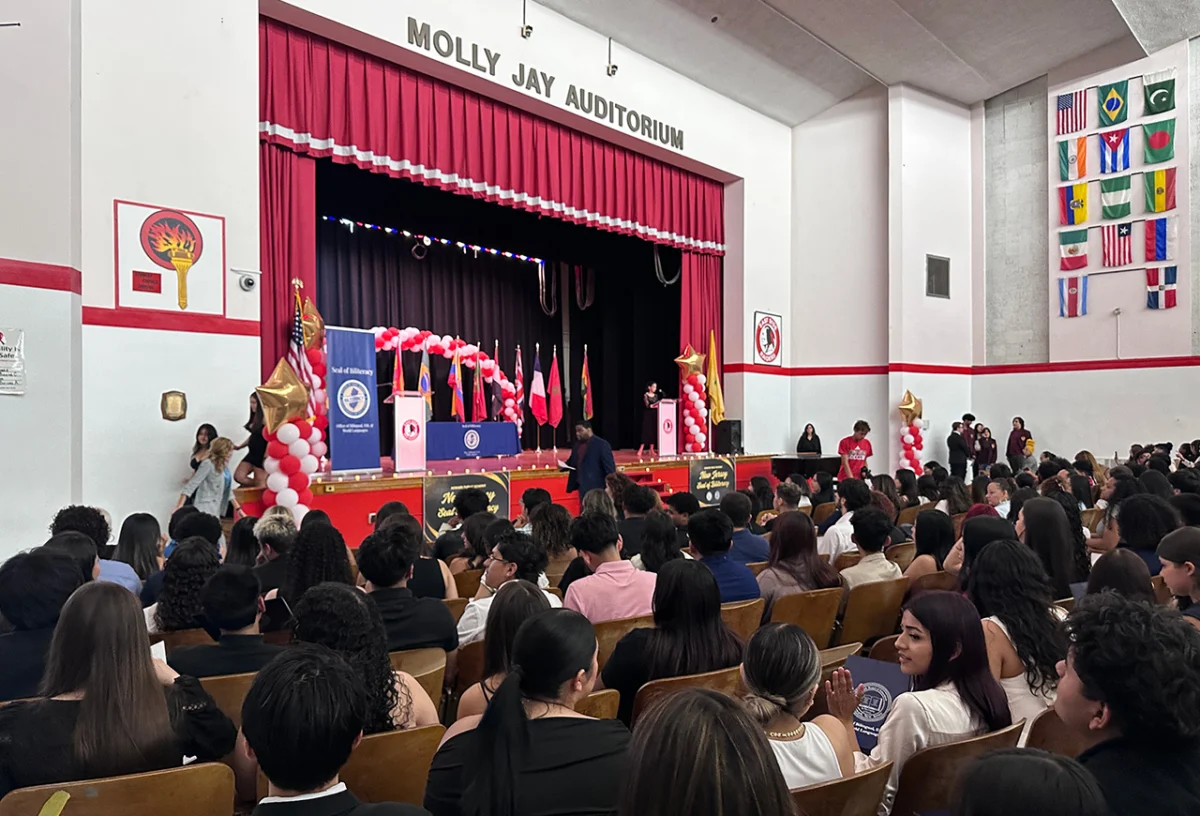
NEWARK, N.J. — In a powerful testament to the evolving academic landscape of New Jersey’s largest school district, Newark Public Schools (NPS) has announced a historic milestone: 531 students have earned the New Jersey State Seal of Biliteracy for the 2025-2026 academic year. This achievement, celebrated at a gala hosted by the district’s Office of Bilingual, English as a Second Language (ESL), and World Languages at East Side High School, underscores a dramatic upward trajectory in linguistic proficiency that has seen the district’s multilingual success rates nearly quadruple in just three years.
The Seal of Biliteracy is more than a mere academic honor; it is a formal recognition by the New Jersey Department of Education that a student has attained advanced fluency in both English and at least one other language. For the 531 Newark students who secured this credential, the journey involved rigorous testing in reading, writing, speaking, and listening, proving their readiness to participate in an increasingly interconnected global economy.
A Chronology of Linguistic Excellence
The path to this year’s record-breaking figures reveals a district-wide commitment to fostering multilingualism. Just three years ago, during the 2022-2023 academic cycle, the district celebrated 122 students earning the Seal. By the following year, that number had surged to 448. The jump to 531 recipients in 2025-2026 represents a 20% increase over the previous year alone, illustrating that the district’s focus on bilingual education is not merely a passing initiative, but a deeply embedded culture of academic excellence.
The growth is attributed to a combination of modernized curriculum standards, increased support for English Language Learners (ELLs), and a district-wide emphasis on the value of native language maintenance. Among this year’s cohort, 18 students displayed exceptional linguistic dexterity by demonstrating proficiency in two languages in addition to English, showcasing a level of intellectual versatility that administrators believe will serve as a bellwether for the district’s future.
Supporting Data: Understanding the Seal
To earn the New Jersey Seal of Biliteracy, students must overcome significant academic hurdles. The process is bifurcated:
- English Proficiency: Students must first meet the stringent high school graduation requirements for English Language Arts as dictated by the state.
- World Language Proficiency: Students must pass a nationally recognized assessment that rigorously tests their ability to read, write, speak, and listen in a second language.
Once these criteria are met, the Seal is officially affixed to the student’s diploma and noted on their permanent academic transcript. This notation serves as a "signal" to university admissions officers and prospective employers that the candidate possesses the high-level cognitive and communicative skills associated with bilingualism.
Furthermore, the district’s Bilingual Department has enhanced the recognition process this year by providing each recipient with a commemorative medal, which will be worn during their respective high school graduation ceremonies. This public acknowledgment serves to elevate the status of bilingualism within the school community, signaling that proficiency in a non-English language is not a deficit to be overcome, but an asset to be celebrated.
Perspectives from Leadership
The announcement was met with overwhelming pride from the district’s top officials, who view the data as a validation of their broader strategic vision.
Superintendent Roger León emphasized the holistic impact of this achievement. "The Seal of Biliteracy is a reflection of our students’ determination, intellectual growth, and cultural pride," León stated during the ceremony. "To earn this distinction, students must demonstrate advanced proficiency in English while mastering another language—a remarkable achievement that opens doors to higher education, career opportunities, and global citizenship. I congratulate each of these students and thank our administrators, teachers, and families for helping them reach this milestone."
Board of Education President Hasani K. Council echoed these sentiments, noting that the demographic composition of Newark is one of its greatest assets. "Newark is one of the most diverse cities in the nation, and our students’ ability to thrive in multiple languages is one of our greatest strengths," Council said. "The record number of Seal of Biliteracy recipients reflects the talent that exists throughout our schools and the value we place on cultural and linguistic diversity."
Marisol Diaz, the Director of the Office of Bilingual Education, provided a practitioner’s perspective on why these numbers continue to climb. "Each Seal of Biliteracy recipient has demonstrated perseverance, academic excellence, and a commitment to maintaining and strengthening their linguistic skills," Diaz noted. "This is a credential that students carry with them into college, careers, and civic life. Seeing the number of recipients continue to grow year after year is a testament to the dedication of our students, families, teachers, and staff who believe that bilingualism is a powerful asset."
The Implications: Why Biliteracy Matters
The rise in recipients has profound implications for the students’ futures and for the city of Newark at large. In an era of globalization, the ability to communicate across cultures is a competitive advantage in almost every sector, including law, medicine, government, and international business.
1. Higher Education and Advanced Placement
For graduating seniors, the Seal of Biliteracy often translates into tangible academic benefits. Many universities and colleges in New Jersey and across the nation offer credit-by-examination for students who have earned the Seal, allowing them to bypass introductory language courses and enter advanced-level study sooner. This not only saves families money on tuition but also allows students to pursue double majors or minors with greater ease.
2. Career Advancement
In the workforce, the "bilingual premium"—the increase in salary and job opportunities available to those who speak more than one language—is well-documented. As Newark continues to develop as a hub for industry and technology, students who carry the Seal on their resumes are positioned to enter the workforce with a distinct advantage over their monolingual peers.
3. Civic and Cultural Empowerment
Beyond the economic benefits, the Seal serves as a tool for community building. By formally recognizing languages such as Spanish, Portuguese, French, and others, the district is affirming the identities of its diverse student body. When students see their home languages recognized by the state, it fosters a sense of belonging and encourages them to continue developing their heritage language skills, which are often lost as students assimilate into English-dominant environments.
Future Outlook: Sustaining the Momentum
The challenge for Newark Public Schools moving forward is to sustain this growth while ensuring the quality of instruction remains high. With a 20% year-over-year increase, the infrastructure required to support these students—ranging from specialized testing to language-specific tutoring—must continue to scale.
The success of the 2025-2026 cohort suggests that the district has effectively tapped into a reservoir of potential that was previously underutilized. By creating a clear, supported, and celebrated path to bilingualism, Newark has transformed from a district managing a high population of ESL students into a district that is cultivating a generation of elite, multilingual scholars.
As these 531 students prepare to walk across the graduation stage wearing their medals, they do so not just as high school graduates, but as representatives of a new standard of excellence in New Jersey. Their accomplishment serves as a roadmap for other urban school districts across the country: invest in your students’ linguistic backgrounds, provide the resources to bridge the gap between home and school languages, and you will unlock a level of academic achievement that prepares students for the challenges of the 21st century.
The story of Newark’s Seal of Biliteracy program is a narrative of transformation. It is the story of a district that has moved beyond the challenges of the past to embrace the promise of the future—one word, one language, and one student at a time. As Superintendent León concluded, "The continued growth in the number of recipients demonstrates the strength of our district’s commitment to multilingual excellence." With this record-breaking year behind them, the district now looks toward a future where bilingualism is not the exception, but the expectation for every student in Newark.
