

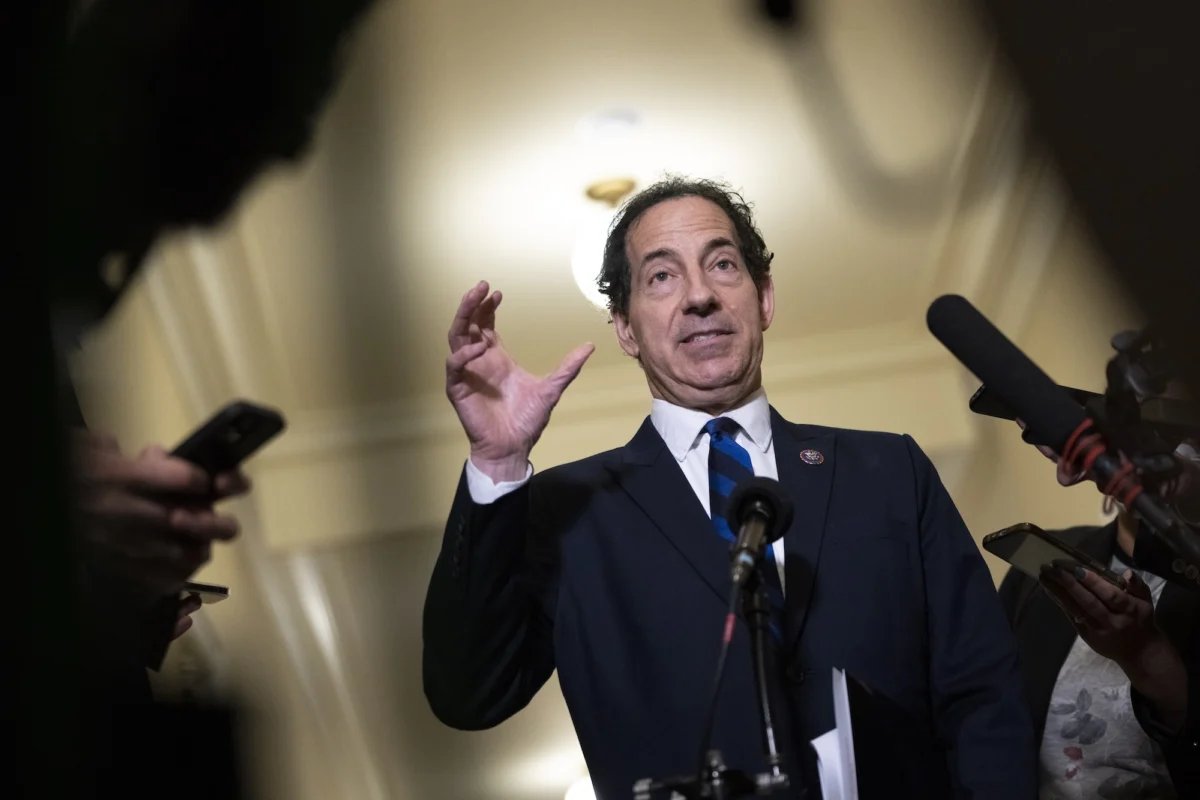
In a move that promises to ignite a fierce debate over the politicization of history and the sanctity of cultural institutions, Democratic Representative Jamie Raskin of Maryland has introduced the "Preserving and Remembering the History of Trump and other Tyrants Act." The legislation seeks to compel the Smithsonian Institution—the world’s largest museum, education, and research complex—to curate and preserve a permanent exhibition dedicated to the “rise of government propaganda, corruption, and authoritarianism” during the two terms of President Donald Trump.
The proposal represents a direct legislative counter-offensive against what Raskin describes as a systematic effort by the Trump administration to “censor, whitewash, and fictionalize” the American historical narrative. By anchoring this project within the National Museum of American History (NMAH) in Washington, D.C., Raskin aims to institutionalize a critical, evidence-based account of a presidency defined by unprecedented executive actions and institutional friction.
The Legislative Mandate: A Custodian of Controversy
The bill, which was formally introduced this week, outlines a broad scope for what the Smithsonian is expected to catalog. Beyond mere historical documentation, the act specifically mandates the preservation of physical and digital artifacts that Raskin argues illustrate the erosion of democratic norms. These include:
- Propaganda Materials: The bill explicitly calls for the preservation of large-scale banners and media footage that have appeared on federal buildings, which critics argue have been used to cultivate a cult of personality.
- Evidence of Resistance: The legislation also directs the Smithsonian to archive the stories and experiences of those who actively opposed what they viewed as the rising tide of authoritarianism in the United States.
- Curatorial Autonomy: Perhaps most significantly, the bill includes a provision to remove any signage installed on federal property without Congressional approval. This is a direct response to a recent directive from the Trump administration, which ordered the Department of the Interior to place warning signs outside the NMAH, accusing curators of pushing “personal, radical ideologies.”
“To avoid repeating this descent into authoritarianism, we must study this corrupt President’s actions,” Raskin stated in a press release. “We must allow the public to learn about the numerous tools he deployed while attempting to remake American history in his own image and according to his own autocratic and white nationalist beliefs.”
Chronology of Institutional Tension
The relationship between the Trump administration and the Smithsonian Institution has been fraught with hostility, particularly during Trump’s second term. The current legislative proposal is the latest development in a years-long struggle for control over the national narrative.
The 2025 Executive Order
The tension escalated in March 2025, when President Trump issued an executive order aimed at purging “divisive” and “anti-American” content from federal cultural institutions. The order specifically targeted exhibitions that the administration deemed critical of national history, calling for the restoration of monuments and statues that had been removed from public spaces in the years following 2020.
The Impeachment Erasure
In July 2025, the NMAH became the site of a high-profile controversy when it quietly removed references to the two impeachments of President Trump from its displays. The move, which followed intense pressure from the White House, sparked an outcry from historians and free-speech advocates. Although the museum eventually restored a placard mentioning the impeachments, it was noted for being significantly abbreviated, leading to widespread accusations of self-censorship under political duress.
The Recent Escalation
The situation deteriorated further last month when the Trump administration publicly accused the Smithsonian of “systemic discrimination” against conservative viewpoints. The White House threatened to withhold federal grants, a move that would represent an unprecedented financial strike against a congressionally chartered institution.
Supporting Data: Allegations of Misconduct
Raskin’s bill is bolstered by a series of reports documenting actions taken by the administration that have raised alarm among constitutional scholars and government watchdogs.
Propaganda and Taxpayer Funds
One of the primary areas of concern cited in the bill is the alleged misuse of taxpayer money for political advertising. Reports indicate that the Department of Homeland Security spent approximately $20 million on broadcast ads that touted the President’s accomplishments during the heat of an election season. The campaign, which featured music by R&B artist Christian Berishaj (JMSN), was heavily criticized as a state-funded campaign operation. Berishaj himself issued a cease-and-desist letter, distancing his artistic work from the political messaging.

Financial Conflicts and Corruption
The bill also points to the rapid growth of the President’s business interests. According to a July 2026 report by The New York Times, revenue from Trump’s business holdings surged to $2.24 billion over the previous year. Of particular note is the expansion of these holdings into sectors where the President exerts significant regulatory influence, such as the rapidly evolving cryptocurrency market. These figures have fueled ongoing discussions regarding the Emoluments Clause and the intersection of private profit with presidential power.
First Amendment Violations
Concerns regarding authoritarianism are perhaps most tangible in the administration’s handling of the press. A federal judge recently ordered the White House to restore access to several major media outlets—including CNN, Politico, and MS NOW—after the administration revoked their credentials. The judge ruled that the bans were content-based, violating the First Amendment protections afforded to the press.
Official Responses and Institutional Silence
As of this writing, the Smithsonian Institution and the National Museum of American History have remained notably silent regarding the legislation. Representatives for the museum complex have not responded to requests for comment on whether they are prepared to accept the responsibility of housing such a contentious exhibit, nor have they addressed the administration’s threats to their federal funding.
Observers note that the Smithsonian is in a precarious position. As a federal entity, it is subject to Congressional oversight and funding, yet its mission is built upon the promise of objective historical inquiry. The legislation introduced by Raskin would essentially codify the museum’s duty to resist political interference, but it also places the institution in the crosshairs of a permanent, high-stakes political battle.
The Implications: A New Era of Historical Contention
The introduction of the "Preserving and Remembering the History of Trump and other Tyrants Act" marks a significant shift in how Congress interacts with historical institutions. Historically, the Smithsonian has maintained a degree of separation from the daily political fray, allowing curators to operate with relative autonomy.
However, the current political climate has rendered that neutrality difficult to maintain. By framing the preservation of Trump-era artifacts as a matter of national security and democratic survival, Raskin is challenging the institution to take a definitive stand.
Long-term Consequences
If passed, the bill would set a precedent where Congress takes an active role in dictating the content of museum exhibitions. While supporters argue this is a necessary step to protect the truth from an administration bent on revisionism, critics—including those within the conservative establishment—are likely to view this as a form of “legislative gaslighting” that creates a permanent, state-sponsored monument to political grievances.
Moreover, the legislation highlights the deepening divide in American society. Whether the Smithsonian becomes a repository for the complexities of the Trump era or a battleground for further ideological conflict remains to be seen. What is clear, however, is that the artifacts of the last four years have become the latest, and perhaps most volatile, frontier in the American culture war.
As the debate moves to the House floor, the country will be forced to confront a difficult question: Who owns the history of a presidency that sought to redefine the very foundations of the state? For Jamie Raskin, the answer is clear: the history belongs to the public, and it must be preserved before it is erased. For the administration, the bill is yet another sign of a political establishment that remains deeply divided over the legacy of a singular, disruptive force in American life.
