

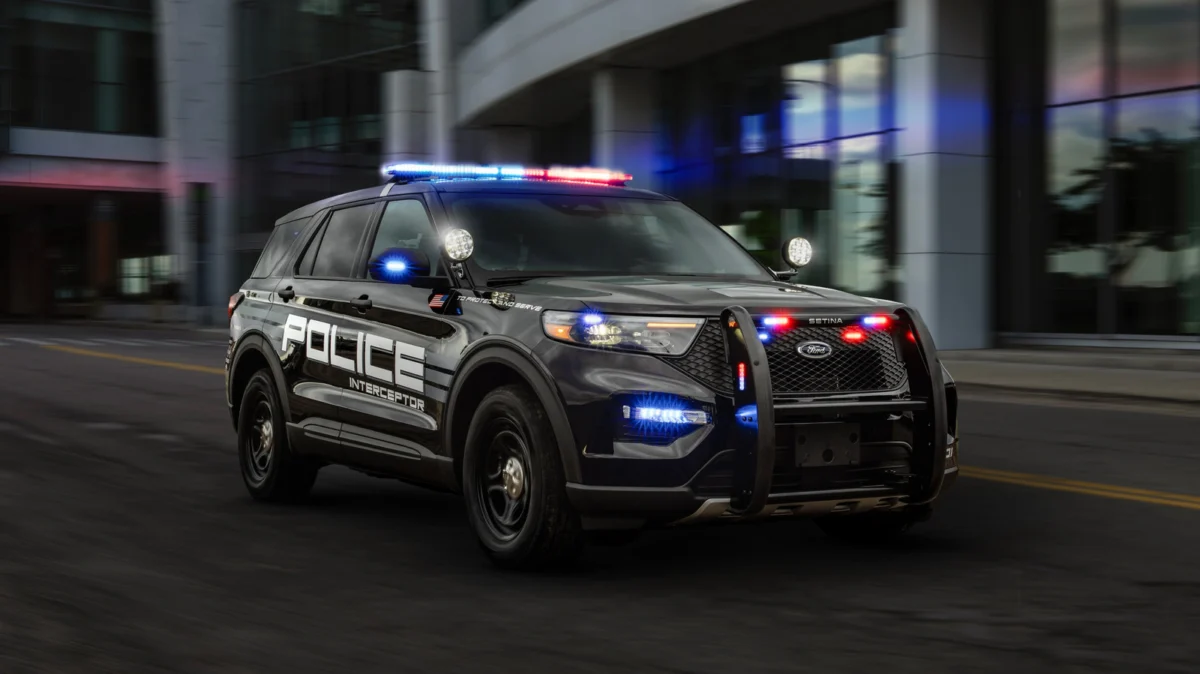
Every year, the automotive industry turns its collective gaze toward Michigan for an event that carries far more weight than a standard track day. The Michigan State Police (MSP) annual vehicle evaluation program—a rigorous, data-driven tradition dating back to 1975—has cemented itself as the definitive benchmark for law enforcement agencies across North America. While police vehicles often share components with their civilian counterparts, the MSP testing reveals how these platforms hold up under the extreme duress of high-speed pursuit, emergency response, and tactical maneuverability.
The 2026 evaluation cycle was particularly noteworthy, featuring a roster of 13 police-spec cars and five motorcycles. Conducted across two distinct proving grounds, the testing environment was designed to isolate performance variables with clinical precision.
The Testing Arena: Precision at the Limit
To ensure the data reflects real-world efficacy, the MSP utilizes two specialized facilities. Acceleration, top-speed, and braking trials were conducted at the Chelsea Proving Ground in Chelsea, Michigan. Owned by Stellantis, this massive facility offers the controlled, high-speed environment necessary to push engines to their electronically governed limits.
Vehicle dynamics—the "art" of cornering and handling—were evaluated at the historic Grattan Raceway in Belding, Michigan. With its challenging 2-mile circuit, elevation changes, and complex technical curves, Grattan provides a simulation of the unpredictable, high-stakes environments officers encounter during active pursuits. The depth of this testing is critical; when an officer is navigating a high-speed emergency response, the difference between a controlled turn and a mechanical failure is measured in milliseconds.
The Speed Kings: Dominance of the Blue Oval
In the realm of raw velocity, Ford’s Police Interceptor Utility (PIU) has maintained a stranglehold on the leaderboard. Since 2020, the PIU has consistently outperformed the competition, and the 2026 results show no sign of that legacy waning.
The AWD Ford Police Interceptor Utility, equipped with a 3.0-liter EcoBoost V6, remains the fastest vehicle in the lineup. Generating 400 horsepower and 415 pound-feet of torque, the vehicle achieved an electronically limited top speed of 148 mph. Notably, this is not just the fastest car; it is faster than the leading police motorcycle in the test, the BMW R 1300 RT-P, which topped out at 141 mph.
The leaderboard for 2026 top speeds highlights a tiered hierarchy:
- 148 mph: Ford Police Interceptor Utility (3.0L EcoBoost)
- 141 mph: BMW R 1300 RT-P
- 136 mph: Ford Police Interceptor (Hybrid and Gas-only variants)
- 130 mph: Chevrolet Tahoe PPV (5.3L V8), Chevrolet Blazer PPV EV (AWD), and Dodge Durango Pursuit (5.7L V8)
It is important to note that these figures are governed. Manufacturers impose electronic limiters on police vehicles to balance the necessity of speed with the long-term mechanical reliability required for municipal fleets.
Acceleration: The Electric Advantage
While top speed captures the imagination, the reality of police work—particularly in urban environments—is defined by "punchy" acceleration. The 0-60 mph sprint is a proxy for how quickly an officer can respond to a scene or close the gap in a pursuit.
The 2026 tests introduced a significant variable: the rise of the Electric Vehicle (EV). The instant, linear torque characteristic of electric motors has fundamentally altered the acceleration hierarchy. The Ford Mustang Mach-E GT and the Chevrolet Blazer PPV EV dominated these metrics. The Mach-E GT clocked a blistering 4.03 seconds, while the Blazer EV followed closely at 5.14 seconds.
For internal combustion engines, the Ford F-150 Police Responder (utilizing a 3.5-liter EcoBoost V6) proved to be the most potent, hitting the mark in 5.68 seconds, followed by the 3.0-liter PIU at 5.95 seconds.
The standout performer, however, was the BMW R 1300 RT-P motorcycle. Equipped with the Dynamic Pack and AutoShift, the bike broke the 4.0-second barrier, finishing the sprint in just 3.61 seconds. This underscores a crucial point for law enforcement planners: while cars offer protection and utility, the agility and explosive acceleration of high-performance motorcycles remain unmatched in tactical deployment.
Braking and Dynamics: The Science of Safety
A fast car is a liability if it cannot stop safely. In the context of a high-speed pursuit, braking distance is a matter of life and death. The MSP conducts "60-0 mph full ABS maximum deceleration stops" to measure stopping distance, a metric where the Mustang Mach-E excelled.
The Mach-E achieved a projected stopping distance of 122.45 feet, with one test run reaching an impressive 116.75 feet. By contrast, the Ford PIU—the fastest car in the test—required 137.24 feet to come to a halt. The difference is stark, highlighting the inherent advantage of lower-slung, performance-oriented EVs compared to the heavier, taller utility vehicles that currently make up the bulk of police fleets. At the other end of the spectrum, the heavy-duty 2026 Ram 2500 required 170.13 feet, reminding agencies that vehicle class dictates physical limitations.
At Grattan Raceway, the dynamics evaluation pushed the vehicles to their chassis limits. Each vehicle completed 32 laps, with four different drivers rotating to ensure consistent results. The Ford PIU once again claimed the crown, with an average lap time of 1:35.09. This was 2.9 seconds faster than its closest competitor, proving that Ford has optimized the suspension and weight distribution of the PIU to handle aggressive maneuvers better than any other vehicle in the field.
Implications for Future Fleets
The 2026 MSP evaluation carries significant weight for procurement officers across the country. As municipalities face pressure to modernize their fleets, the data suggests a transition period characterized by a "hybridized" approach.
The Shift Toward EVs
The data makes a compelling case for EVs in urban and suburban law enforcement. The acceleration and braking advantages of the Mustang Mach-E and Blazer EV are not just impressive statistics; they represent a significant increase in the performance threshold for standard patrol units. However, agencies must weigh these benefits against the challenges of charging infrastructure and the versatility of traditional utility vehicles.
Utility Remains King
Despite the allure of the EV, the Ford PIU remains the gold standard for versatility. Its ability to marry high top-end speed with superior track handling and ample storage for specialized equipment makes it the "Swiss Army Knife" of law enforcement. Until EVs can match the long-range, rapid-refuel nature of internal combustion utility vehicles, the PIU is likely to remain the backbone of American law enforcement.
The Role of Motorcycles
The performance of the BMW R 1300 RT-P demonstrates that motorcycles are not merely supplementary; they are performance leaders in terms of acceleration. For traffic enforcement and rapid response in congested areas, the data suggests that these machines are essential assets that cannot be replicated by four-wheeled vehicles.
Conclusion: Data as a Decision-Making Tool
The Michigan State Police evaluation program serves a vital purpose beyond ranking vehicles. It provides a transparent, standardized dataset that removes marketing hyperbole from the equation. For a police department purchasing a fleet that costs millions of taxpayer dollars, this data is the ultimate vetting tool.
As we look toward the future, the integration of EVs will likely accelerate. The 2026 test results demonstrate that the technology is ready for prime time, offering performance metrics that often exceed those of legacy gas-powered vehicles. Yet, the continued dominance of the Ford PIU in dynamics and speed confirms that there is still a specialized role for robust, combustion-powered utility vehicles.
Ultimately, the MSP evaluations serve as a reminder that the "best" police vehicle is not necessarily the fastest or the most high-tech—it is the one that provides the most reliable, predictable, and safe performance under the extreme conditions of public service. As these 2026 models hit the streets, they will bring the lessons learned at Chelsea and Grattan to the front lines, ensuring that the technology protecting the public continues to evolve.
