

For many adults over the age of 65, the simple act of standing up from a low-seated chair can feel like a significant athletic hurdle. While conventional wisdom often points toward expensive gym memberships and complex, fixed-pathway machines, the most effective tools for restoring functional knee strength are often found within the four walls of your own home.
As we age, the integrity of our joints and the strength of the surrounding musculature become paramount to maintaining independence. By moving away from restrictive machines and toward functional, wall-supported movements, older adults can build the stability and power necessary to navigate daily life with confidence.
The Problem with Fixed-Pathway Machines
In the fitness industry, machines are often marketed as the "safe" way to train. However, professional trainers increasingly recognize a fundamental flaw: fixed-pathway machines force the body to move in a rigid, predetermined arc. This does not reflect the nuanced, multi-planar reality of human movement.
When you walk, climb stairs, or step over an obstacle, your body relies on internal stabilizers—small, intricate muscles that keep your joints aligned and safe. Machines often bypass these stabilizers, providing external support that leaves your joints vulnerable once you step off the equipment. Wall-based exercises, by contrast, require your body to manage its own weight, thereby forcing the engagement of those essential stabilizing muscles.
The Fundamental Movement Patterns
The goal for seniors should not be "bodybuilding" in the traditional sense, but "functional longevity." Every exercise program for the over-65 demographic should be rooted in fundamental movement patterns:
- The Hinge: Essential for picking up items from the floor.
- The Squat: Required for sitting and standing.
- The Lunge: Necessary for walking, stair climbing, and navigating uneven terrain.
When performed with slow, deliberate control, these patterns do more than just build muscle; they restore the neuromuscular pathways that tell your brain how to safely navigate your environment.
1. The Wall Sit Hold: Isometric Foundations
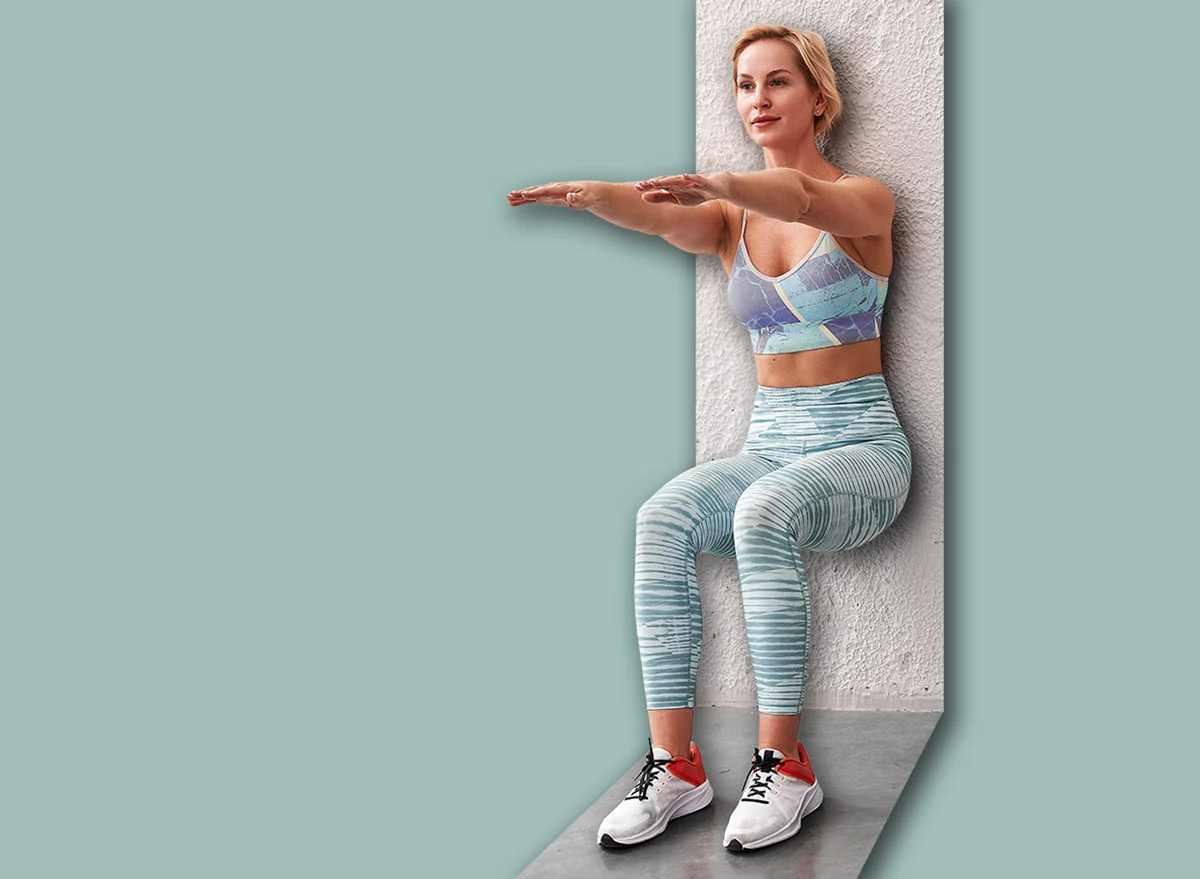
The Wall Sit is a staple in physical therapy for a reason. It is a premier exercise for isolating the quadriceps while leveraging the wall for safety.
Why It Works
Isometric exercises—where the muscle is under tension without the joint changing angle—are incredibly effective for those who may have joint discomfort during dynamic movement. Because you can control the depth of your sit by moving your feet closer to or further from the wall, the exercise is infinitely scalable.
Implementation
To begin, lean your back against a sturdy wall. Walk your feet forward, keeping them shoulder-width apart. Slide your back down the wall until you reach a comfortable depth. Hold this position, focusing on breathing.
- For Beginners: Keep your feet closer to the wall and your knees only slightly bent.
- For Progression: Gradually walk your feet further out, which forces your hips to sink lower and increases the tension on the quads.
- Warning: Tension builds quickly. Start with short durations—15 to 30 seconds—before attempting longer holds.
2. The Wall Squat: Building Concentric Power
While the wall sit builds static strength, the Wall Squat introduces movement. This exercise mimics the "sit-to-stand" motion we perform dozens of times a day.
Why It Works
This move bridges the gap between the static hold and a free-standing squat. By keeping your back against the wall, you maintain a neutral spine, significantly reducing the risk of lower back strain while ensuring the knees track properly over the toes.
Implementation
Stand with your back against the wall, feet hip-width apart. Slowly descend by bending your knees and hips simultaneously. Imagine you are reaching back for a chair. Keep your heels firmly planted on the floor. Pause at the bottom for one second, then push through your heels to return to a standing position. Focus on a 3-second descent and a 2-second ascent to ensure the muscles, not momentum, are doing the work.
3. Wall-Supported Split Squat: Developing Unilateral Stability
Life rarely happens with both feet planted symmetrically. Whether you are stepping onto a curb or climbing a flight of stairs, your body must be able to support its full weight on one leg at a time.
Why It Works
The split squat is the gold standard for correcting muscular imbalances between the left and right legs. Using the wall as a balance aid allows you to safely practice this unilateral movement without the fear of falling.
Implementation
Stand sideways to the wall, placing one hand on it for support. Step one foot forward and the other back into a staggered stance. Lower your back knee toward the floor, keeping your torso upright.
- The Progression Metric: The "finger-touch" system is an excellent way to track progress. Start by touching the wall with all five fingers. As your balance and strength improve, reduce your contact to four, then three, and eventually just one finger. This gradual reduction of support is the most effective way to build genuine core and leg stability.
4. Wall-Supported Standing Hamstring Curl: Protecting the Knee
Often, knee pain is treated by focusing exclusively on the quadriceps. However, the hamstrings are the "brakes" of the knee joint. Strengthening them provides critical posterior support, effectively taking the load off the kneecap.
Why It Works
By working the back of the leg, you create a balanced joint environment. A stronger hamstring prevents the quadriceps from over-pulling on the knee, which is a common cause of chronic discomfort in older adults.
Implementation
Stand facing the wall, placing both hands on it for stability. Keeping your upper body upright, slowly curl one heel toward your glute. The key here is the "eccentric" phase: do not let your leg drop back to the floor. Lower it slowly, counting to three. As you become more proficient, you can introduce a light resistance band around your ankles or a small ankle weight to increase the stimulus.
Implications for Long-Term Health
The primary implication of incorporating these exercises is the preservation of Functional Independence. When you restore the strength required to stand from a chair or climb stairs without pain, you aren’t just improving your fitness—you are lowering your risk of falls and reducing your dependence on assistive devices.
Clinical Perspective and Safety
While these movements are generally safe for the majority of the population over 65, it is essential to approach them with a "safety-first" mindset.
- Consistency over Intensity: It is far better to perform these movements five days a week for ten minutes than to perform a grueling, exhausting workout once a week.
- Listen to the Joint: Muscle soreness (the "burn") is normal; sharp, stabbing pain in the joint is not. If you experience sharp pain, stop immediately and consult with a physical therapist or your primary care physician.
- The Role of Nutrition: Strength training is only half the battle. To repair the muscle tissues being stimulated, ensure your diet includes adequate protein—roughly 1.2 to 1.5 grams of protein per kilogram of body weight—to support muscle protein synthesis.
Conclusion: The Path Forward
You do not need a fancy gym or an expensive trainer to reclaim your mobility. The walls in your home are static, supportive, and always available. By committing to these four fundamental patterns—the Wall Sit, Wall Squat, Split Squat, and Hamstring Curl—you are investing in the most important asset you own: your ability to move through the world freely.
Start slowly, focus on your form, and remember that strength is a journey, not a destination. With consistent practice, you can turn the daily challenge of standing up from a chair into an effortless, automatic part of your life.
About the Author:
Tyler Read, BSc, CPT, is a certified personal trainer with 15 years of experience in the health and fitness industry. His work focuses on longevity-based training, specifically helping aging adults improve functional strength to maintain an active, independent lifestyle.
