

In the fitness industry, there is a persistent myth that rebuilding muscle after the age of 60 requires a complex, high-tech gym membership or an array of heavy, intimidating equipment. However, the latest research in exercise physiology suggests that simplicity is often the most effective tool for long-term health. A single dumbbell—an implement often relegated to the corner of the gym—can serve as the cornerstone of a comprehensive strength-building program that fosters mobility, bone density, and functional independence.
For those navigating their seventh decade and beyond, the goal of exercise shifts from aesthetic perfection to "longevity-based training." This means focusing on movements that mimic daily life while minimizing the risk of injury. By mastering five fundamental patterns with a single weight, you can cultivate a level of total-body strength that defies the traditional aging trajectory.
The Science of Functional Strength After 60
The physiological decline associated with aging, particularly sarcopenia (the loss of muscle mass), is not inevitable; it is a manageable condition. Studies published in the National Center for Biotechnology Information (NCBI) have consistently shown that resistance training is the primary intervention to combat age-related muscle loss.
When you use a machine, the path of motion is fixed. A dumbbell, however, requires the user to stabilize the weight through space. This "free-weight" aspect engages stabilizer muscles, improves neural coordination, and enhances proprioception—the body’s ability to perceive its position in space. This is critical for balance and fall prevention in older adults.
The Five Pillars of Movement
To build a sustainable program, we focus on five primary movement patterns:
- The Squat (Knee-dominant): Essential for sitting, standing, and stair climbing.
- The Overhead Press (Vertical push): Necessary for reaching for high shelves and upper-body stability.
- The Row (Horizontal pull): Crucial for posture and countering the "slumping" associated with aging.
- The Romanian Deadlift (Hip-hinge): The king of posterior chain strength, vital for back health.
- The Suitcase Carry (Loaded gait): The ultimate functional move for carrying groceries or luggage.
Chronology of a Training Session
For the individual over 60, recovery is just as important as the stimulus. A recommended schedule is to perform these five movements two to four days per week. This frequency allows the central nervous system to recover while providing the consistent stimulus required for muscle protein synthesis.
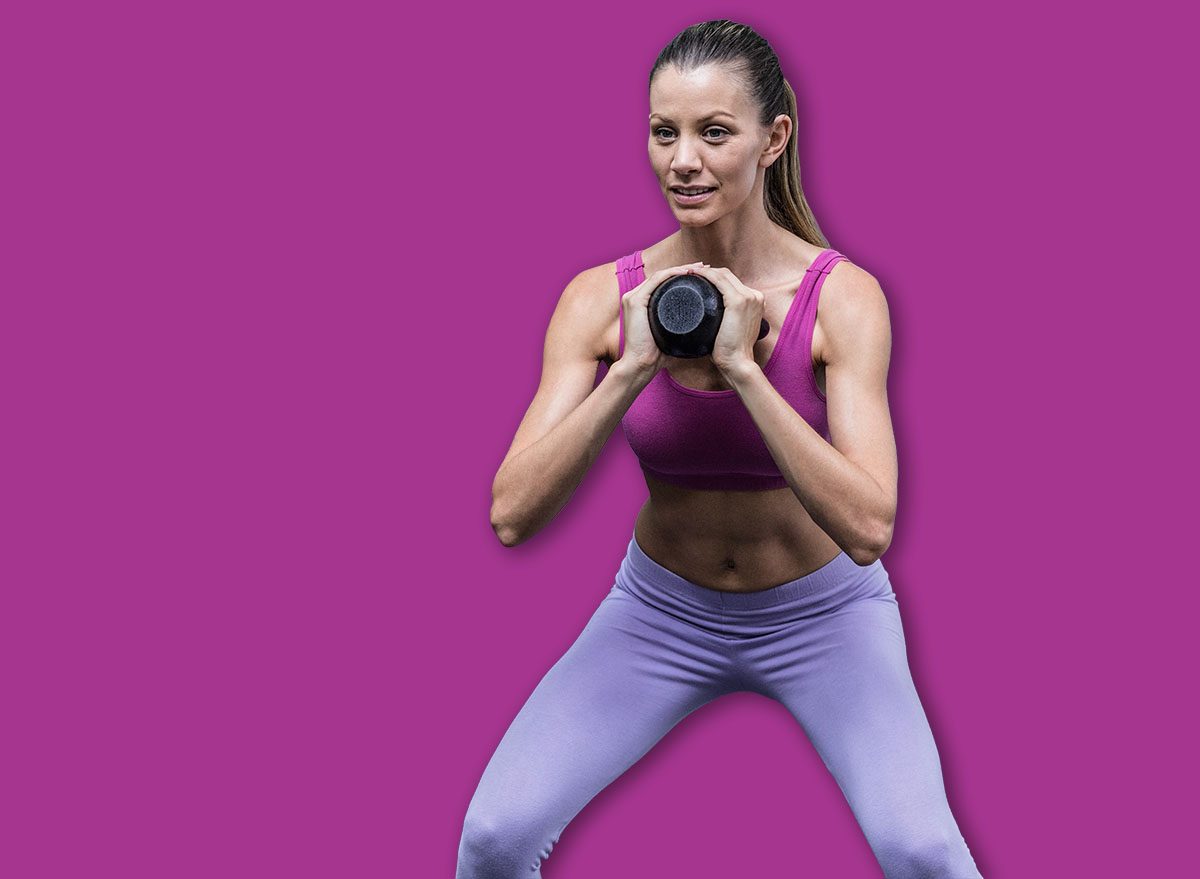
1. The Goblet Squat
The goblet squat is the gold standard for teaching proper squat mechanics. By holding the weight against the sternum, you create a natural counterbalance that encourages an upright torso, preventing the dangerous "rounding" of the lower back that often plagues beginners.
- Execution: Hold the dumbbell vertically against your chest. With feet shoulder-width apart, sit your hips back and down. Ensure your knees track over your toes.
- Why it matters: It builds the quadriceps and glutes while reinforcing core bracing—a key component in preventing lower back pain.
2. Half-Kneeling Shoulder Press
Standing overhead presses can sometimes place undue stress on the lumbar spine. The half-kneeling variation, where one knee is on the floor and the other foot is planted, provides a locked-in base.
- Execution: Kneel on your right knee, press with your left arm. This forced stability prevents you from "cheating" with your hips or leaning backward.
- Why it matters: It promotes shoulder health and improves the stability of the core through the transverse abdominis.
3. Single-Arm Bent-Over Row
Many older adults suffer from "rounded shoulder syndrome" due to excessive sitting. Pulling movements are the antidote.
- Execution: Lean forward with a flat back, resting your non-working hand on a chair or your knee. Pull the dumbbell toward your hip, focusing on retracting the shoulder blade.
- Why it matters: This strengthens the rhomboids and lats, which are essential for maintaining a proud, upright posture.
4. Staggered-Stance Romanian Deadlift (RDL)
The RDL is the most effective way to strengthen the hamstrings and glutes without the high spinal load of a traditional barbell deadlift. The "staggered stance" (one foot slightly behind the other) shifts the load to one leg, improving balance.
- Execution: Place the dumbbell in the hand opposite the front foot. Hinge at the hips, keeping the front knee soft. Feel the stretch in the hamstring of the front leg.
- Why it matters: Strong hamstrings are the primary protectors of the knee joint.
5. Dumbbell Suitcase Carry
If you only do one exercise for longevity, make it the carry. It is the ultimate test of grip strength, core stability, and endurance.
- Execution: Hold one heavy dumbbell at your side like a suitcase. Walk with a steady, upright gait for 30–45 seconds. Do not let the weight pull your torso to the side.
- Why it matters: It forces your core to work isometrically, mimicking the act of carrying heavy objects in real-world scenarios.
Supporting Data: Why "Less" is Often "More"
Research into aging populations suggests that intensity should be scaled, not necessarily by weight, but by effort and form. A study on resistance training in older adults found that those who performed slow-tempo repetitions (taking three seconds to lower the weight) saw significant improvements in muscle density compared to those who used faster, momentum-based reps.
Furthermore, the "one-dumbbell" approach reduces the "barrier to entry." Many seniors abandon training because the gym feels overwhelming or the commute to the facility is too long. By removing the friction—having the equipment in your living room—the likelihood of adherence increases by nearly 60%, according to behavioral exercise psychology data.
Expert Perspectives and Professional Guidance
Fitness professionals specializing in geriatric exercise emphasize that "rebuilding" is a process, not a race. Dr. Elena Vance, a clinical exercise physiologist, notes: "The biggest mistake I see in clients over 60 is trying to match the weight they lifted in their 30s. At 60, we prioritize ‘Time Under Tension.’ By slowing down the movement, you gain the same muscular benefit with half the load, which is much safer for the joints and connective tissues."
Physical therapists often endorse the "suitcase carry" as a foundational movement for spinal health. By keeping the core tight and resisting the lateral pull of the weight, the deep stabilizers of the spine are activated in a way that crunches or sit-ups simply cannot replicate.
Implications for Longevity and Independence
The implications of adopting a consistent, single-dumbbell routine are profound. Beyond the aesthetic benefits of muscle definition, this program serves as an insurance policy for your future self.
- Bone Density: Resistance training is the only effective way to combat osteoporosis. The loading of the bones during a goblet squat or RDL stimulates osteoblasts, the cells responsible for bone formation.
- Metabolic Health: Muscle is metabolically active tissue. By increasing your muscle mass, you effectively improve your insulin sensitivity and resting metabolic rate, which helps manage weight and blood sugar levels naturally.
- Independence: The ability to perform a squat and a carry means the ability to live independently. Being able to rise from a chair, carry groceries, and reach for items on a shelf is the literal definition of functional longevity.
Final Recommendations for Success
- Consistency over Intensity: It is better to do 15 minutes three times a week than 60 minutes once a week.
- Listen to the Body: There is a difference between "muscle soreness" and "joint pain." If you feel sharp, stabbing pain, stop immediately and adjust your form.
- Progressive Overload: Once 12 repetitions feel easy, do not just jump to a heavier weight. Try slowing down your tempo, adding a pause at the bottom of the movement, or reducing the rest time between sets.
- Hydration and Nutrition: Ensure you are consuming adequate protein—ideally 1.2 to 1.5 grams per kilogram of body weight—to support muscle recovery.
By shifting your focus to these five simple, functional movements, you can transform your home into a high-performance training center. You don’t need a gym full of steel to rebuild your body; you simply need the commitment to show up, the discipline to move with control, and a single, trusty dumbbell to guide your path to strength.
