

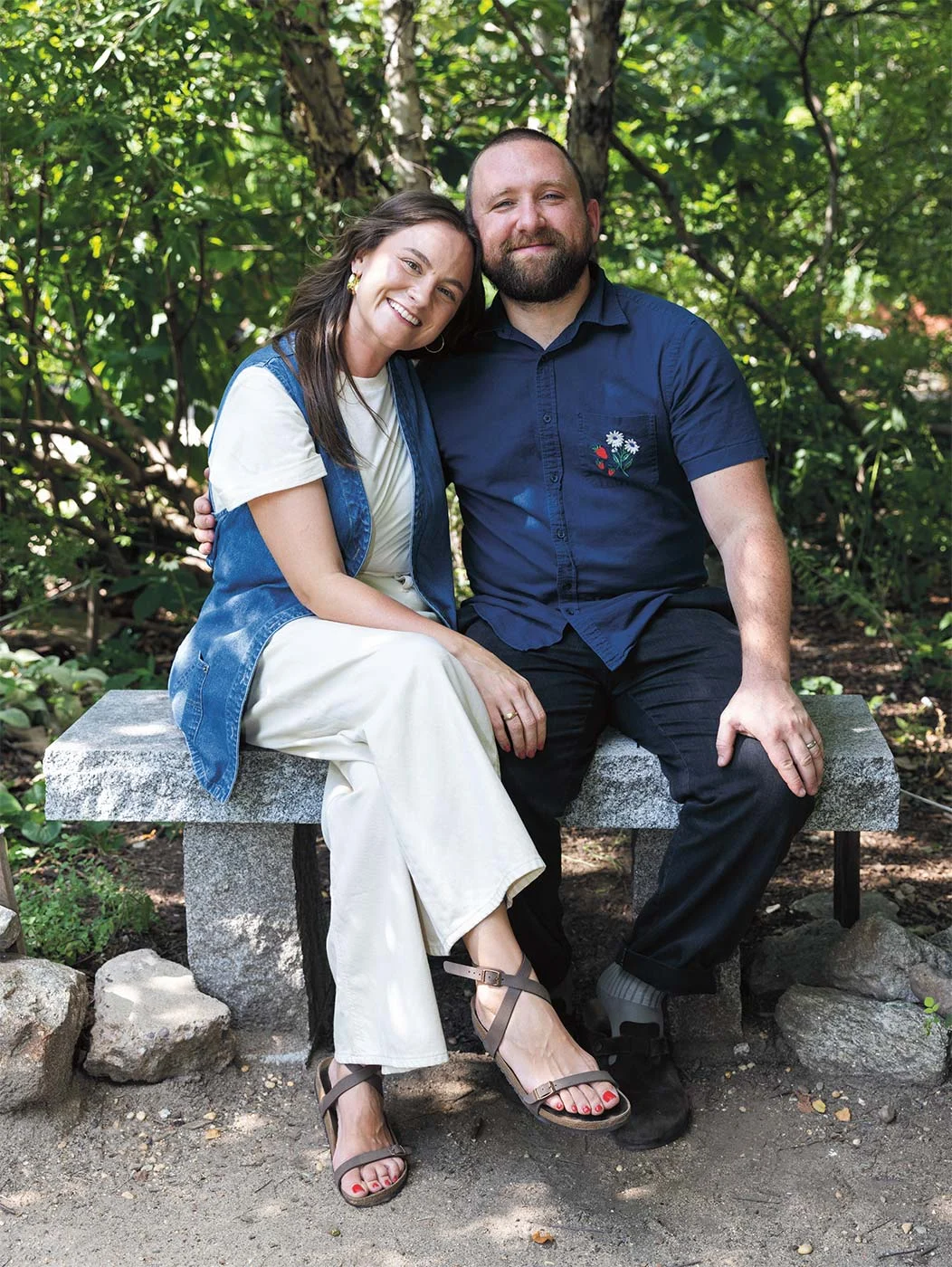
Just across the Delaware River in the vibrant Northern Liberties neighborhood of Philadelphia, a new, ambitious project is taking root. Field Day, the forthcoming cocktail bar from Danny and Katie Childs, promises to be more than just a watering hole; it is the physical manifestation of a decade-long exploration into the intersection of ethnobotany, regional agriculture, and the art of the cocktail. By marrying the hyper-local ingredients of the Jersey-Philly corridor with a radical, science-forward approach to fermentation, the Childs are positioning Field Day as a boundary-pushing destination that honors the terroir of the Mid-Atlantic.
The Evolution of a Beverage Visionary
The path to Field Day was never linear. When Danny Childs first walked into the Farm & Fisherman Tavern in Cherry Hill in 2014, his aspirations were rooted in academia, not the hospitality industry. As an ethnobotanist—a scientist who studies the complex relationships between people and plants—Childs had spent his post-graduate years conducting fieldwork in South America. Upon returning to the region where he was raised, he sought to marry his academic background with practical agriculture.

“I needed money, and I thought maybe Farm & Fisherman would buy some of our vegetables,” Childs recalls of his initial interaction with owners Josh Lawler and Todd Fuller. While the restaurant did indeed purchase his produce, their staffing needs leaned toward service. What began as a stop-gap job evolved into a transformative nine-year tenure. It was here that Childs’ academic curiosity collided with the constraints and possibilities of a professional kitchen. He began bringing his own farm-grown ferments, preserves, and forage-based ingredients to the chefs, eventually carving out a niche that would become the foundation of his career.
Chronology of a Movement: From Farm to Bar
The journey from a server at a suburban tavern to the proprietor of a marquee Philadelphia destination is marked by several pivotal milestones:

- 2014: Danny Childs begins working at Farm & Fisherman, where he begins experimenting with local produce in cocktails.
- 2018: The “Slow Drinks” movement is formalized. Drawing on the principles of the Slow Food Movement—biodiversity, sustainability, and transparency—Childs begins to craft a narrative that connects the consumer directly to the land.
- 2020-2022: Childs pens a popular beverage column for Edible Jersey, guided by the late editor Teresa Politano, who helped him synthesize his academic research into a consumer-facing voice.
- 2022: The publication of Slow Drinks, a book that challenges readers to forage for garden herbs and backyard shrubs to create seasonal, place-based libations. The book later earns a prestigious James Beard Award.
- 2024-2025: Conceptualization and construction of Field Day in Northern Liberties, Philadelphia.
- Fall 2026: Scheduled opening of Field Day.
The Philosophy of ‘Slow Drinks’
At its core, the Slow Drinks movement is a rebellion against the homogeneity of mass-produced spirits. It is, as Childs describes it, the practice of “weaving together stories of people, place, process, and plants.” By utilizing ingredients that are often overlooked—dandelions, sassafras, local black walnuts, or beeswax—Childs creates drinks that serve as a liquid map of the Mid-Atlantic.
The process is inherently patient. In an era of instant gratification, Childs champions the “slow” aspect of his craft. Making a true liquor or a complex infusion requires time, allowing natural enzymes and yeasts to transform raw botanical matter into something greater than the sum of its parts. This is why the bar is named “Field Day”—it captures the energy of the harvest and the spirit of a day spent in connection with the soil.

Supporting Data: Sourcing and Collaboration
Field Day is uniquely positioned to bridge the agricultural gap between South Jersey’s lush farmlands and Philadelphia’s urban culinary scene. The bar’s supply chain is a testament to the relationships Childs has spent a decade cultivating.
- New Jersey Partnerships: The bar will utilize produce and botanicals from D&V Organics in Swedesboro and the esteemed Robson’s Farm in Wrightstown.
- Pennsylvania Partnerships: Teddy Moynihan of Plowshare Farms is currently growing heirloom ingredients specifically curated for the bar’s cocktail program.
- Vines and Vines: The team is collaborating with Blind Fox Vineyards in Bucks County to source local grapes, further emphasizing the bar’s commitment to regional viticulture.
The food program, a critical pillar of the Field Day experience, will be helmed by consulting chef partner Melissa McGrath, formerly of Sweet Amalia Market & Kitchen. McGrath’s reputation for unfussy, ingredient-driven cooking makes her the ideal partner for a bar that seeks to elevate the concept of “bar food.” Expect menu items that bridge the gap between Pennsylvania Dutch heritage and Jersey Shore classics: Lebanon bologna sandwiches with house-made fermented chowchow, red beet eggs, and local clams.

Official Responses and Creative Vision
The excitement surrounding Field Day stems from the team’s willingness to experiment. Behind the bar, a dedicated "Director of Fermentation and Preservation" is already pushing the boundaries of what a cocktail can be.
“After years of studying and seeing culinary beverages and traditions proudly represented in their places, I thought it would be really cool to do that here,” says Childs. He notes that the bar’s menu will feature over 30 original cocktails, including the Birch and Bourbon—a complex blend of homemade birch beer, wintergreen, sassafras root, and hibiscus, rounded out with Appalachian Fernet.

Regarding the bar’s atmosphere, Katie and Danny Childs emphasize that despite the intellectual weight of the “Slow Drinks” movement, the goal is accessibility. “We want a neighborhood bar,” they reiterate. “A place comfortable enough to come multiple times a week.”
Implications for the Industry
The opening of Field Day signals a shift in the regional hospitality landscape. It represents a move away from the generic “craft cocktail” bars that rely on pre-made mixers and imported syrups, toward a model that is deeply rooted in the local ecology. By bringing the principles of ethnobotany into the public sphere, Field Day encourages patrons to view their drinks as extensions of their environment.

Furthermore, the integration of a professional fermentation program at a bar level—where ingredients like beeswax and fermented pickles are treated with the same reverence as top-shelf spirits—sets a new benchmark for Philadelphia’s beverage scene. If successful, Field Day could provide a blueprint for other operators, proving that the most sustainable, high-quality, and interesting ingredients are often found just a short drive from the city center.
As the doors prepare to open at 923 N Second St, the anticipation is palpable. Whether it is the boozy gelato that pays homage to Philadelphia’s water ice culture or the nuanced, forest-floor-inspired martinis, the message is clear: the future of drinking is local, it is slow, and it is happening in the fields and forests surrounding us. For those eager to taste the landscape, the wait is almost over.
