

As we navigate the later chapters of life, our bodies undergo a series of natural physiological shifts. Among the most common concerns for men and women over 55 is the loss of muscle mass, decreased collagen production, and a reduction in skin elasticity—a trifecta that often manifests as “under-arm flab” or sagging skin. While the aesthetic desire for toned arms is a common motivator for hitting the gym, the importance of upper-body strength extends far beyond vanity.
Functional fitness—the ability to carry groceries, lift grandchildren, or swing a golf club with ease—is the true benchmark of health in our fifties and beyond. With the right strategy, it is entirely possible to sculpt lean muscle, enhance functional capability, and improve your overall silhouette.
The Reality of Muscle Loss and Aging
To address sagging arms effectively, one must first understand the biology of aging. After the age of 30, adults can lose between 3% to 5% of their muscle mass per decade, a condition clinically known as sarcopenia. By the time we reach our mid-fifties, this process accelerates, leading to a noticeable reduction in metabolic rate and a shift in body composition.
Jacob Siwicki, founder of Siwicki Fitness, a former top-ranked Equinox group fitness instructor, and a leading expert in the D.C. fitness scene, emphasizes that transparency is the first step toward success.
“Strength training can rebuild the muscle underneath and improve the arm’s shape, but it cannot completely tighten loose skin or selectively remove arm fat,” Siwicki explains. “That part is important to be honest about. The best approach is building muscle, maintaining a healthy overall body-fat level, eating enough protein, and giving the process time.”
The Functional Importance of Upper-Body Strength
While the cosmetic aspect of "toned arms" is often the headline, the functional implications are where the real value lies. Strong arms are essential for maintaining independence. As we age, the muscles of the shoulders, biceps, and triceps act as the primary engines for daily life.
- Grip and Carry: Stronger biceps and forearms make routine tasks, such as hauling groceries or carrying luggage, safer and less taxing on the joints.
- Stability and Posture: Developing the shoulder girdle helps counteract the "slump" that often accompanies aging, leading to better posture and reduced neck and upper back pain.
- Active Living: For those who enjoy sports like pickleball, tennis, or golf, upper-body strength is non-negotiable for power, precision, and injury prevention.
Core Pillars of an Effective Arm-Sculpting Program
To achieve visible results, a workout routine must be paired with specific lifestyle habits. Siwicki outlines four essential pillars:
- Progressive Resistance: You must challenge the muscles consistently. If the weight feels too light, the body has no stimulus to build new tissue.
- Protein Intake: Muscle protein synthesis slows down with age. Ensuring you have adequate protein in your diet is vital to providing the building blocks for the muscle you are trying to cultivate.
- Hydration and Skin Health: While exercise builds the muscle, maintaining hydration and high-quality nutrition supports skin elasticity from the inside out.
- Patience and Consistency: Muscles do not change overnight. A consistent regimen, performed three to four times per week, is the key to long-term transformation.
The 5 Essential Exercises for Arm Definition
To help you get started, we have curated five home-based exercises that target the primary muscle groups of the arm: the triceps (the back of the arm), the biceps (the front), and the deltoids (the shoulders).
1. Incline Pushups: The Upper Body Foundation
Incline pushups are a superior alternative to standard floor pushups, especially for those concerned about wrist or shoulder strain. By placing your hands on a stable, elevated surface (like a countertop or a sturdy table), you decrease the amount of body weight you must lift while still heavily engaging the triceps, chest, and shoulders.
- The Benefit: They improve core stability while safely overloading the upper body.
- Pro-Tip: Keep your elbows tucked closer to your ribs to shift more of the workload onto the triceps.
2. Hammer Curls: Defining the Biceps
Unlike traditional curls where the palm faces up, the hammer curl involves holding the dumbbells with your palms facing each other. This movement targets the brachialis—a muscle that sits beneath the bicep—which can provide a "fuller" look to the arm.
- The Benefit: This variation is often easier on the wrists and provides excellent definition for the entire arm.
- Pro-Tip: Focus on the lowering phase. Taking three seconds to lower the weight back down is where the most muscle fiber recruitment occurs.
3. Shoulder Presses: Sculpting the Deltoids
Strong shoulders create a frame that makes the arms look more toned by comparison. The shoulder press is the gold standard for developing the deltoids.
- The Benefit: It builds functional strength that translates directly into the ability to lift objects overhead—a vital skill for maintaining independence.
- Pro-Tip: Engage your core during the press to ensure your lower back remains protected and stable.
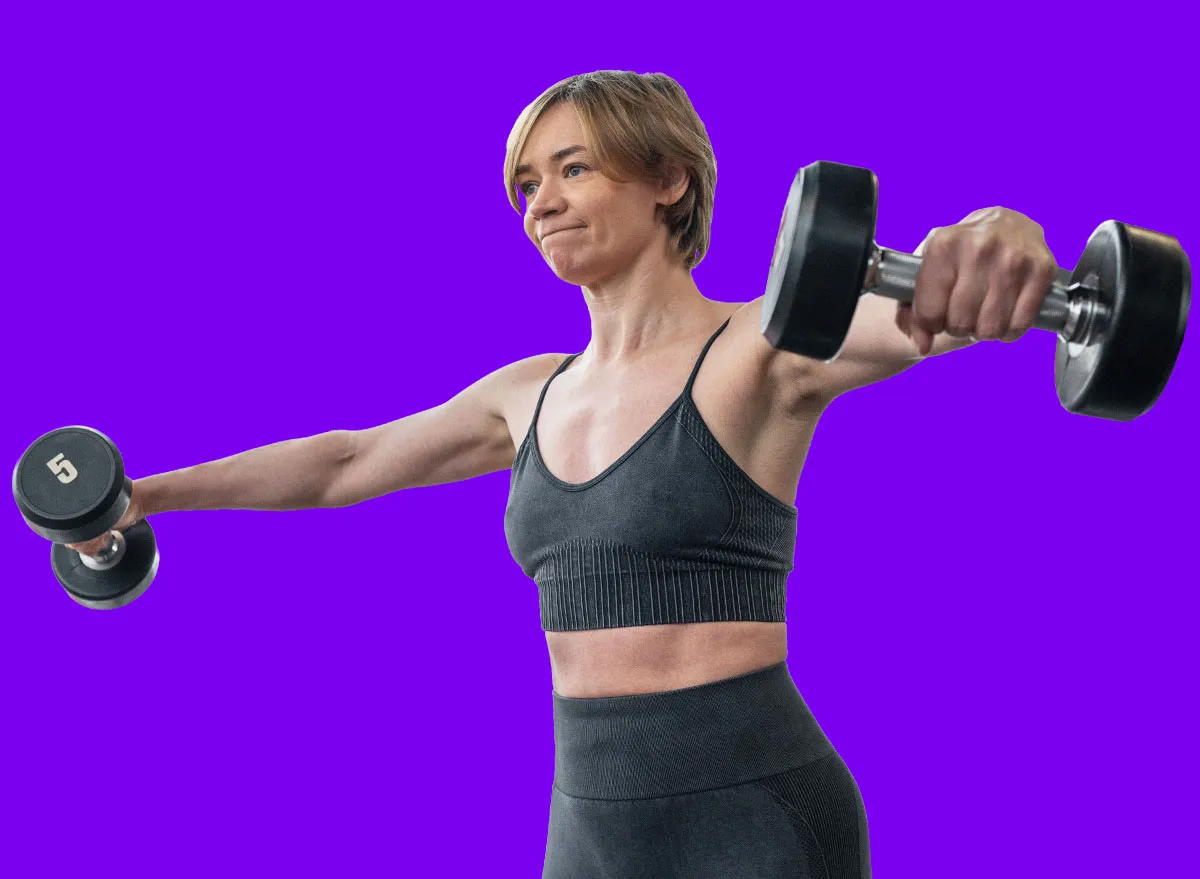
4. Lateral Raises: Targeting the "Cap"
If you want to create a sculpted silhouette, the lateral raise is your best friend. This move isolates the side of the shoulder, helping to create that "capped" look that provides a clear separation between the shoulder and the upper arm.
- The Benefit: It is an isolation exercise that requires very little weight to be effective, making it ideal for those with joint sensitivity.
- Pro-Tip: Imagine you are pouring two pitchers of water out to the sides. This small internal rotation helps keep the focus on the shoulder muscle.
5. Tricep Kickbacks: Eliminating the Sag
The tricep is the largest muscle in the arm. When it is underdeveloped, the skin on the back of the arm can appear loose. Tricep kickbacks effectively target the long head of the tricep, which is the primary driver of arm firmness.
- The Benefit: This movement is highly effective for isolating the back of the arm, which is rarely used in day-to-day activities.
- Pro-Tip: Keep your elbow pinned to your side throughout the entire range of motion. If your elbow moves, you lose the tension on the target muscle.
Expert Insights: The Path Forward
The consensus among fitness experts is clear: the most dangerous thing you can do for your body after 55 is to become sedentary. The "sagging" that many fear is often a result of muscle atrophy rather than just skin laxity. By reclaiming that muscle, you aren’t just changing your appearance—you are investing in your mobility and longevity.
As you integrate these exercises into your weekly routine, remember to listen to your body. Start with lighter weights to ensure your form is pristine, and prioritize consistency over intensity in the first few weeks. As Siwicki notes, the combination of a healthy diet, consistent resistance training, and a patient mindset is the only proven formula for success.
The goal is not to be 25 again; it is to be the strongest, most capable, and most confident version of yourself at 55, 65, and beyond. Start slow, stay focused, and enjoy the process of rebuilding your strength from the inside out.
