

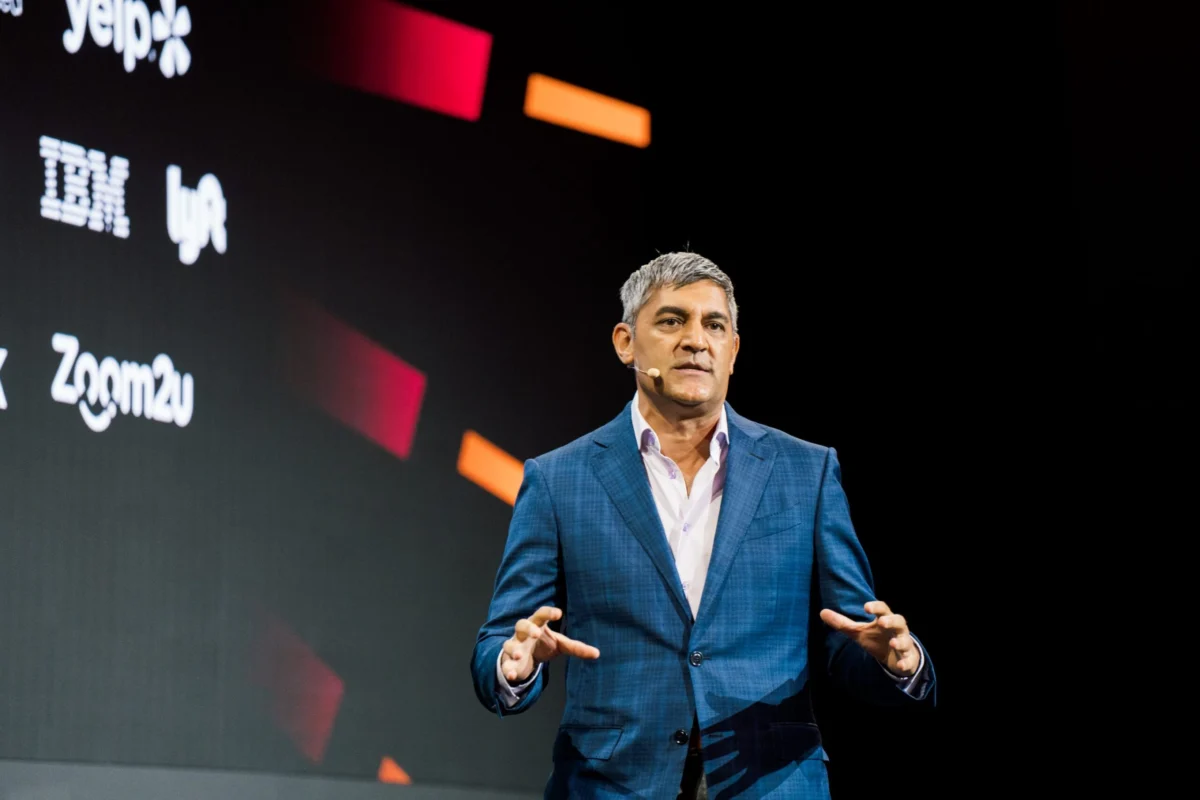
For the typical college graduate, 4:30 a.m. is the twilight hour of a long night—the tail end of social revelry or the final moments of restless sleep before an early morning lecture. But for Khozema Shipchandler, CEO of cloud communications giant Twilio, this pre-dawn silence is not the end of the day; it is the strategic foundation of his professional dominance.
At 51, Shipchandler represents a breed of executive leadership that views the workday not as an eight-hour block, but as a lifestyle discipline. In an era where the modern workforce is increasingly clamoring for radical flexibility, four-day workweeks, and strict digital boundaries, Shipchandler stands as a staunch defender of the "old school" grind. He posits that the C-suite is not a destination reachable through work-life balance, but a peak that demands total commitment, sacrifice, and a rigorous adherence to high-performance habits.
The Immigrant Ethos and the Climb to the Top
Shipchandler’s trajectory is rooted in the narrative of the "immigrant success story." Born to parents who emigrated from Mumbai to the United States, he was raised in an environment where professional excellence was not merely a goal, but a family mandate.
"My parents were the classic immigrant success story," Shipchandler reflected in a recent interview. "They really pushed working hard and playing hard—which, by the way, I do play hard when I’m not working—so that was the goal. They wanted their kids to do better than them and to create opportunities for them."
This upbringing cultivated a mindset that saw opportunity as a reward for effort. After graduating from Indiana University Bloomington in 1996, he entered the industrial sector, quickly distinguishing himself within the ranks of General Electric. His ascent was meteoric: by the age of 31, he was already serving as the Chief Financial Officer for a multi-billion-dollar GE business unit. Reflecting on that time, he notes, "If you were willing to put in the effort, they were willing to give you the opportunity."
The Great Divide: Traditionalism vs. Modern Workplace Culture
Shipchandler’s philosophy puts him at odds with a significant portion of the current workforce. As Millennials and Gen Z employees reshape corporate norms—prioritizing autonomy, mental health, and the right to "unplug"—Shipchandler remains unconvinced that such boundaries are compatible with top-tier leadership.
When asked if true work-life balance is possible for a CEO, his response is characteristically blunt: "I do not."
He does not frame this as a moral judgment against those who choose a different path, but rather as an acknowledgment of the reality of the role. "If you want to work eight-to-five, coach your kids’ sports teams, have the evenings for yourself, and maybe have another hobby or interest, that’s awesome," he concedes. However, he adds a sobering caveat: he has never encountered a peer at his level of industry responsibility who maintains that kind of schedule.
For Shipchandler, the sacrifice is tangible. He openly admits that his professional ascent meant missing out on significant moments in his son’s life, including tennis matches. It is a calculated trade-off, one he believes is inherent to the "consequences" of high-level leadership.
A Chronology of Performance: The Daily Routine
To run a $30 billion company with over 5,500 employees, Shipchandler relies on a rigid, almost militaristic schedule that maximizes cognitive output while minimizing distraction. His routine is a masterclass in time-blocking and sequential prioritization.
The Morning Offensive (4:30 a.m. – 7:30 a.m.)
The day begins at 4:30 a.m. with a triage session. Shipchandler scans Slack, emails, and urgent texts, identifying "red hot" issues that require immediate executive intervention. Once the fires are identified, he moves through a non-negotiable sequence: coffee, a smoothie for breakfast, a scan of global news, and a workout.
"I do it in that order intentionally," he explains. "While I’m working out, I have an opportunity to think through the various things that have happened through the course of the news and the things that I’ve seen on email and Slack." This is his "thinking time," where the day’s strategy is refined before the rest of the world wakes up.
The Core Workday (7:30 a.m. – 6:30 p.m.)
By 7:30 a.m., he is "officially at work." While many of Twilio’s engineers begin their day around 9:00 a.m., Shipchandler has already banked several hours of deep, focused work. He is highly protective of his calendar, viewing time as his most finite resource.
To maintain momentum, he employs a strict meeting protocol: 25-minute meetings for 30-minute slots, and 50-minute meetings for hour slots. The remaining five to ten minutes are not for emails, but for movement—laps around the house or office to clear his head.
The Evening Transition (6:30 p.m. – 9:30 p.m.)
Evenings are dedicated to dinner—either with family, customers, or leadership teams—followed by one final hour of work at 8:00 p.m. The wind-down is analog and low-stakes, involving SportsCenter or spending time with his wife. By 9:30 p.m., he is in bed, preparing for the next cycle.
Supporting Data: The Science of High-Performance Habits
Shipchandler’s insistence on "working smarter" is supported by his integration of micro-habits that prevent cognitive fatigue. His practice of a 10-minute treadmill walk after lunch is a deliberate tactic to avoid the "afternoon lull," keeping his blood flow and focus consistent throughout the day.
Furthermore, he maintains a strict digital diet. By abstaining from social media, he eliminates the "cognitive noise" that plagues many modern executives, allowing him to maintain deep focus on Twilio’s long-term objectives. This "intentionality," he argues, is the differentiator between those who simply work long hours and those who produce meaningful results.
Implications for the Future of Leadership
The rise of "quiet vacationing" and "quiet quitting" among younger demographics signals a shift in the cultural contract between employer and employee. However, Shipchandler’s perspective suggests that while the culture of the office may change, the requirements of the C-suite are unlikely to follow suit.
For the aspiring executive, the implication is clear: leadership at the highest level requires an extreme level of personal organization and a willingness to prioritize the organization above personal convenience. Shipchandler’s routine is not necessarily a prescription for everyone; rather, it is a diagnostic tool. It asks the individual to define their own benchmarks based on their life experiences and their ultimate career ambitions.
"I think habits really matter," Shipchandler says. "When you have a set of habits, it allows you to kind of move through the work in a way that is very intentional and you don’t let a lot of distractions creep in."
Conclusion: The Cost of the Corner Office
Khozema Shipchandler represents a bridge between the traditional corporate titans of the late 20th century and the tech-driven, hyper-connected leaders of today. His routine serves as a reminder that the path to the top is rarely paved with convenience.
Whether one agrees with his rejection of traditional work-life balance is perhaps secondary to his central point: the C-suite is a high-stakes environment where the demands are consistent, relentless, and unforgiving. As the professional landscape continues to evolve, the debate over "hustle culture" will likely intensify, but for leaders like Shipchandler, the 4:30 a.m. alarm remains the most vital tool in their arsenal. In a world of infinite distractions, he has chosen the path of singular focus—a choice that has clearly paid dividends for his career and his company.
