

Introduction: A Sanctuary for Conversation
In the digital age, the podcast studio has largely become synonymous with sterile, black-walled rooms, neon LED strips, and utilitarian microphones. However, as the global wellness phenomenon On Purpose migrated to the expansive reach of Netflix this past summer, host Jay Shetty—a former monk turned life coach with a staggering 65 million followers—sought a departure from the conventional. He did not want a set; he wanted a sanctuary.
The result is a masterclass in atmospheric design. Located within the privacy of his Los Angeles home, Shetty’s new studio is a 800-square-foot environment designed to bypass the artifice of broadcasting and invite the kind of raw, vulnerable disclosure that has become the hallmark of his brand. Tasked with the challenge was Los Angeles-based designer Mike Moser, who was charged with a singular, daunting objective: build a space that feels like a natural extension of a home while functioning as a professional-grade television stage.
The Chronology of Creation: From Drywall to Sanctuary
The project, which came to life in the spring of 2026, was a race against time and a test of creative vision. The commission began in March, with an aggressive construction timeline that saw the space transformed from a raw, dry-walled shell to a finished, high-concept studio in just three weeks by late April.
"My team members were working around the clock," Moser explains, reflecting on the intensity of the build. The speed of the project required absolute clarity in design language. Because the studio occupies a footprint within Shetty’s personal residence, the aesthetic had to bridge the gap between "den-like" comfort and "camera-ready" polish.
Moser leaned heavily into residential design cues rather than broadcast standards. He drew inspiration from the quiet, layered luxury of boutique hotels and the intellectual depth of private libraries. The goal was to create a space that wouldn’t just look good on a high-definition Netflix monitor, but would physically manifest the "slow down" philosophy Shetty preaches to his millions of listeners.

The Anatomy of the Space: Elements of Design
The studio is a sophisticated dialogue between texture, color, and provenance. Every element, from the structural paneling to the specific curation of art, serves a dual purpose: aesthetic grounding and acoustic/visual warmth.
The Foundation of Texture
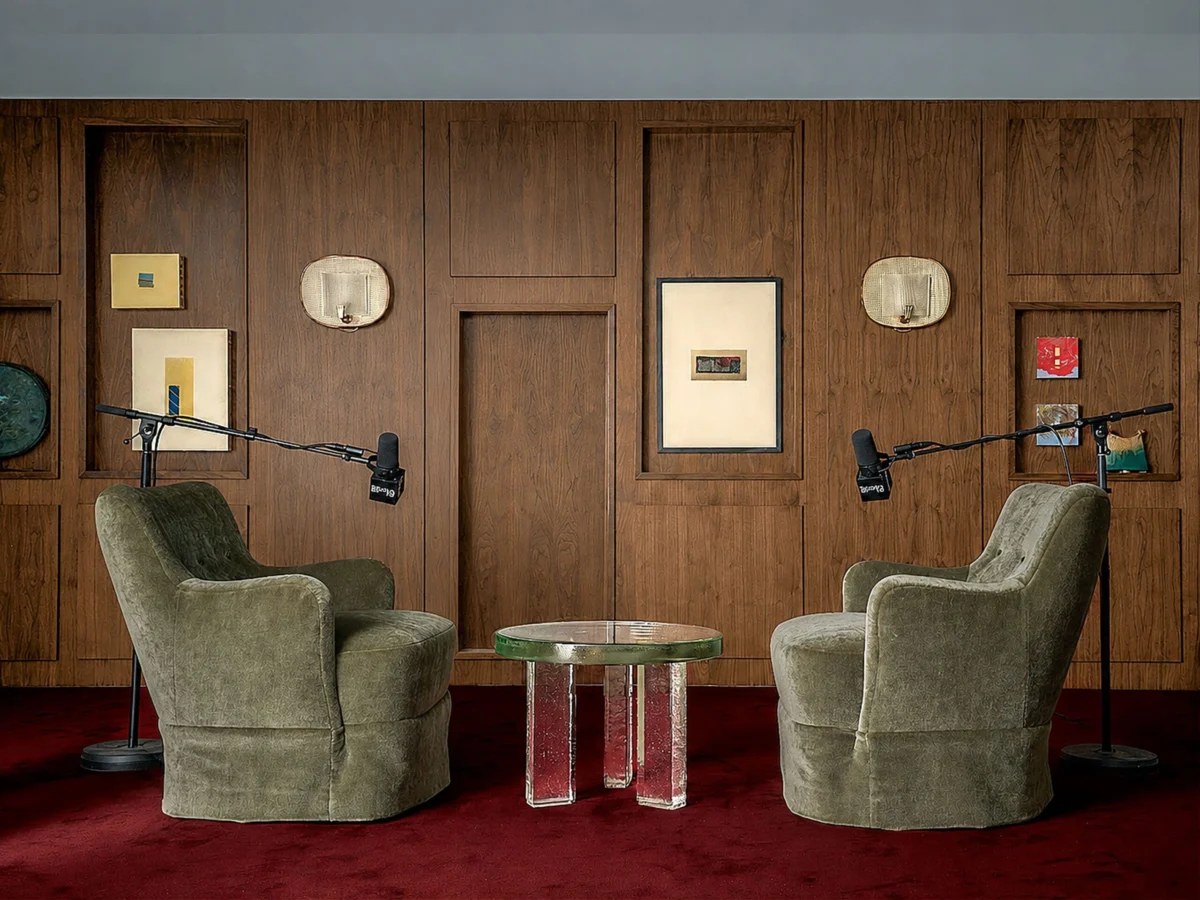
The walls, custom-fabricated by Moser, are paneled in bleached walnut. Drawing inspiration from the architectural legacy of Villa Borsani, Moser incorporated structural protrusions—depth-defying shelves that provide both architectural definition and a display surface for curated objects, such as a vintage vessel and a ceremonial gong.
The color palette is a carefully orchestrated balance. A deep wine-colored rug from Nordic Knots anchors the room, creating a rich, earthy contrast against a striking, replastered blue ceiling. To prevent the space from feeling too "designed" or overwhelming, Moser introduced various shades of green, which he describes as a counterbalance to the primary red and blue tones. "It’s such a friendly, warm color," says Moser. "Given the type of work Jay does—these are dead serious conversations—it should be a space that is inviting and warm."
The Centerpiece of Discourse
The seating arrangement—the heart of the studio—features two vintage Danish armchairs upholstered in luxurious mohair velvet by Designs of the Time. Positioned between them is a custom-commissioned glass table by Courtney Applebaum, featuring three jagged, architectural slabs for legs. This piece serves as the literal and figurative nexus of the room, providing a tactile, grounded surface for the guests.
Curation as Conversation
Art in the space serves as more than mere decoration; it acts as a conversational partner. Behind the guest’s chair, two contrasting works provide a backdrop that is visually stimulating without being distracting: a large-scale acrylic on linen by Liam Stevens (Untitled XXV) and a layered oil painting by J. Grant (Black and Blue). A vintage Fortuny lamp stands nearby, providing a soft, diffused light that is inherently flattering to the human face.

Elsewhere, the studio features a unique piece by Rosie Clements: Calyx (2026), a photograph transformed into bubble wrap via UV printing. "I think one thing that was huge for Jay was bringing in artists that had different perspectives," Moser notes.
Supporting Data: Why Environment Matters
The success of On Purpose—which has featured high-profile guests ranging from Michelle Obama and Lewis Hamilton to Selena Gomez—is predicated on the quality of the dialogue. The move to Netflix for its latest season, featuring guests like Karl-Anthony Towns and Camila Mendes, highlighted a need for higher production values, but Shetty remained adamant about the "intimacy-first" approach.
Design in the podcasting space is often an afterthought, yet data on viewer engagement suggests that environment plays a significant role in audience retention. When a space feels authentic, the barrier between the viewer and the subject dissolves.
Moser had to account for "triple-duty" design:
- The Guest Experience: The furniture and lighting had to make a guest feel comfortable enough to reveal parts of themselves they don’t normally share.
- The Personal Aesthetic: It had to be a space where Shetty, who spends hours there daily, felt a sense of belonging and peace.
- The Broadcast Demand: The space had to be photogenic and technically sound, ensuring that every guest, regardless of their personal style, looked "incredibly good" within the frame.
Official Responses and Philosophy
For Jay Shetty, the studio is the ultimate physical manifestation of his brand’s mission. "One of the most meaningful moments was welcoming guests into the space for the first time," Shetty says. "It was rewarding to see the studio become a home for meaningful conversations. It reinforced something we’ve always believed: The environment matters."

Shetty emphasizes that the design process was inherently collaborative. He didn’t want a "traditional set," he wanted a space that felt like an extension of his own living room. The result is an environment that functions as a psychological anchor. Before a single question is asked, the room sets the tone—warm, intimate, and focused.
Mike Moser, meanwhile, found the project to be a unique departure from his residential-focused portfolio. His biggest takeaway? The importance of "swag." Reflecting on the final result, Moser notes, "It just looks incredibly good on Jay. He’s swaggy as hell."
Implications for the Future of Media
The collaboration between Shetty and Moser signals a shift in the media landscape. As the line between "at-home" content and "prestige television" continues to blur, the design of the production space is becoming as critical as the lighting or the audio quality.
This project suggests that the future of high-end podcasting lies in environmental storytelling. By rejecting the "studio look" in favor of a bespoke, architecturally sound, and deeply personal environment, Shetty has set a new standard for how creators should view their workspace. It is no longer just a room where you record; it is a container for the experience itself.
The success of this space proves that when design is treated with the same level of care as the content being produced, the result is a more profound connection with the audience. By prioritizing the comfort and aesthetic soul of the studio, Shetty has ensured that the On Purpose platform remains a place where, as he puts it, people feel "safe enough to share the parts of themselves they don’t normally reveal."

In the final analysis, the studio is not merely a collection of vintage chairs, walnut panels, and art. It is a psychological tool—a carefully crafted,, hushed, and lavish environment that proves that in the loudest digital age in history, the most powerful thing one can do is create a space to sit down and listen.
