

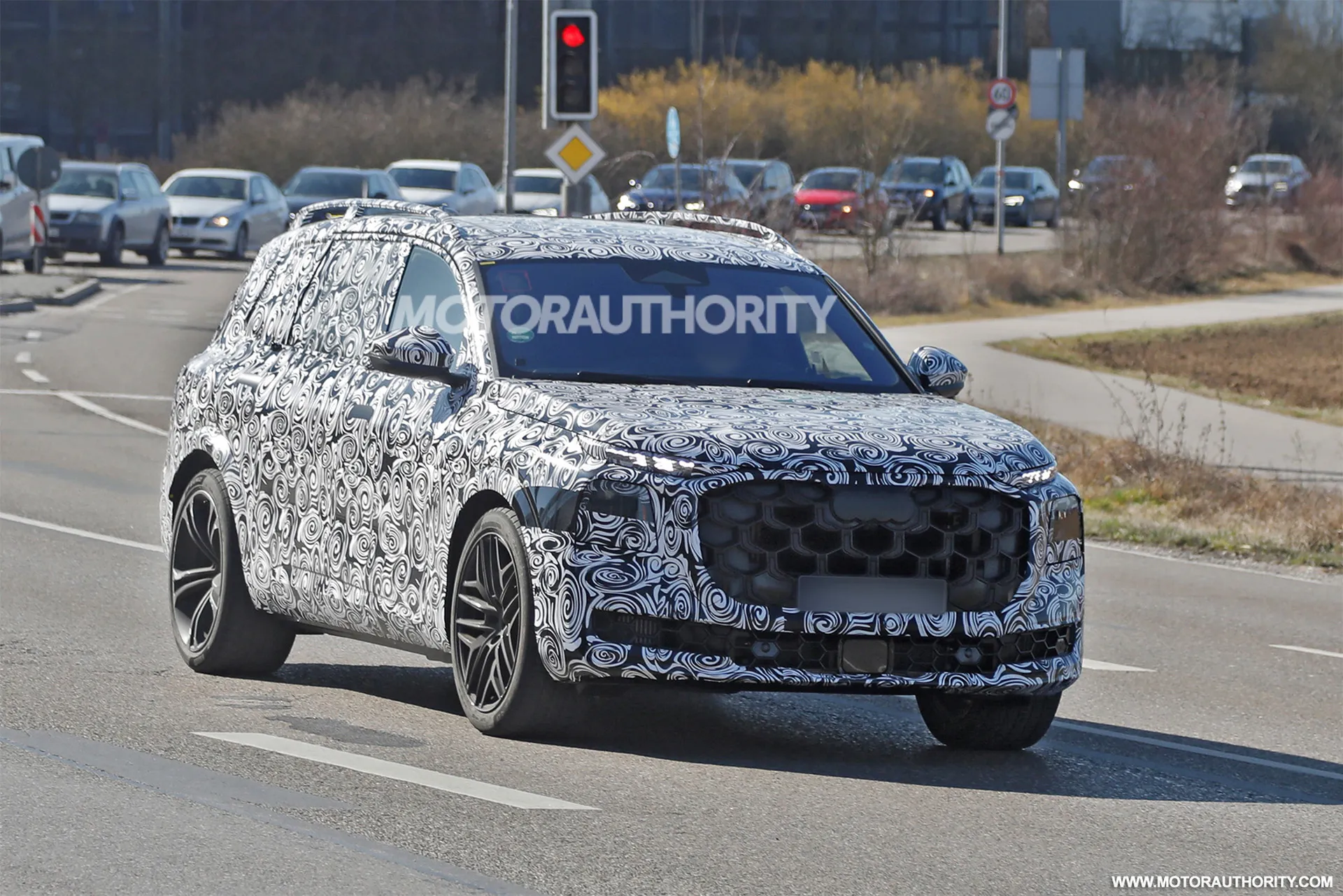
For years, the luxury automotive landscape has been dominated by the heavyweights of the full-size SUV segment. While the BMW X7, Mercedes-Benz GLS-Class, and the Cadillac Escalade have carved out immense market share by offering cavernous interiors and commanding road presence, Audi has remained notably absent from this specific "land yacht" category. That appears to be changing. Recent spy photography and industry whispers confirm that Audi is finally ready to challenge the status quo with the development of the highly anticipated Audi Q9.
The Emergence of the Q9: Main Facts
The automotive world is buzzing following the sighting of a camouflaged prototype that signifies a tectonic shift in Audi’s product strategy. Sources indicate that this prototype is the inaugural Q9, a vehicle designed to sit atop the current Q-series hierarchy. Based on the development timeline observed in the prototype’s current stage, the vehicle is expected to make its formal global debut early next year. For the North American market, this translates to a anticipated arrival as a 2027 model-year vehicle.
The spotted test mule is not merely a base-model utility vehicle; it appears to be a high-performance "S" variant, likely dubbed the SQ9. The tell-tale sign—four prominent, circular exhaust tips—points toward a powertrain engineered for significant output rather than just efficiency. Beyond the aggressive exhaust configuration, industry expectations suggest the SQ9 will be equipped with a sophisticated air suspension system paired with adaptive dampers, mirroring the high-performance dynamics found in the current SQ7 and SQ8.
A History of Anticipation: The Chronology of a Rumor
The journey to the Q9 has been a slow-burning saga of trademark filings and strategic hints. For nearly a decade, automotive journalists and enthusiasts have speculated about a "big brother" to the Q7.
- The Trademark Foundation: Audi’s interest in the Q9 designation is not new. The manufacturer filed for the trademark years ago, signaling an intent to protect the nomenclature should they decide to greenlight the project. For a long time, however, these filings remained dormant, treated as mere defensive maneuvers against competitors.
- Dealer Communications: The momentum shifted drastically about a year ago when reports surfaced indicating that Audi had begun briefing its U.S. dealership network. Dealers, who have long clamored for a competitor to the Escalade and GLS, were informed that a flagship, three-row SUV was in the pipeline. This internal communication served as the first tangible evidence that the Q9 was moving from the drawing board to the prototype phase.
- The Spy Shot Breakthrough: The most recent development—the appearance of a heavily camouflaged prototype on public roads—is the definitive turning point. Unlike previous conceptual sketches, the physical presence of the vehicle confirms that Audi has finalized its engineering direction and is currently moving through the rigorous testing phases required for mass production.
Structural Anatomy and Design Implications
Visually, the prototype bears a striking resemblance to the next-generation Audi Q7, which is also slated for a reveal in the coming year. However, a closer examination reveals the "Q9 difference."
The Stretched Silhouette
The most critical design departure is the wheelbase. The prototype features noticeably elongated rear doors, a clear indication that Audi is prioritizing interior real estate. A longer wheelbase typically translates to improved legroom for second-row passengers and, more importantly, a more usable third row. The rear overhang is also significantly extended compared to the Q7, which serves a dual purpose: it increases the cargo capacity behind the third row and ensures the vehicle maintains a balanced, regal silhouette characteristic of a true flagship SUV.
Performance Architecture
As an S-badged variant, the SQ9 is expected to serve as the performance benchmark for the range. While Audi has remained tight-lipped regarding the powertrain, it is widely speculated that the vehicle will leverage a high-output V8 engine or a heavily electrified hybrid powertrain to compete with the likes of the Mercedes-AMG GLS 63. The integration of adaptive air suspension will be vital, as the vehicle must balance its massive physical footprint with the sharp handling dynamics that define the Audi driving experience.
The Strategic Imperative: Why Now?
The decision to enter the full-size SUV segment is a calculated response to the economic realities of Audi’s two most important markets: the United States and China.
In the U.S., the "bigger is better" ethos continues to drive luxury sales. Families and high-net-worth individuals increasingly view the full-size SUV as the ultimate status symbol, providing luxury, safety, and utility in a single package. Cadillac, in particular, has seen unprecedented success with the Escalade, demonstrating that there is significant consumer appetite for high-priced, high-margin, full-size vehicles.

In China, the demand for "executive" SUVs with extended wheelbases is a staple of the premium market. By developing a vehicle that is inherently large and luxurious, Audi is hitting two major growth levers with a single product. Despite this, Audi management has been characteristically cautious, maintaining a veil of secrecy and refusing to issue an official confirmation of the Q9’s production timeline. This is typical of the brand, which prefers to keep its cards close to the vest until the final moment of reveal.
Supporting Data and Competitive Analysis
To understand the stakes for the Q9, one must look at the segment it is entering. The BMW X7 and Mercedes-Benz GLS are not just cars; they are technological showcases. They feature the latest in autonomous driver-assistance systems, advanced MBUX or iDrive infotainment, and opulent interior materials.
Audi’s current lineup, while premium, has felt slightly dated compared to these rivals. The Q9 will likely feature the next iteration of the Audi Virtual Cockpit, augmented reality head-up displays, and a level of cabin refinement that integrates sustainable luxury materials—a key pillar of Audi’s ongoing transition toward an electrified and sustainable future.
The SQ9’s expected chassis dynamics will likely be the primary differentiator. Audi has spent decades refining the Quattro all-wheel-drive system, and the application of this technology in a flagship SUV will be a major marketing point. If the SQ9 can deliver the "sports car in a tuxedo" feel that the SQ7 has mastered, it will likely lure buyers away from the stiffer competition.
Implications for the Future of Audi
The Q9 represents more than just a new model; it is a manifestation of Audi’s long-term strategy to bolster its margins. Full-size SUVs are some of the most profitable vehicles in the automotive industry. A successful launch of the Q9 could provide the necessary capital to further accelerate Audi’s transition to electric mobility.
Furthermore, the Q9 will likely be the last "great" combustion-powered flagship from the brand. As Audi moves toward a goal of having a fully electric lineup in the near future, the Q9 might arrive as a bridge, potentially offering plug-in hybrid (PHEV) variants alongside traditional internal combustion engines. This hybrid approach would allow Audi to satisfy the immediate demand for massive, powerful SUVs while complying with increasingly stringent global emissions regulations.
Conclusion: A New Era for the Four Rings
The appearance of the Q9 prototype is a watershed moment for Audi. It signals that the brand is finally ready to step out of the shadows of the Q7 and stake its claim in the most prestigious segment of the SUV market. With its stretched proportions, performance-oriented SQ9 variant, and the promise of class-leading technology, the Q9 is poised to be a disruptor.
While official confirmation remains pending, the evidence is overwhelming. Audi is not just building a new SUV; it is building a new flagship that will define its presence in the luxury market for the next decade. As we look toward the expected 2027 U.S. arrival, the competition—BMW, Mercedes, and Cadillac—should take note: the four rings are coming to play in the big leagues.
