

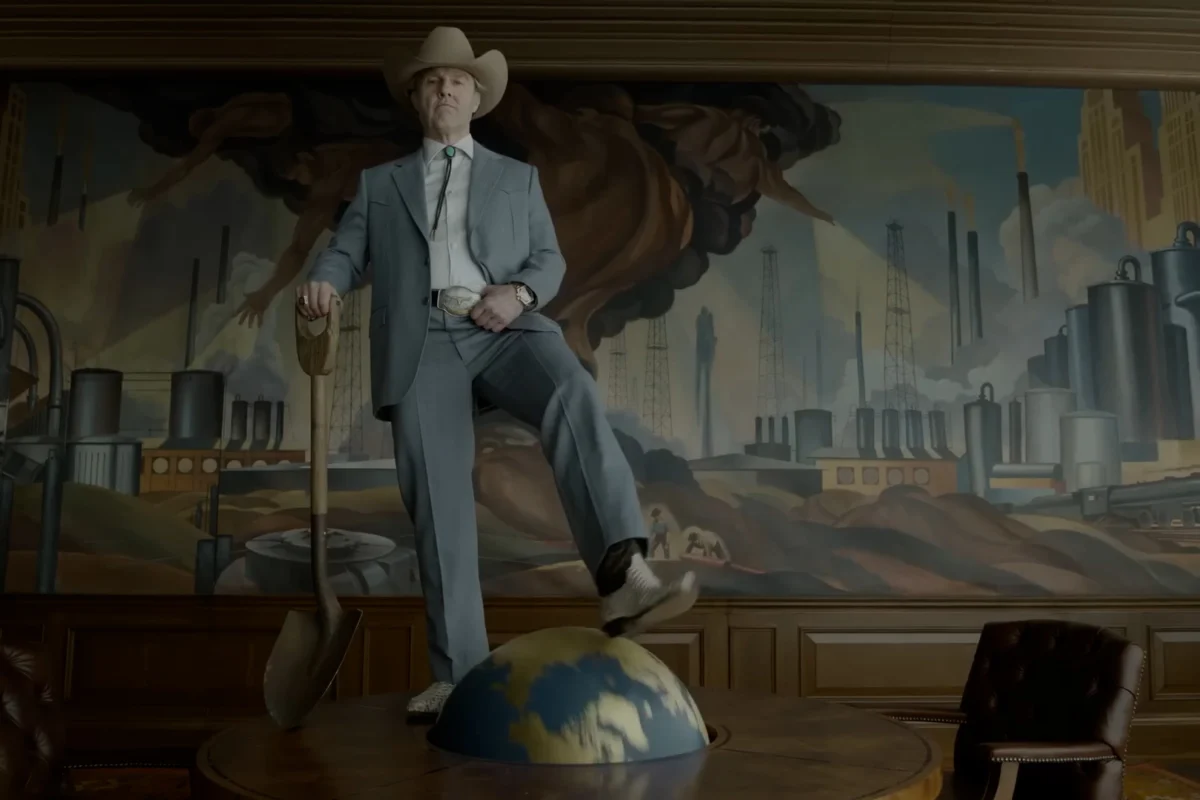
Last week, the critical consensus surrounding Digger, the latest climate-allegory feature from Mexican visionary Alejandro Iñárritu, seemed to reach a fever pitch of disdain. In these pages, my colleague Jake Bittle articulated a detailed, scathing critique of the film, labeling it "ugly, loud, and unpleasant."
I arrived at the cinema harboring a healthy dose of skepticism toward that consensus. As a long-time admirer of Iñárritu’s filmography—ranging from the raw, kinetic energy of his 2001 debut Amores Perros to the meta-theatrical heights of Birdman—I have long felt that his creative risks are worth the price of admission. Furthermore, in an industry where authentic, non-Western perspectives are often marginalized, I find myself inherently invested in the success of a filmmaker who has consistently challenged the boundaries of global cinema. I walked into the theater, armed with a small popcorn and a two-hour-and-nine-minute commitment, expecting a polarizing experience. What I found, however, was a masterwork that demands to be wrestled with.
The Anatomy of an Ambition
Digger is, without reservation, Iñárritu’s most ambitious, visually maximalist, and sonically grating project to date. To those who find the film "unpleasant," I would argue that such a reaction is not a failure of the director’s craft, but rather the intended effect. We are currently living through an era characterized by a relentless, high-frequency roar—the constant ping of notifications, the degradation of our natural world, and the overwhelming anxiety of a future in flux.
In this, Digger stands alongside films like Boots Riley’s Sorry to Bother You or the frenetic tension of the Safdie brothers’ Uncut Gems. These films do not merely depict chaos; they weaponize it, offering cacophony as a form of social commentary. Digger is intentionally noxious, filled with fiery industrial accidents, the visual shorthand of planetary collapse, bumbling bureaucrats, and pervasive, casual acts of cruelty. Yet, at the center of this hurricane is Tom Cruise, delivering one of the most bizarre and compelling performances of his storied career.
Chronology of a Climate Allegory
The plot, on its surface, is a satirical indictment of the fossil fuel industrial complex. Tom Cruise plays Digger Rockwell, a monomaniacal oil tycoon who ignores the desperate warnings of climate scientists regarding a critical breach in the Arctic shelf. As methane leaks into the atmosphere at a terrifying rate—a scientific reality underscored by the film’s commitment to the mechanics of the "warming feedback loop"—Rockwell continues his expansionist agenda.
When the inevitable occurs, and a massive ice shelf fractures and drifts toward Europe, the film shifts into a frantic, claustrophobic panic. We see the interplay between Rockwell and the President of the United States (portrayed with grotesque, oily charm by John Goodman), a man who greased the wheels of industry at the expense of global safety. These characters serve as blunt, cartoonish avatars for the real-world architects of the climate crisis: the corporate titans who knew the risks and the political class that provided the cover for them.
However, just as the audience settles into the rhythm of a traditional climate satire, Iñárritu pulls the rug out from under us.
The Meta-Theatrical Twist: A Play Within a Play
(Warning: Spoilers follow)
As the narrative reaches its midpoint, the director peels back the cinematic curtain. We discover that the "Digger Rockwell" we have been watching is not a real-time event, but a character being portrayed by an actor named Curtis Markson (Cruise) in a stage play. The "film" we are watching is a layered meta-text, exploring how we—as a society—package and consume the trauma of our own extinction.
The supporting characters, including the scientist (played with quiet intensity by Riz Ahmed) and the President, are revealed to be fellow actors in a theatrical production. This revelation shifts the film’s focus from the climate crisis itself to the storytelling of the climate crisis. The central conflict becomes a battle between the lead actor, Markson, who struggles to find the "internal motivation" of a man destroying the world, and the visionary director, Hannah (Sophie Wilde), who insists that the play must serve as a reckoning for the dispossessed.
Supporting Data: The Cost of Denial
The film’s backdrop—that an actual iceberg caused mass casualties across Europe 25 years prior—adds a layer of historical weight to the play. The production is a "cult classic" of theater, a retrospective examination of a tragedy that the world has already tried to move past.
Data from the film’s internal world suggests that the play is not just art, but a form of public penance. Why stage a play about climate change long after the disaster has occurred? The film posits that the crisis of climate change is, fundamentally, a crisis of narrative. We struggle to understand how things went wrong because we are trapped in the stories we tell ourselves about power, greed, and inevitability.
Iñárritu’s inclusion of the "falling tree" sequences—uncanny moments where the set design glitches, showing trees being propped back up—disorients the audience, forcing us to question the stability of the reality being presented. It is a visual representation of the cognitive dissonance required to maintain a status quo while the world burns.
Official Responses and Creative Risks
In a recent interview with The New York Times, Iñárritu addressed the polarizing nature of his work. "The movie is not perfect," he conceded. "I like taking risks."
This risk-taking is evident in his choice to prioritize intellectual friction over audience comfort. Critics have pointed to the box-office numbers as a sign of failure, but to measure the worth of Digger by its opening weekend receipts is to miss the point entirely. The film is an auteur’s manifesto—a declaration that cinema can, and perhaps should, be an uncomfortable mirror.
When Hannah screams at Markson during a rehearsal, arguing that the role of art is to comfort the dispossessed, she is articulating the film’s thesis. The tension between her mandate and Markson’s ego creates a microcosm of our broader cultural debate: Should our art be a weapon for justice, or a mirror for our own flaws?
Implications: Can Art Change the World?
The final act of Digger leaves us with a haunting question: What is the point of telling these stories when the metaphorical tsunami is already at our doorstep?
Iñárritu does not offer an optimistic answer. He avoids the "hopeful" trope that dominates modern blockbusters. Instead, he presents a cold, hard truth: perhaps art cannot stop the tides. Perhaps our attempts to intellectualize or dramatize the end of the world are simply another form of vanity.
Digger is not a film that invites you to leave the theater feeling satisfied. It is, however, a film that refuses to be ignored. By blending the absurdity of the climate crisis with the pretension of the theater world, Iñárritu has crafted a piece of work that is as infuriating as it is essential. Whether or not you agree with his methods, the conversation sparked by Digger—about legacy, accountability, and the failure of our collective imagination—is one that we, as a society, desperately need to be having.
In a landscape of safe, formulaic sequels and sanitized narratives, Digger stands as a jagged, loud, and undeniably human monument to our current, precarious moment in time. It is a cinematic experience that proves, if nothing else, that Alejandro Iñárritu remains one of the few directors willing to stare into the abyss, even if he knows it won’t stare back.
