

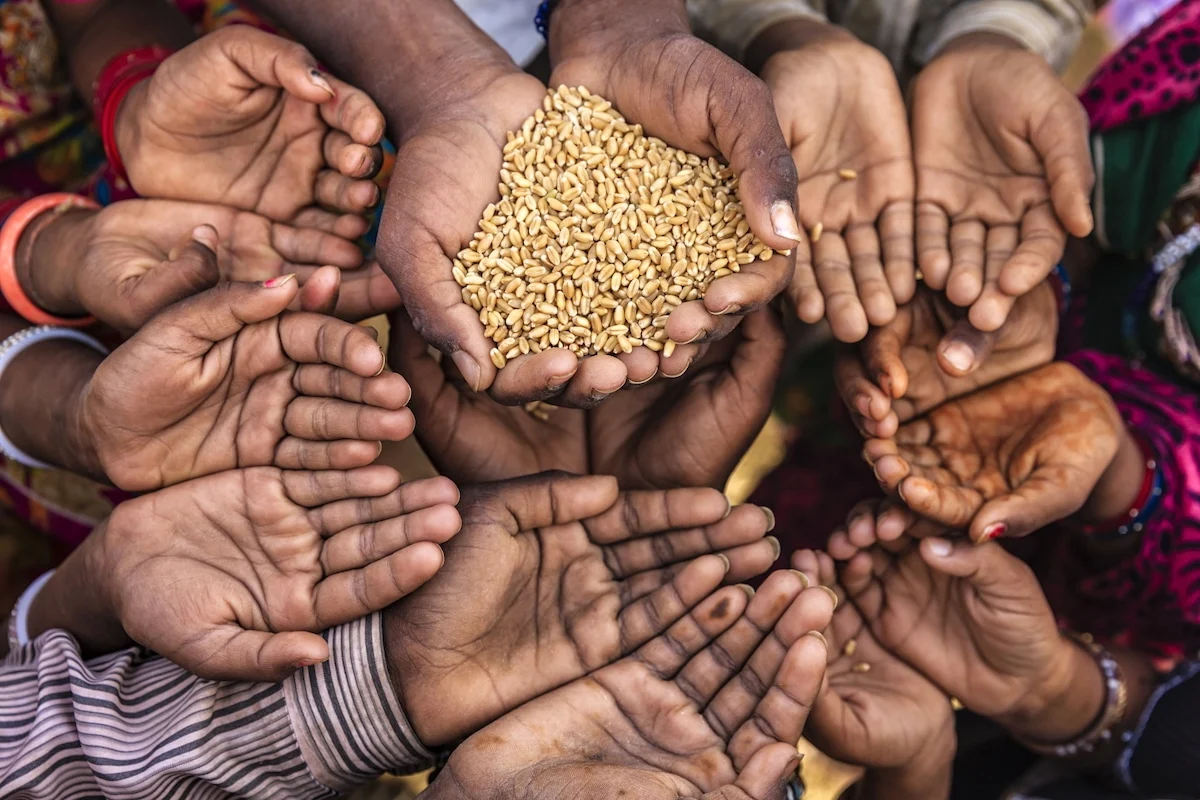
In a world defined by rapid technological advancement and unprecedented global connectivity, the basic human right to food remains an elusive goal for hundreds of millions. According to the 2025 State of Food Security and Nutrition in the World (SOFI) report, released jointly by five specialized United Nations agencies, the global fight against hunger is currently experiencing a profound paradox: while the aggregate number of hungry people is trending downward, the crisis is intensifying in the world’s most vulnerable regions.
The report, spearheaded by the Food and Agriculture Organization (FAO) in collaboration with the International Fund for Agricultural Development (IFAD), the World Food Programme (WFP), the United Nations Children’s Fund (UNICEF), and the World Health Organization (WHO), offers a sobering assessment of the path toward the UN’s Sustainable Development Goal of "Zero Hunger."
The State of Global Hunger: A Statistical Overview
In 2024, approximately 673 million people—roughly 8.2 percent of the global population—suffered from hunger. This figure represents a measurable improvement from the 8.7 percent recorded in 2022 and 8.5 percent in 2023. In raw numbers, this translates to a decrease of roughly 15 million people compared to 2023 and 22 million since 2022.
While these statistics suggest a positive global trajectory, they mask a deepening divide. The improvement is largely driven by recovery in parts of Asia, as well as the Caribbean and Latin America. In Asia, the prevalence of undernourishment dropped to 6.7 percent, a significant improvement from 7.9 percent just two years prior. Similarly, Latin America and the Caribbean saw their undernourishment rates fall to 5.1 percent, marking a reversal of the trend that saw a peak of 6.1 percent during the height of the global pandemic-induced instability in 2020.
However, the aggregate global numbers offer little comfort to those in Africa and western Asia. In Africa, the situation has reached a critical juncture, with the proportion of the population facing hunger surpassing 20 percent in 2024, affecting 307 million people. Western Asia mirrors this distress, with an estimated 12.7 percent of its population—over 39 million people—struggling to secure adequate sustenance.
A Chronology of Crisis: From Pandemic to Polycrisis
The current state of global food insecurity cannot be divorced from the events of the last five years. The road to the current figures began in 2020, as the world grappled with the logistical and economic shocks of the COVID-19 pandemic. This initial blow was exacerbated by the subsequent "polycrisis" that defined the 2021–2023 period.
2020–2021: The Pandemic Shock
The onset of the pandemic triggered supply chain disruptions, lockdowns, and labor shortages that crippled food distribution networks. By the time the world began to emerge from strict lockdowns, global food systems were already fragile, characterized by depleted reserves and localized labor crises.
2022: The Geopolitical Catalyst
The conflict in Ukraine acted as a massive accelerant to existing pressures. As one of the world’s primary "breadbaskets," the war in Ukraine disrupted the supply of grain and fertilizer to global markets. This sent food price inflation skyrocketing. Simultaneously, the world witnessed an increase in extreme climate events, ranging from prolonged droughts in the Horn of Africa to erratic monsoon patterns in Southeast Asia, further compromising agricultural output.
2023–2024: Inflationary Persistence
While global inflation began to stabilize toward the end of 2024, the damage to low-income economies had already been cemented. The median global food price inflation, which surged from 2.3 percent in late 2020 to 13.6 percent in early 2023, reached a staggering 30 percent in low-income nations by May 2023. These countries lacked the fiscal buffers to shield their populations from these price spikes, leading to a permanent shift in food affordability.

Supporting Data: The Affordability Gap
The SOFI 2025 report makes it clear that the issue is not merely the availability of food, but the ability of families to afford a healthy diet.
Despite a global reduction in the number of people unable to afford a healthy diet—falling to 2.6 billion last year from 2.76 billion in 2019—the data for low-income countries is alarming. In these regions, the number of individuals unable to afford a nutritious diet rose to 545 million in 2024, up from 464 million just five years earlier.
Furthermore, in lower-middle-income nations (excluding India), the count of those excluded from a healthy diet surged from 791 million to 869 million over the same period. These numbers highlight a growing "affordability chasm," where the global poor are increasingly priced out of the basic nutrients required for health, leading to long-term health consequences such as stunted growth in children and chronic illness.
Official Responses and Strategic Recommendations
The leadership of the UN agencies involved in the report has been unified in their call for systemic reform. FAO Director-General QU Dongyu emphasized that while the downward global trend is encouraging, progress is dangerously uneven. "We must work collaboratively and innovatively with governments, organizations, and communities to address the specific challenges faced by vulnerable populations, especially in regions where hunger remains persistent," he noted.
Dr. Tedros Adhanom Ghebreyesus, Director-General of the WHO, focused on the human cost, particularly regarding child development. "In recent years, the world has made good progress in reducing stunting and supporting exclusive breastfeeding, but there is still much to be done to relieve millions of people from the burdens of food insecurity and malnutrition."
Key Policy Recommendations:
- Monetary Policy: Countries are encouraged to adopt transparent, credible monetary policies aimed at containing inflationary pressures without stifling agricultural growth.
- Fiscal Protection: Implementing time-bound, targeted social protection programs to act as a buffer for the most vulnerable households during periods of price volatility.
- Infrastructure Investment: Increased funding for agricultural research and development, market information systems, and rural transportation networks to boost local resilience and productivity.
- Nutritional Education: UNICEF emphasizes the need for community-led initiatives that teach the value of locally produced nutritious food, including the promotion of breastfeeding as a cornerstone of infant health.
The Implications: A Future at Risk
If current trends hold, the UN estimates that 512 million people will experience chronic undernourishment by 2030, with nearly 60 percent of that burden concentrated in Africa. This reality presents a grim outlook for the global community’s commitment to the Sustainable Development Goals.
The implications of failing to address this hunger crisis extend far beyond individual health. As IFAD President Alvaro Lario noted, investments in rural and agricultural transformation are not just about food security; they are critical to global stability. History has shown that food insecurity is a primary driver of civil unrest, migration, and geopolitical instability.
The 2025 report serves as a definitive wake-up call. The world has proven it can move the needle on hunger, as evidenced by the progress in Asia and Latin America. However, the current trajectory suggests that without a deliberate, resource-heavy, and policy-driven focus on Africa and conflict-affected regions, the "Zero Hunger" promise will remain a distant, unfulfilled ambition.
The challenge for the next five years is clear: the international community must transition from emergency food aid toward structural investment. Only by fortifying the agricultural backbone of low-income nations can the world ensure that food becomes a guaranteed right for every child, rather than a luxury defined by the volatility of the global market.
