

The Democratic Republic of the Congo (DRC) stands at a perilous environmental precipice. Home to the world’s second-largest tropical rainforest and the vast, carbon-sequestering peatlands of the Cuvette Centrale, the nation is arguably one of the most ecologically significant regions on Earth. However, a sweeping new government initiative to auction off over half of the country’s land to oil and gas corporations threatens to dismantle this critical global asset.
According to a harrowing new report by Earth Insight, titled Forests to Frontlines: Oil Expansion Threats in the DRC, the government has initiated an auction round for 52 new oil blocks. This follows the previous awarding of three blocks, effectively placing 53% of the country’s total land area—including over 300 million acres of intact tropical forest—on the chopping block for fossil fuel extraction.
The Scope of the Crisis: A Landscape Under Siege
The implications of this expansion are difficult to overstate. The proposed oil blocks do not merely touch the edges of the DRC’s wilderness; they penetrate the heart of its most sensitive ecosystems. The report reveals that the concessions overlap with 20.5 million acres of officially protected areas, 21.3 million acres of designated "Key Biodiversity Areas," and a staggering 165.1 million acres of pristine, intact tropical rainforest.
Perhaps most alarming is the threat to the Cuvette Centrale, a massive tropical peatland complex that serves as one of the planet’s most vital carbon sinks. This region alone stores an estimated 30 gigatons of carbon—the equivalent of several years of total global human-caused emissions. Disrupting this landscape through industrial drilling could trigger a massive release of sequestered carbon, turning a critical climate solution into a climate catastrophe.
Chronology: From 2022 Auctions to Current Escalation
To understand the current crisis, one must look at the recent history of the DRC’s energy policy. The push toward fossil fuel dependency has been a gradual, yet accelerating, strategy by the state.
- 2022: The Initial Spark: The DRC government launched a controversial auction of 30 oil and gas blocks. This move was met with immediate, widespread condemnation from international conservation groups and local activists. Despite warnings that these blocks overlapped with protected peatlands and Indigenous territories, the government proceeded, setting a precedent for prioritizing short-term extractive revenue over long-term ecological stability.
- 2023–2024: Mounting Pressure: Throughout the following years, the administration faced intense scrutiny as it continued to finalize agreements for the initially auctioned blocks. Scientific reports increasingly highlighted the incompatibility of these projects with the country’s commitments under the Paris Agreement and international biodiversity frameworks.
- 2025: The Current Escalation: The situation reached a critical inflection point with the announcement of the latest licensing round. By adding 52 new blocks to the existing portfolio, the government has moved to effectively open more than half of the national territory to industrial exploitation. This decision has sparked a renewed wave of opposition from civil society, including organizations like the Coalition des Organisations de la Société Civile pour le Suivi des Reformes et de Action Publique (CORAP) and the campaign group Notre Terre Sans Pétrole (Our Land Without Oil).
Supporting Data: Biodiversity and Human Livelihoods
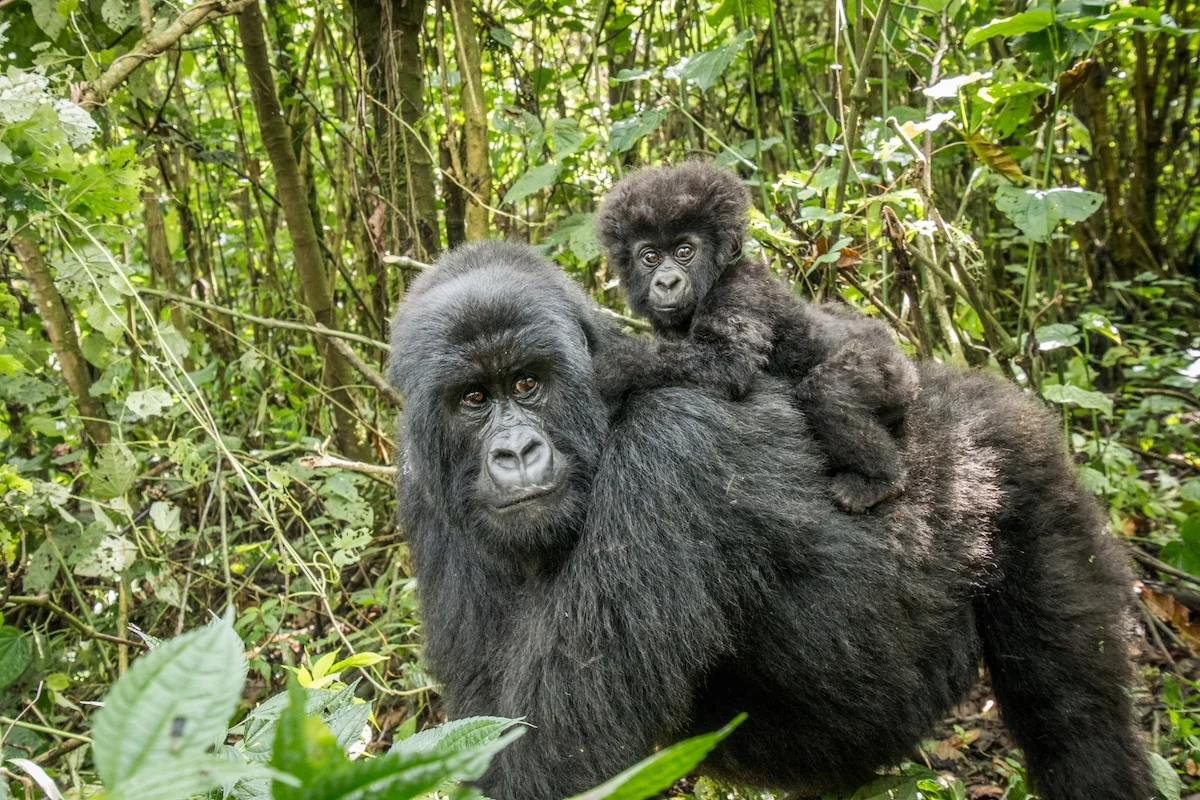
The DRC is a bastion of biodiversity, harboring species that exist nowhere else on the planet. The rainforests and river systems of the Congo Basin are essential habitats for mountain gorillas, eastern lowland gorillas, bonobos, elephants, and thousands of endemic plant and bird species.
Beyond the fauna, the human cost is immense. It is estimated that approximately 39 million people live within or adjacent to the areas currently slated for auction. These include numerous forest-based and Indigenous communities whose survival, cultural identity, and spiritual connection to the land are intrinsically linked to the forest. For these populations, the arrival of oil infrastructure—roads, pipelines, and the pollution that follows—represents an existential threat to their way of life.
The government’s decision also clashes with its own stated policy initiatives. For example, 72% of the recently established Kivu-Kinshasa Green Corridor—a project intended to foster ecological connectivity and sustainable development—now intersects with these oil blocks. This overlapping of contradictory policies undermines the DRC’s credibility on the international stage, particularly regarding its ability to leverage its natural capital for sustainable "green" development.
Official Responses and Civil Society Outcry
The government’s position remains rooted in the argument of economic development and energy sovereignty. Officials have frequently argued that the DRC has a right to exploit its natural resources to pull its population out of poverty. However, this view is strongly contested by local leaders and environmental advocates.

Pascal Mirindi, a campaign coordinator for Notre Terre Sans Pétrole, captured the sentiment of the resistance in a recent statement to The Guardian: “Imagine: 39 million Congolese people… and 64% of our forests could be directly affected by the awarding of these oil blocks. And all this while the government is promoting the Kivu-Kinshasa ecological corridor. Where is the logic? Where is the coherence?”
Mirindi’s call to action is a poignant reminder of the democratic deficit in these decisions: “We are reminding our leaders that the Congolese people are the primary sovereign. We will not remain silent while certain people organize themselves to sell off our future.”
International organizations, including Earth Insight and the Rainforest Foundation UK, have echoed these concerns, emphasizing that the development of these blocks would render the DRC’s environmental goals entirely moot. Anna Bebbington, a research manager at Earth Insight, noted that such development would have “devastating impacts on biodiversity, communities, land rights, and the global fight against climate change.”
Implications: A Global Climate Tipping Point
The implications of the DRC’s path reach far beyond its borders. The Congo Basin is frequently referred to as the "second lung" of the planet. If the forest is fragmented by industrial roads—which facilitate poaching, deforestation, and illegal logging—the region’s ability to regulate rainfall patterns, mitigate global temperatures, and provide a home for endangered species will be permanently crippled.
1. The Carbon Sink Risk
The destruction of the Cuvette Centrale peatlands is perhaps the most dangerous aspect of the proposal. These peatlands have been protected by their remote, waterlogged nature for millennia. Industrial drilling introduces the risk of drainage and degradation, which could convert the area from a net carbon sink into a massive carbon source, potentially accelerating global warming beyond the thresholds set by the IPCC.
2. The Erosion of Rights
The expansion also represents a severe threat to the land rights of Indigenous Peoples. Without the Free, Prior, and Informed Consent (FPIC) of these communities, any oil development in these regions constitutes a violation of international human rights standards. The report calls for international donors and financing institutions to ensure their support is strictly aligned with the protection of these rights, rather than enabling their violation.
3. Sustainable Development vs. Fossil Fuel Lock-in
By committing to an oil-based economic model, the DRC risks falling into the "resource curse," where the economy becomes hyper-dependent on volatile commodity prices, neglecting the development of more sustainable sectors like ecotourism, sustainable agriculture, and renewable energy. The report argues that the path forward must involve canceling the 2025 licensing round and redirecting international aid toward community-led conservation and development programs.
The Path Forward: Demands for Accountability
The report Forests to Frontlines concludes with a clear set of recommendations aimed at the DRC government and its international partners:
- Immediate Moratorium: Stop all current licensing rounds and halt future hydrocarbon expansion in the Congo Basin.
- Inclusive Governance: Ensure that local and Indigenous communities are central to all decision-making processes regarding their lands.
- Transparency and Participation: Guarantee that environmental impact assessments are conducted independently and that the public has meaningful access to information regarding development projects.
- Financial Alignment: International donors must condition their support on the protection of biodiversity and the rights of local populations, ensuring that climate finance is not inadvertently subsidizing the destruction of the very ecosystems it aims to protect.
As the DRC navigates this critical juncture, the world watches with anxiety. The decisions made in Kinshasa in the coming months will not only define the future of the Congolese people but will ripple across the global climate system. The evidence is clear: the path to a sustainable future does not lie in the depths of the forest’s oil reserves, but in the preservation of the landscape that sustains all life within it.
