

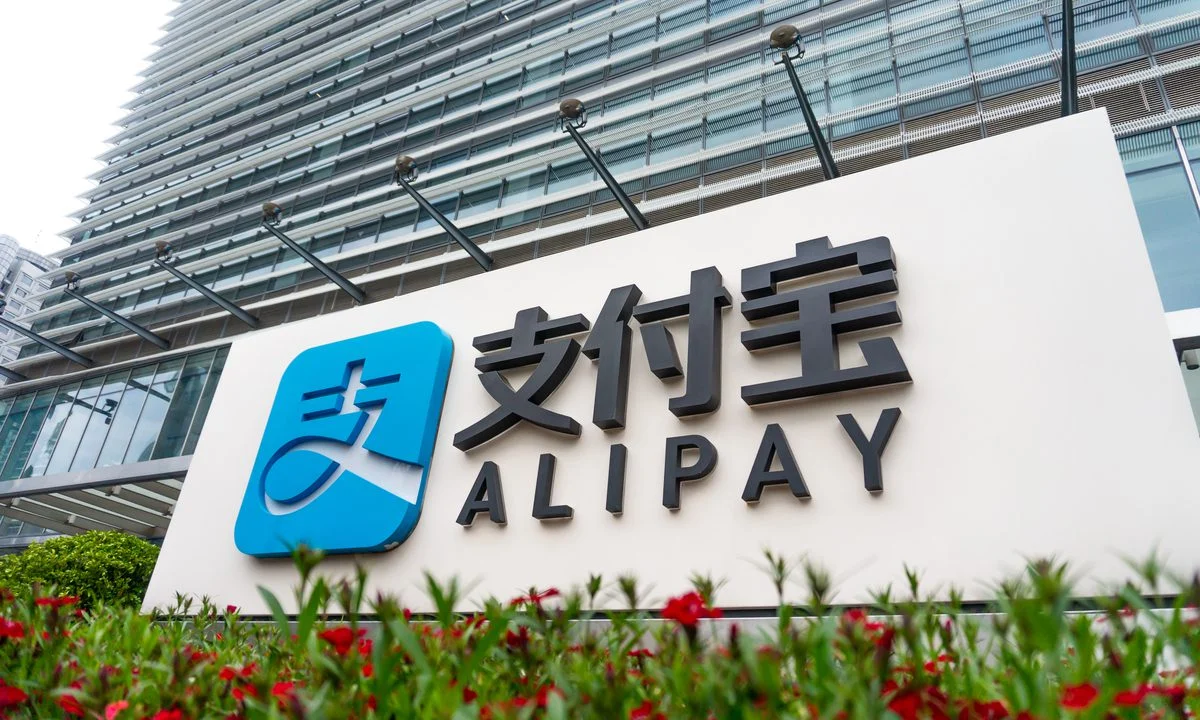
HANGZHOU, China — In a move that signals a paradigm shift in the global digital economy, Ant Group’s Alipay has officially launched a comprehensive suite of artificial intelligence-driven financial tools, headlined by what it characterizes as the world’s first "AI Wallet" and "Token Pay" system. Announced on May 26, 2026, this new infrastructure is specifically engineered to power the "agentic economy"—a burgeoning ecosystem where autonomous AI agents, rather than human users, execute complex commercial transactions.
The launch represents a significant technological leap for Ant Group, transitioning from a platform that facilitates human-to-merchant payments to one that provides the foundational trust and liquidity layer for machine-to-machine commerce. As AI agents evolve from simple chatbots into sophisticated personal assistants capable of autonomous decision-making, the need for a financial framework that allows these entities to hold funds, verify identities, and execute secure payments has become a critical bottleneck. Alipay’s new suite aims to resolve these frictions, positioning the company at the center of the next generation of global trade.
Main Facts: A New Architecture for Autonomous Transactions
The centerpiece of the announcement is the Alipay AI Wallet. Unlike traditional digital wallets designed for human interaction through a graphical user interface (GUI), the AI Wallet is a programmable financial environment. It allows users to delegate specific financial permissions to AI agents—such as digital personal assistants or automated procurement bots—enabling them to make purchases within predefined limits and criteria.
Complementing the wallet is Token Pay, a specialized payment solution designed to handle the unique transaction needs of AI-native companies. This includes facilitating global subscription payments for Large Language Model (LLM) access, token-based top-ups, and micro-payments for API usage.
To govern these interactions, Alipay has introduced the Agentic Commerce Trust Protocol. Developed in collaboration with several industry partners, this protocol serves as a "common language," ensuring that when an AI agent interacts with a service platform, both parties have a standardized framework for verifying intent, authenticity, and payment capability.
Finally, to address the heightened risks associated with automated commerce, Alipay launched an Intelligent Security System. This AI-driven safeguard monitors transactions in real-time, using predictive modeling to distinguish between legitimate autonomous agent behavior and potential "rogue" agent activity or algorithmic fraud.
Chronology: From Escrow to the Agentic Era
The journey to May 26, 2026, has been decades in the making. Ant Group CEO Cyril Han noted that the current launch is the culmination of 22 years of technological expertise.
- 2004–2014: The Trust Era. Alipay was originally conceived to solve the problem of trust in China’s nascent e-commerce market. By acting as an escrow service, it enabled the explosion of platforms like Taobao.
- 2014–2023: The Mobile & QR Era. Alipay pioneered the use of QR codes, moving payments from the desktop to the physical world and creating the "super-app" model that integrated food delivery, insurance, and travel into a single ecosystem.
- 2024–2025: The Generative AI Pivot. As LLMs became mainstream, Ant Group began integrating AI into its internal operations and customer service. During this period, the concept of "agentic commerce" began to surface in R&D labs, as researchers realized that AI agents would eventually need their own "bank accounts."
- May 26, 2026: The Agentic Launch. Alipay officially moves beyond the "human-centric" model. The launch of the AI Wallet and Token Pay marks the official opening of the infrastructure to third-party AI developers and traditional retailers, signaling that the agentic economy is no longer a theoretical concept but a live commercial reality.
Supporting Data: The Infrastructure Gap in Modern Retail
The launch comes at a time of significant disparity between the capabilities of AI and the readiness of the retail sector. According to recent industry analysis by PYMNTS, a vast majority of global merchants remain unprepared for the arrival of AI agents.
Traditional e-commerce is built for "human browsing." Websites are optimized for visual appeal, search engine optimization (SEO), and "click-through" rates. However, AI agents do not "browse" in the traditional sense. They query databases, analyze structured data, and compare technical specifications in milliseconds.
Key statistics and observations regarding this shift include:
- Transaction Speed: While a human checkout process takes an average of 2–3 minutes, an AI agent can evaluate a hundred vendors and finalize a transaction in less than 0.5 seconds.
- Data Structure: Currently, over 80% of online retail descriptions are written for human consumption (natural language and images) rather than machine-readable APIs.
- The "Invisible" Customer: Projections suggest that by 2028, up to 15% of all consumer discretionary spending could be initiated or fully managed by autonomous agents.
Alipay’s Token Pay addresses the "micro-payment" problem that has long plagued the digital economy. AI agents often require tiny increments of data or compute power, where traditional credit card processing fees would exceed the transaction value. Token Pay utilizes a high-throughput architecture to make these sub-cent transactions economically viable.
Official Responses: Shifting the Paradigm of Commerce
Leadership at Ant Group and Alipay emphasized that this launch is not merely a product update, but a fundamental reimagining of what a payment represents.
Cyril Han, CEO of Ant Group:
"While the essence of commerce remains unchanged in the age of AI, the emergence of AI agents is reshaping everything. Drawing on 22 years of technological expertise and commercial know-how, Alipay is building a new generation of AI payment services to accelerate the growth of the agentic commerce ecosystem. We are moving from a world where we pay for what we see, to a world where our agents pay for what we need."
Lin Zhu, General Manager of Alipay’s AI Payment Business:
"As AI agents begin helping people search for information, shop, order food, and even make money, payments are no longer just the ‘final step’—they are becoming a capability embedded from the very beginning. Only when trusted transactions, seamless payments, and secure controls are all in place can agentic commerce truly take off. Our goal is to ensure that the human remains in control, even when they are not in the room."
Industry analysts have noted that the "Agentic Commerce Trust Protocol" may be the most significant part of the announcement. By creating a standardized handshake between AI agents and merchants, Alipay is attempting to set the global standard for how machines talk to money.
Implications: A Future Without the "Checkout" Button
The launch of the AI Wallet and Token Pay has profound implications for the future of the global economy, retail infrastructure, and consumer behavior.
1. The Death of the Traditional User Interface
For decades, brands have spent billions on the "user experience" (UX) of their websites. In an agentic economy, the "customer" is a line of code. Merchants who do not offer robust API-based storefronts that can interface with the Alipay AI Wallet will find themselves invisible to the agents that are increasingly making purchasing decisions for high-net-worth and time-poor consumers.
2. The Rise of "Continuous Commerce"
With Token Pay, the concept of a "one-off purchase" begins to fade. We are moving toward a model of continuous, micro-metered consumption. An AI agent might negotiate a per-second rate for a streaming service or a per-query rate for a research database, with the AI Wallet handling the high-frequency, low-value settlements in the background without requiring human intervention.
3. Redefining Financial Security and Liability
The introduction of an AI-specific security system highlights a new era of risk. If an AI agent makes a "mistake"—such as ordering 1,000 units of a product instead of one due to a prompt injection attack—who is liable? Alipay’s Trust Protocol and Intelligent Security System are the first attempts to codify the "financial guardrails" for autonomous software. This will likely spark a new wave of insurance products and legal frameworks surrounding algorithmic liability.
4. Global Accessibility for AI Firms
By simplifying global subscription payments and token top-ups, Token Pay lowers the barrier to entry for small AI startups. These firms can now integrate into a global payment network that understands the "token-based" nature of their business model, allowing them to scale across borders without navigating the complexities of traditional international banking for every micro-transaction.
5. Consumer Control and "The Agentic Budget"
While the technology enables autonomy, the AI Wallet is designed to provide users with more visibility and control. Users can set "agentic budgets"—for example, "My grocery agent has a $200 weekly limit and can only buy from organic-certified vendors." This creates a new form of financial management where humans act as the "Chief Financial Officers" of their personal lives, while their AI agents act as the "procurement department."
In conclusion, Alipay’s move into the agentic economy marks the beginning of an era where the "buy" button becomes obsolete, replaced by a seamless, invisible, and autonomous flow of value. As the infrastructure for this new economy takes shape, the challenge for the rest of the world’s financial institutions and retailers will be to adapt to a world where their most important customers are no longer human.
