

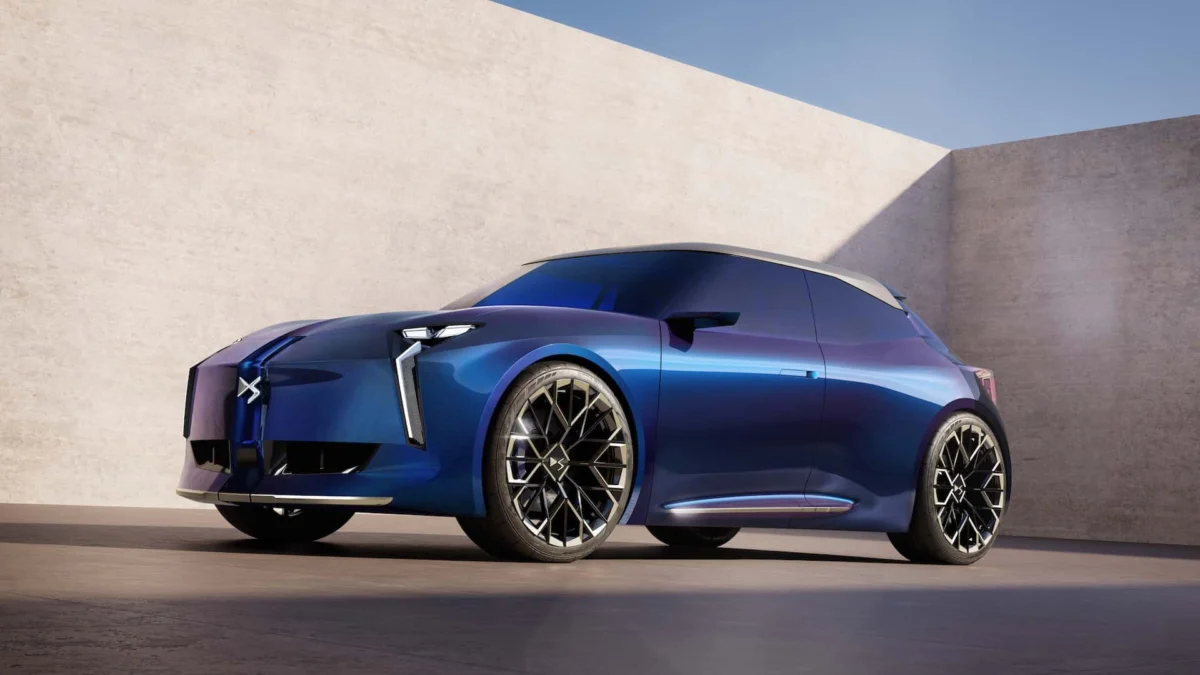
In the fiercely competitive landscape of the global premium automotive market, few brands face as existential a challenge as DS Automobiles. Born from the storied heritage of Citroën but tasked with standing alone as Stellantis’s vanguard for French luxury, the brand has struggled to carve out a distinct identity against the monolithic influence of German rivals and the stylistic dominance of brands like Mini.
However, at the 2026 Paris Motor Show, DS has made a bold, luminous statement of intent. The unveiling of the DS F3VER—a futuristic design study—is more than a mere showcase of concept technology; it is a profound declaration that DS intends to reclaim its status as an arbiter of avant-garde design. While the company maintains that the F3VER is not a production-ready model, its proportions, design language, and philosophy suggest a clear successor to the DS 3 and a template for the marque’s electrified future.
The Genesis of the F3VER: A Design Manifesto
The F3VER represents a pivot for DS. In an era where the industry is obsessed with "more"—more screens, more weight, and more aggressive bulk—the F3VER aims for the surgical precision of "less." Measuring 4.19 meters (165 inches) in length, 1.84 meters (72.4 inches) in width, and standing 1.46 meters (57.5 inches) tall, the concept occupies a compact footprint that feels agile and urban-focused, eschewing the trend of bloated SUVs.
The design team at DS has leaned heavily into a "Design Intelligence" philosophy. This approach seeks to simplify the vehicle’s construction by utilizing integrated lighting assemblies, one-piece bumpers, and a reduction in the proliferation of plastic cladding—elements that often clutter the aesthetic of modern hatchbacks. By minimizing parts, DS not only improves aerodynamic efficiency but also achieves a cleaner, more sophisticated silhouette that aligns with the brand’s premium aspirations.
Chronology: From Citroën Roots to Electrified Ambition
The journey of DS Automobiles has been one of gradual detachment. Originally established as a sub-brand of Citroën to highlight the French manufacturer’s most luxurious and experimental engineering, it became a standalone marque in 2014. Since the formation of the Stellantis automotive conglomerate—the result of the massive merger between Fiat Chrysler Automobiles and Groupe PSA—DS has been navigating a complex path to find its footing.
- 2014-2015: DS is formally launched as a standalone premium brand, aiming to challenge the likes of Audi and Lexus with a focus on "French luxury savoir-faire."
- 2018-2022: The brand expands its SUV-heavy lineup with the DS 3 Crossback and DS 7, though it faces criticism for lack of brand differentiation.
- 2024: Stellantis begins a sweeping internal review of its global portfolio, focusing on quality control and brand identity, placing pressure on DS to prove its long-term viability.
- 2026 (Paris Motor Show): The DS F3VER is unveiled, marking a departure from previous design languages and signaling a move toward a new, lightweight, and highly customizable electric vehicle architecture.
Aesthetic Precision: The Language of Light
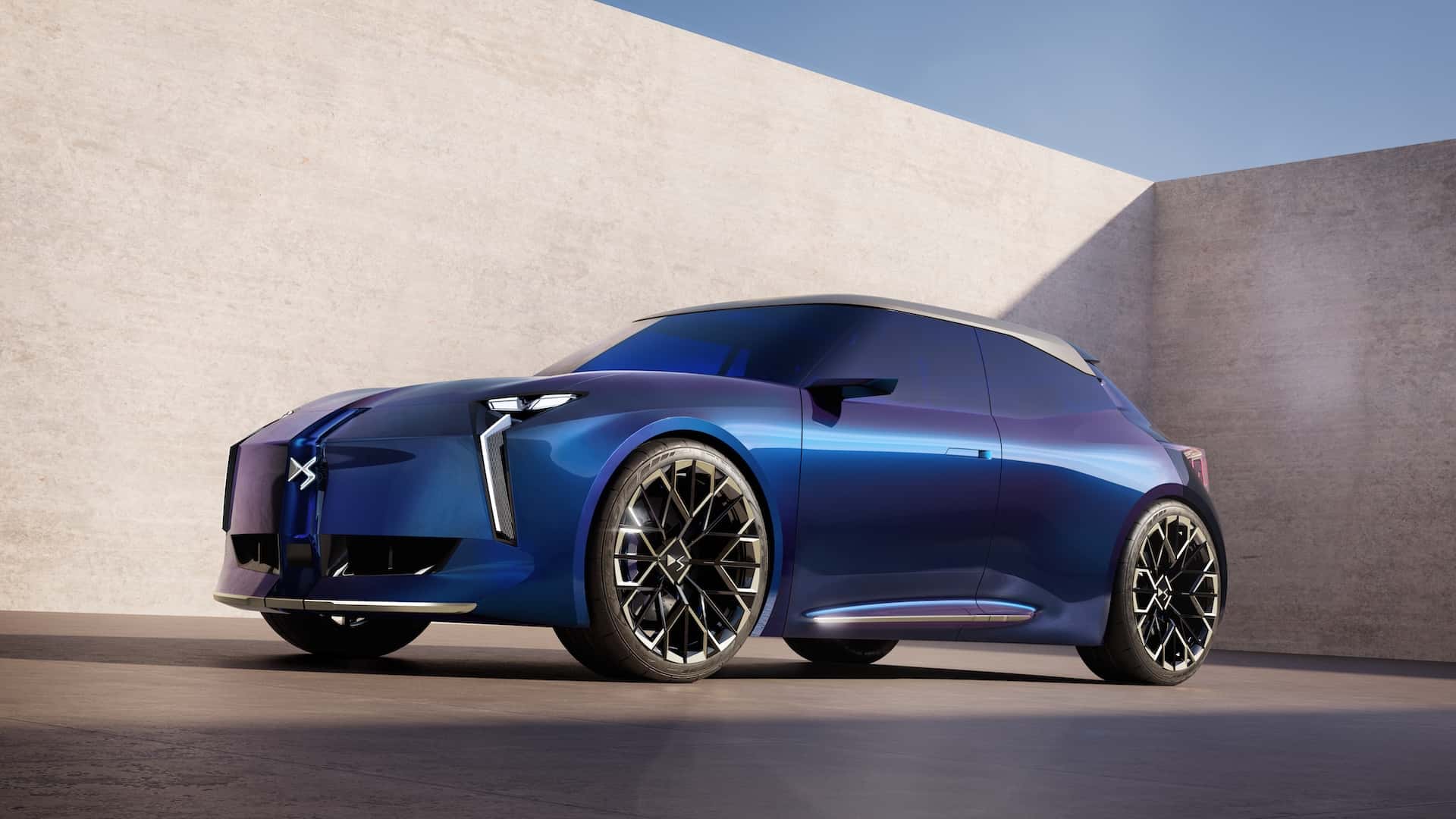
The visual identity of the F3VER is defined by its lighting. The front fascia is anchored by a vertical central element that houses the DS emblem, flanked by Y-shaped LED signatures that provide an aggressive, feline aesthetic. However, it is the rear of the vehicle that truly commands attention.
The taillights are comprised of 16 individual LED panels mounted on a lightweight magnesium structure. This design was directly inspired by the vaulted roof of Paris’s iconic Grand Palais, serving as a homage to French architectural history. Beyond their structural beauty, these lights are fully digitized, allowing the car to communicate via animations—a nod to the growing trend of vehicle-to-infrastructure (V2I) communication.
The exterior is finished in an exclusive "Cosmic Blue" paint. This is not a static color; it utilizes advanced pigments that shift between a deep, vibrant blue and an ethereal violet depending on the viewing angle and ambient light. This two-tone effect is further emphasized by the wrap-around rear treatment, which creates a sense of fluid motion even when the car is stationary. The wheels, finished in champagne accents with the intricate Clous de Paris pattern, further cement the brand’s commitment to "jewel-like" detail.
Supporting Data: Engineering for Efficiency
While DS has remained tight-lipped regarding the specific output of the F3VER’s electric motors, the vehicle’s technical specs hint at a focus on weight reduction and space maximization.
- Wheelbase: 2.70 meters (106.3 inches). This allows for a surprisingly spacious cabin for a car under 4.2 meters long.
- Cargo Capacity: 400 liters. This is a class-leading figure for a vehicle of this size, suggesting that the "Design Intelligence" approach has successfully reclaimed space typically lost to bulky structural components.
- Structural Composition: The use of magnesium in the lighting supports and the integration of bumper assemblies point toward a strategy of component reduction, which directly impacts the curb weight and, consequently, the battery efficiency.
DS has stated that the F3VER represents a "new generation of electric vehicles," promising that future models utilizing this design language will achieve class-leading range. By stripping away extraneous plastic and utilizing a modular platform, the brand is positioning itself to compete with the highly efficient electric platforms currently being developed by Tesla and the Hyundai-Kia group.
Official Responses and Industry Context
The reception to the F3VER within the industry has been one of cautious optimism. For a brand that has struggled to establish its place within the massive Stellantis umbrella, the F3VER serves as a vital signal. A spokesperson for DS noted during the reveal that "The F3VER is not just a concept; it is a laboratory for how we will build cars in the next decade. We are moving away from the conventional to the essential."
However, industry analysts are waiting to see how these promises manifest in a production vehicle. The challenge for DS remains the "premium gap." Can a French brand command the same loyalty and pricing power as a German counterpart? The F3VER’s focus on high-end customization—allowing owners to alter the look and feel of the vehicle through digital interfaces and swappable exterior elements—is a strategy aimed at the younger, luxury-conscious demographic that currently favors bespoke tech-centric brands.
Implications: The Road Ahead
The implications of the F3VER for the future of DS are threefold:
- Manufacturing Simplification: By moving toward "Design Intelligence," DS is likely preparing for a leaner production line. This is essential for Stellantis, which is currently undergoing a massive initiative to rectify quality issues and streamline manufacturing across its 14 brands.
- A Shift in Brand Identity: The F3VER confirms that DS is moving away from the "Citroën-plus" mentality. By leaning into French high-fashion sensibilities (the Clous de Paris patterns, the Grand Palais-inspired architecture), the brand is attempting to pivot from being an "alternative" to being a "destination" for luxury buyers.
- The Electric Pivot: The promise of "class-leading range" suggests that the next generation of DS vehicles will likely be built on the STLA Medium or Small platforms, with a focus on battery density and aerodynamic drag coefficients that were impossible to achieve with the brand’s earlier combustion-based models.
The DS F3VER is a reminder that in the transition to an electrified future, there is still room for soul, history, and, most importantly, design flair. While the path from a concept on a stage in Paris to a showroom floor is fraught with engineering compromises and fiscal hurdles, the F3VER proves that DS is not merely a brand in decline. It is a brand in transition.
For the prospective buyer, the message is clear: the next generation of DS vehicles will prioritize the human experience—combining the agility of an urban runabout with the sophisticated aesthetics of a haute couture fashion house. Whether this will be enough to challenge the entrenched German hegemony remains to be seen, but for the first time in years, the conversation around DS is no longer about its past—it is about its potential.
