

By Editorial Staff
March 20, 2025
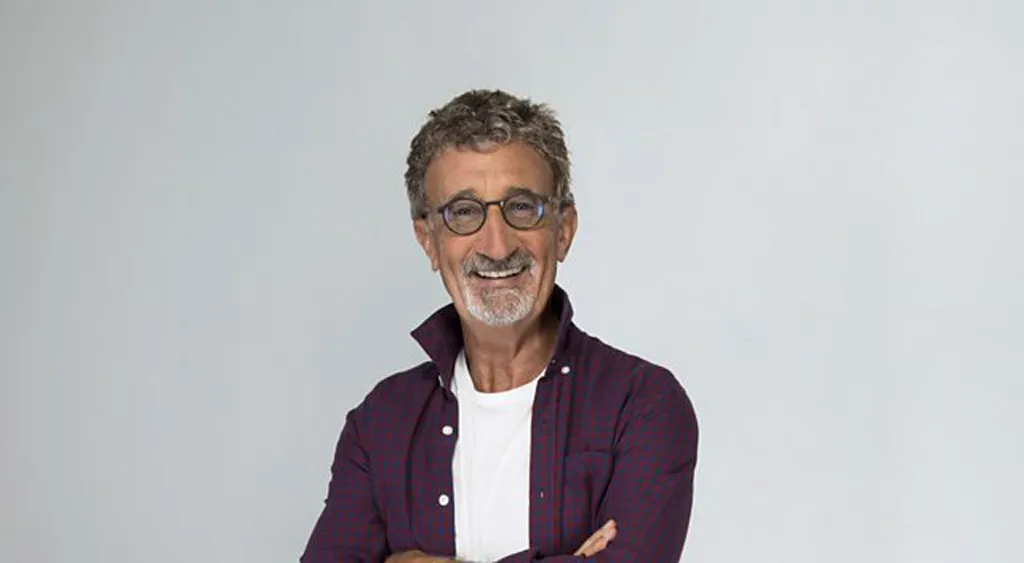
The world of motorsport is in mourning today following the passing of Eddie Jordan, the quintessential Irishman who brought color, controversy, and unmatched charisma to the Formula 1 paddock. Jordan, who died peacefully in Cape Town, South Africa, at the age of 76, leaves behind a legacy that transcends his role as a team owner. From his humble beginnings in Dublin to the glitz of the F1 starting grid and the screens of millions on Top Gear, Jordan was a force of nature who shaped the modern era of racing.
The Life and Legacy of a Racing Icon
Born in Dublin in 1948, Edmund "Eddie" Jordan was never destined for a quiet life in the banking sector, despite his early attempts to establish himself in finance. His heart belonged to the roar of engines. After a stint as a clerk, he discovered the world of karting in the early 1970s. What began as a recreational pursuit quickly evolved into an obsession, propelling him through the ranks of Formula Ford and Formula Three.
While his own driving career was modest compared to the giants he would later manage, it was in the business of racing—the cutthroat, high-stakes world of team ownership—that Jordan truly found his calling. In 1991, he achieved the near-impossible: he established Jordan Grand Prix, an independent team that dared to challenge the established automotive giants of Ferrari, McLaren, and Williams.
Chronology of a Maverick’s Career
To understand the impact of Eddie Jordan, one must look at the timeline of his extraordinary rise:
- 1948: Born in Dublin, Ireland.
- 1970s: Begins a racing career in karts, progressing to Formula Ford and Formula Three.
- 1980: Founds Eddie Jordan Racing (EJR) in Formula Three, finding early success with drivers like Johnny Cecotto.
- 1988: EJR enters Formula 3000, winning the championship with Jean Alesi.
- 1991: Jordan Grand Prix is launched in Formula 1. Michael Schumacher makes his sensational debut at Spa-Francorchamps.
- 1998: The team reaches its zenith with Damon Hill and Ralf Schumacher securing a 1-2 finish at the Belgian Grand Prix.
- 1999: Heinz-Harald Frentzen mounts a surprise world championship challenge, finishing third in the standings.
- 2005: After years of financial struggle, the team is sold to the Midland Group, marking the end of the "Jordan" era.
- 2009: Joins the BBC’s Formula 1 coverage, becoming a beloved and often polarizing pundit.
- 2016: Joins the revamped Top Gear cast, bringing his infectious energy to a global audience.
- 2025: Passes away in Cape Town, South Africa, aged 76.
The Schumacher Connection: A Kingmaker’s Eye
Perhaps no decision in the history of Formula 1 has had as profound an impact as Eddie Jordan’s choice to put a young, relatively unknown German named Michael Schumacher into his car for the 1991 Belgian Grand Prix.
At the time, the F1 establishment was skeptical. Jordan, however, saw something in the young driver that others missed. Schumacher’s debut was brief—he retired on the first lap due to a clutch failure—but he had already left his mark, qualifying an astonishing seventh in a midfield car. That brief moment ignited a chain reaction that would lead to Schumacher winning seven world championships. Jordan was the catalyst, the man who provided the platform for the greatest driver of his generation to step into the light.
Supporting Data: The Jordan Grand Prix Record
Jordan Grand Prix was never the wealthiest team on the grid, but it was often the most opportunistic. Under Eddie’s guidance, the team secured four Grand Prix victories. While that number may seem small compared to current juggernauts like Red Bull or Mercedes, it represents a monumental achievement for a privateer team competing against manufacturer-backed giants.
- Total Entries: 250 Grands Prix.
- Total Wins: 4 (1998 Belgian GP, 1999 French GP, 1999 Italian GP, 2003 Brazilian GP).
- Pole Positions: 2.
- Podiums: 19.
- Highest Constructors’ Finish: 3rd (1999).
The 1999 season remains the high-water mark for the team. With Heinz-Harald Frentzen behind the wheel, Jordan pushed the title fight until the final races of the season, a feat that remains one of the greatest underdog stories in the history of the sport.
Life After the Paddock: Media and Entertainment
When the era of Jordan Grand Prix came to a close in 2005, many expected the Irishman to retire to a quiet life. Instead, he reinvented himself as one of the most recognizable voices in sports broadcasting.

Starting in 2009 with the BBC, his chemistry with veteran commentator Martin Brundle and presenter Jake Humphrey became the gold standard for F1 coverage. Jordan was never afraid to speak his mind, often predicting team moves and driver contracts months before they were announced—a skill that earned him the nickname "The Oracle."
His transition to Top Gear in 2016 introduced him to a wider audience. Alongside Matt LeBlanc, Chris Harris, and the late Sabine Schmitz, Jordan proved that his charisma was not limited to the technicalities of the paddock. He brought a sense of fun and unpredictability that had been missing from the show, proving that his love for the automobile was as fervent in his 60s as it was in his 20s.
Official Responses and Tributes
The racing community has been swift to pay tribute to the man who was, by all accounts, a larger-than-life figure.
"Eddie was the heartbeat of the paddock," said a statement from the FIA. "His contribution to Formula 1, not just as a team owner but as a personality who helped bring the sport to the masses, is immeasurable. He taught us that with enough passion and a bit of luck, anything is possible."
Former drivers, many of whom owed their starts to Jordan, have flooded social media with memories. Damon Hill described him as "a mentor, a provocateur, and a friend," while contemporaries from the 90s era noted that the paddock feels "significantly emptier" without his presence.
Implications: The End of an Independent Era
The death of Eddie Jordan marks more than just the loss of a public figure; it represents the closing of a chapter in motorsport history. The era of the "garagiste"—the small, independent team owner who builds a car in a shed and challenges the titans of industry—has largely passed.
Jordan was the last of a breed. His team was built on personality, intuition, and an unwavering belief in the human element of racing. In today’s hyper-corporate F1, where data analytics often override intuition, the legacy of Eddie Jordan serves as a reminder of the power of passion.
As the F1 community gathers for the upcoming races, there will undoubtedly be moments of silence and tributes across the circuits. But perhaps the most fitting tribute to Eddie Jordan would be a race fought with the same spirit he championed: bold, unpredictable, and, above all, fearless.
He is survived by his wife, Marie, and their four children. They have asked for privacy during this difficult time, but they have shared that Eddie passed away surrounded by the love and laughter that defined his extraordinary life.
The paddock will miss the man in the colorful shirts and the sharp wit, but the sport he helped build will continue to carry his influence for decades to come. Eddie Jordan did not just watch history; he drove it.
