


In a landmark judicial development that could send shockwaves through the American law enforcement landscape, a federal judge in Oklahoma has delivered a scathing critique of modern surveillance tactics. U.S. District Judge Sara Hill has ruled that the use of month-long, warrantless tracking via Automated License Plate Reader (ALPR) data constitutes a violation of the Fourth Amendment.
Describing the widespread deployment of these cameras as a form of "indiscriminate mass surveillance," Judge Hill’s decision represents a rare judicial pushback against the technological erosion of privacy in public spaces. While the ruling is currently confined to a single criminal case in the Northern District of Oklahoma, legal scholars and privacy advocates are already debating whether this marks the beginning of a constitutional reckoning for the multi-billion-dollar ALPR industry.
The Case: United States v. Kyle
The legal battle stems from a routine traffic stop that escalated into a significant narcotics seizure. Melisa Kyle was traveling through Oklahoma in a Mazda SUV when she was spotted by Tulsa County Deputy Sheriff Freddie Alaniz. According to court records, Deputy Alaniz began shadowing the vehicle, noting only that it bore California license plates.
Without any immediate probable cause, the deputy utilized the department’s access to an ALPR network to query the vehicle’s history. The system returned a wealth of historical data, including more than 50 records documenting the vehicle’s movements over the preceding 30 days, tracing a path from the California-Arizona border through to Missouri.
Armed with this aggregated history, the deputy initiated a traffic stop. Although the judge ruled that the initial stop for traffic violations was technically lawful, she determined that the subsequent detention and investigation were unconstitutional. Because the officer’s suspicion was predicated on information gleaned from a warrantless, long-term digital dragnet, Judge Hill ordered the suppression of the evidence obtained during the encounter—which included a staggering 91 pounds (41 kg) of methamphetamine.
Chronology of Surveillance: From Observation to Database
To understand the weight of Judge Hill’s ruling, one must look at how ALPR technology has evolved from a simple tool for locating stolen vehicles into a pervasive surveillance infrastructure.
- The Early Days: Initially, ALPR technology was used exclusively to identify stolen vehicles or cars belonging to individuals with active warrants. These cameras were typically mounted on patrol cars, and the data was often purged within hours or days.
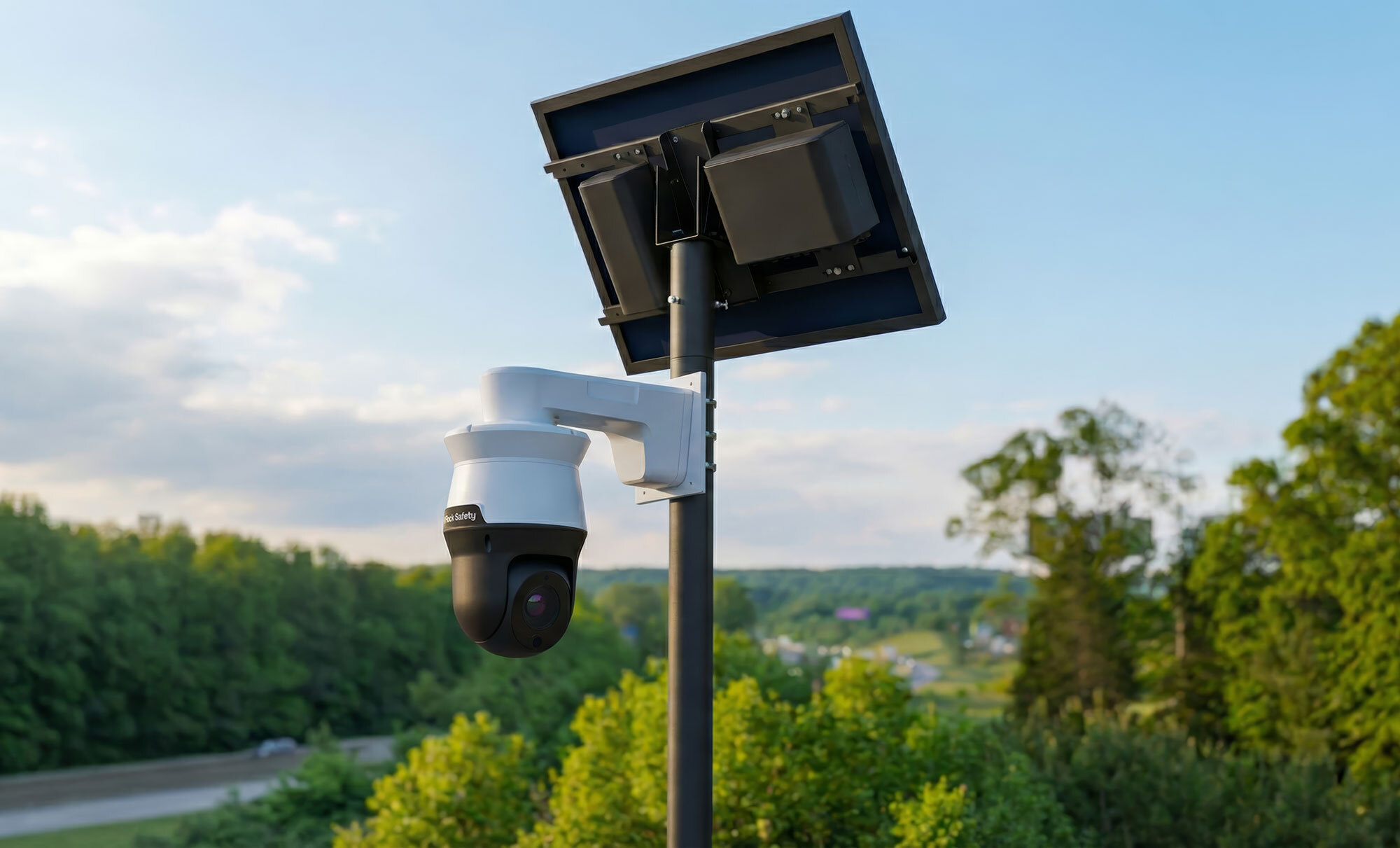
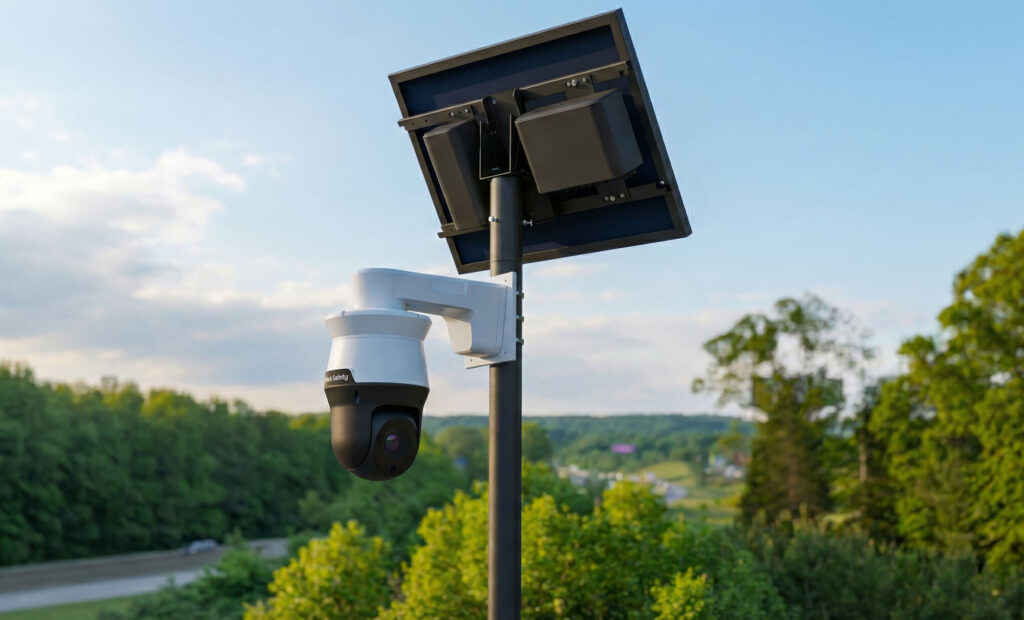
- The Proliferation Phase: With the advent of companies like Flock Safety, the model shifted. High-definition, solar-powered cameras were placed on fixed poles at nearly every major intersection in suburban and urban environments.
- The Aggregation Era: Unlike earlier iterations, modern systems capture not just the license plate, but also the vehicle’s make, model, color, and even unique identifying features like bumper stickers or roof racks. This data is uploaded to massive cloud-based repositories, often shared between private companies and law enforcement agencies across state lines.
- The Legal Collision: The Kyle case represents the point where the "reasonable expectation of privacy"—a cornerstone of Fourth Amendment jurisprudence—clashed with the reality of an "always-on" tracking network that keeps tabs on innocent citizens as frequently as it monitors criminal suspects.
Supporting Data: The Scale of Modern Tracking
The technology at the heart of this dispute is not proprietary to a single firm, though Flock Safety—which operates a massive, interconnected network of cameras—is the most prominent target of current criticism.
Industry analysts estimate that hundreds of thousands of these devices are now active across the United States. A single urban center may have thousands of cameras, each capable of pinging a vehicle’s location multiple times an hour. This data is then searchable by law enforcement agencies, allowing them to construct a "pattern of life" for any driver.

In United States v. Kyle, the court noted that the deputy had access to at least 30 days of historical data. The aggregation of 50 distinct data points provided a comprehensive view of the defendant’s travel habits—a level of detail that the Supreme Court previously suggested, in cases like Carpenter v. United States, might require a warrant. Judge Hill’s ruling essentially argues that when the aggregation of data becomes so precise that it reveals an intimate portrait of a person’s life, the "public view" doctrine no longer provides the police with a free pass to ignore the Fourth Amendment.
Official Responses and Industry Defense
The response from the surveillance industry has been one of cautious defiance. Flock Safety, while not a named party in the Kyle litigation, has publicly maintained that the ruling is an outlier.
"The decision runs contrary to the overwhelming majority of existing legal precedents," a company spokesperson suggested in recent communications. The industry’s argument rests on the established principle that there is no expectation of privacy when driving on public roads. Historically, courts have reasoned that if an officer can see a license plate from their cruiser, they are entitled to record that information.
However, legal experts point out that the scale is the differentiator. There is a fundamental difference between an officer manually noting a plate and a computer-generated, multi-state, 30-day historical report.
Law enforcement agencies are currently in a state of flux. While some departments have paused or reviewed their data-retention policies in light of the ruling, most continue to utilize ALPR data as a primary tool for criminal investigations. They argue that suppressing such evidence would "handcuff" police and make it significantly harder to solve violent crimes, human trafficking, and drug smuggling operations.
Implications: A Looming Constitutional Crisis
The implications of Judge Hill’s decision are profound, though they are currently limited by the nature of the U.S. court system.
1. The Precedent Gap
Because this is a district court ruling, it is not binding on other federal districts or state courts. In fact, other federal courts within the state of Oklahoma have previously ruled that ALPR usage does not violate the Fourth Amendment. This sets the stage for a "circuit split," which is often the catalyst for the Supreme Court to eventually take up a case.
2. The "Technology-Neutral" Ruling
Crucially, Judge Hill’s decision did not target one specific company. She did not rule that "Flock cameras are unconstitutional"; she ruled that the use of aggregated, long-term ALPR data to track individuals without a warrant is unconstitutional. This means that even if a department switches to competitors like Motorola Solutions, Genetec, or Rekor, they remain subject to the same legal risks if their surveillance practices are equally intrusive.

3. The Future of Law Enforcement Data
If this ruling gains traction at the appellate level, police departments will likely be forced to adopt "warrant-based" access to historical ALPR data. Just as police must obtain a warrant to access historical cell-site location information (CSLI), they may soon be required to demonstrate probable cause to a judge before pulling a 30-day history of a citizen’s vehicle movements.
4. A Chilling Effect on Industry Growth
The uncertainty generated by this ruling could lead to a decrease in the aggressive expansion of these networks. If municipalities and private homeowners associations fear that the data they collect will be deemed "fruit of the poisonous tree" in court, they may become more selective in how they share data with law enforcement or how long they choose to store it.
Conclusion: The Privacy Tug-of-War
The ruling in United States v. Kyle serves as a stark reminder that technology moves faster than the law. For years, the rapid deployment of license plate readers has outpaced the judicial system’s ability to define the boundaries of digital privacy.
Judge Hill has effectively drawn a line in the sand, suggesting that while the public road is open to all, the systematic, automated, and long-term digital surveillance of individuals is not a right that the government can claim without oversight. Whether this decision is overturned on appeal or serves as the first domino in a national shift toward stricter digital privacy rights remains to be seen. However, one thing is clear: the era of "indiscriminate mass surveillance" is now officially a matter of intense constitutional scrutiny.
