

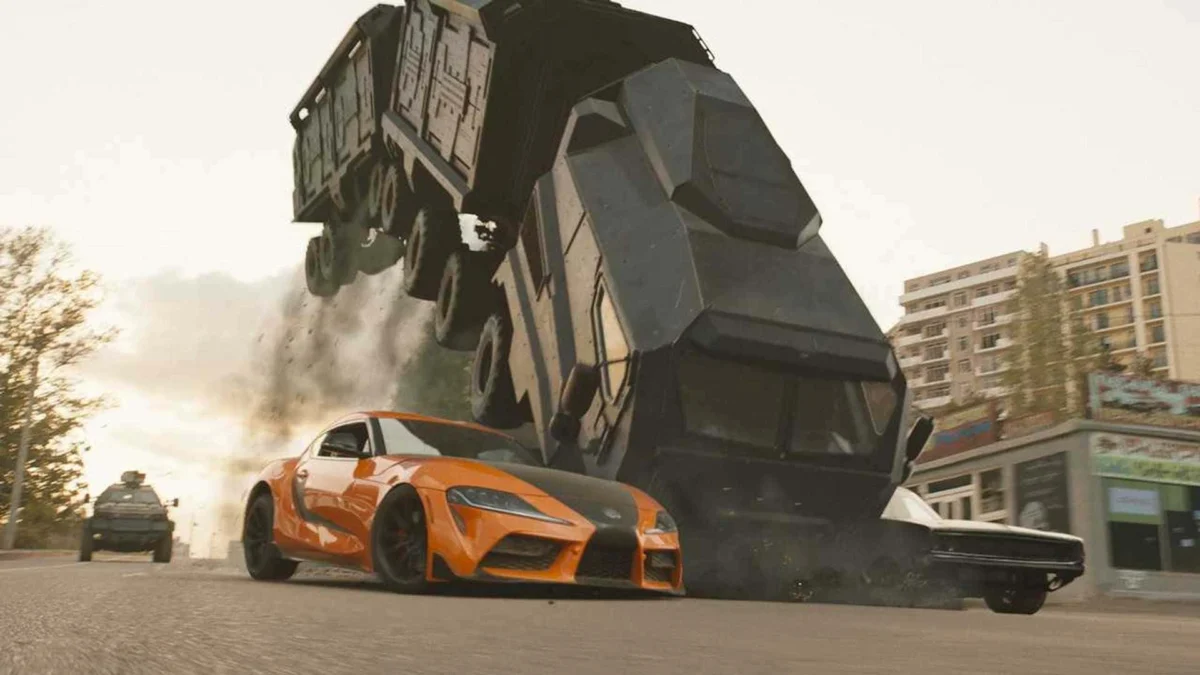
After more than two decades of dominating the global box office with high-octane stunts, gravity-defying maneuvers, and an enduring focus on the concept of "family," the Fast & Furious franchise is preparing for its most ambitious shift to date. With eleven feature films and one successful spin-off already in the rearview mirror, the saga is officially pivoting toward the small screen.
Franchise cornerstone Vin Diesel recently stirred significant excitement—and a degree of industry speculation—by announcing that the Fast & Furious universe is slated for a massive television expansion. While Diesel suggested that as many as four new series are in the pipeline, industry insiders have offered a more measured perspective, noting that the development process is in its early, fluid stages.
The State of the Franchise: From Street Racing to Global Phenomenon
What began in 2001 as a modest crime-thriller about illegal street racing in Los Angeles has ballooned into a multi-billion-dollar cultural juggernaut. Over the last 23 years, the series has evolved from simple quarter-mile races into a globe-trotting action epic characterized by heist plots, espionage, and increasingly outlandish set pieces.
The announcement of a television transition marks a pivot point for Universal Pictures. According to reports from Variety, a major series is currently in active development for the Peacock streaming platform. While Diesel’s public remarks regarding a four-show slate may represent a long-term goal rather than an immediate production schedule, the intent is clear: Universal is looking to capitalize on the deep bench of legacy characters that have been established since the turn of the millennium.
"For the last decade, we have realized that the fans have wanted more," Diesel stated during a recent media appearance. "They wanted us to expand the legacy characters, their stories. I had to wait for the right time to ensure the ‘family’ would be protected in the TV space."
A Chronology of the Fast & Furious Legacy
To understand the magnitude of this television expansion, one must look at the historical trajectory of the franchise.
- 2001: The Fast and the Furious introduces the world to Dominic Toretto and Brian O’Conner, grounding the series in the gritty subculture of street racing.
- 2003–2006: The franchise experiments with sequels (2 Fast 2 Furious) and a cult-classic detour (Tokyo Drift), which eventually becomes central to the series’ mythology.
- 2009: The return of the original cast in Fast & Furious cements the series’ focus on ensemble chemistry.
- 2011–2015: The "Heist Era" (Fast Five through Furious 7) transforms the series into a global blockbuster powerhouse, with Furious 7 becoming one of the highest-grossing films of all time.
- 2019: The first spin-off, Hobbs & Shaw, tests the viability of expanding the narrative universe beyond the main Toretto-centric arc.
- 2023: Fast X debuts, introducing high-stakes villainy and setting the stage for the final act of the core series.
- 2028: Fast Forever is scheduled to hit theaters, marking the official conclusion of the main film saga—exactly 27 years after the journey began.
Supporting Data: Why Television is the Logical Next Step
The transition to television is a calculated strategic move. In an era where "cinematic universes" are often criticized for burnout, the Fast & Furious franchise has maintained a remarkably loyal fanbase. Data suggests that the franchise’s longevity is driven by character investment rather than just the spectacle of the cars themselves.
Television allows for a "deeper dive" into the backstories of secondary characters who have been sidelined by the breathless pacing of the films. Characters like Tej Parker, Roman Pearce, and the various members of the "extended family" offer fertile ground for episodic storytelling. Furthermore, television provides a more cost-effective environment to explore smaller, character-driven narratives that don’t necessarily require the $200 million budgets associated with the feature films.
While the "four shows" claim remains subject to the realities of network development, the sheer volume of content produced by the franchise—including animated series like Fast & Furious Spy Racers on Netflix—proves that the audience appetite for non-feature content is already tested and proven.

Official Responses and Industry Context
The discrepancy between Diesel’s vision and the reported reality—that only one series is currently in development—is common in Hollywood. Studios often have multiple projects in "pre-development" or "concept phases," and talent often speaks to the broader ambition of a brand rather than the current status of contracts.
Sources close to the situation emphasize that the partnership between the production team and Peacock is focused on maintaining the "brand identity" of Fast & Furious. This means ensuring that the stunt choreography, the emphasis on brotherhood, and the "living life a quarter-mile at a time" ethos remain intact, even without the massive scale of a theatrical release.
Implications for the Future: Fast Forever and Beyond
The upcoming theatrical finale, Fast Forever, is positioned as the emotional and narrative capstone to the series. The implications of this are twofold:
- The "Family" Legacy: By concluding the film saga in 2028, Universal effectively closes the book on the current iteration of the main story, allowing television shows to act as either spiritual successors or prequel explorations.
- The Pivot to Streaming: As the theatrical market becomes increasingly crowded, moving the brand to streaming ensures that Fast & Furious remains a staple in the homes of millions of subscribers. It shifts the burden of performance from "opening weekend box office" to "subscriber retention," a metric that is arguably more stable for long-running franchises.
Motor1.com’s Take: The High-Octane Transition
The shift from the big screen to the small screen poses a unique challenge. The Fast & Furious movies are synonymous with "big"—big cars, big explosions, and big budgets. Can the television medium capture that same visceral energy?
History suggests that when franchises transition to television, the most successful ones are those that double down on what made the films great: the chemistry between characters. If the upcoming Peacock series focuses on the human element—the dynamics within the crew, the tension of the heists, and the high-stakes drama—it could easily succeed. If it attempts to replicate the massive, physics-defying stunts of the movies on a television budget, it may struggle.
However, the "family" core of the franchise is what kept it alive for 27 years. That is a commodity that translates perfectly to any medium, whether it is an IMAX screen or a smartphone display.
Conclusion
As we look toward the 2028 release of Fast Forever, the Fast & Furious brand is proving that it is far more than just a series of car movies. It is a cultural institution. Whether or not we see four distinct series arrive on Peacock in the coming years, the mandate from the top is clear: the road doesn’t end when the credits roll on the final film.
Vin Diesel’s ambition to expand the universe into television serves as a bridge, ensuring that the legacy of Dom Toretto and his crew continues to burn rubber for a new generation of viewers. For the fans who have spent nearly three decades following this journey, the prospect of seeing their favorite characters in new, serialized environments is a welcome evolution. The engine is still running, and the next chapter is just getting into gear.
