

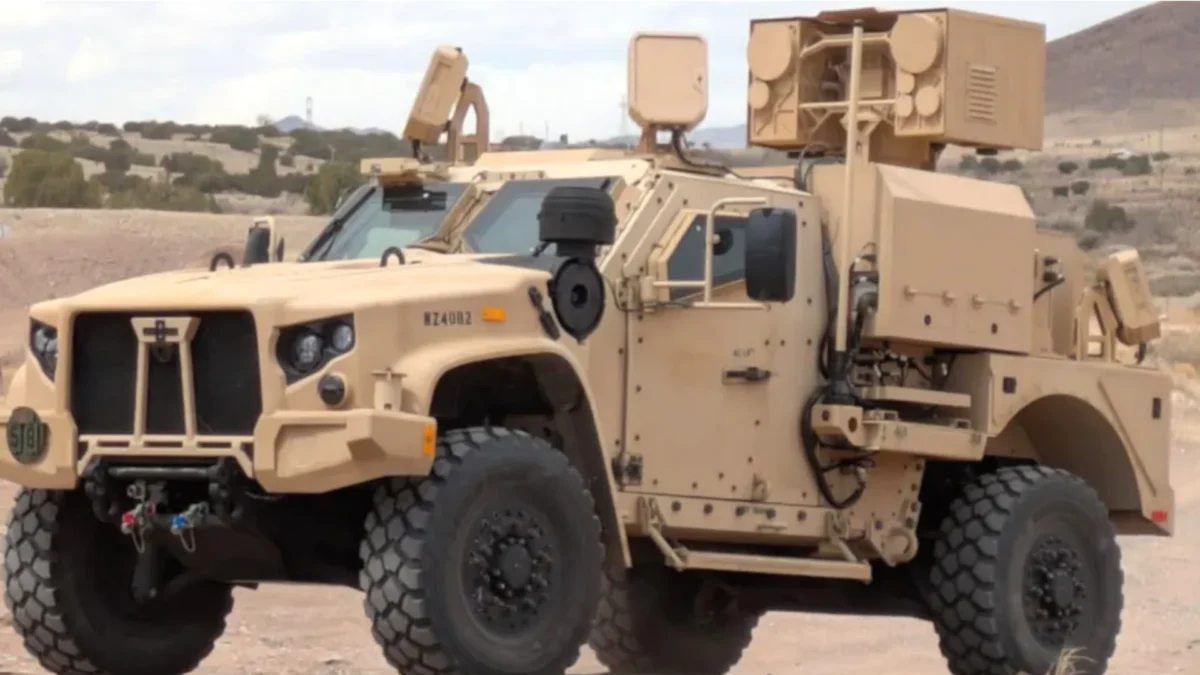
In an era where the battlefield is increasingly dominated by low-cost, high-frequency drone swarms, the U.S. military is pivoting toward a radical shift in air defense. The Department of Defense has long grappled with the "cost-exchange ratio"—the economic absurdity of firing a $2 million interceptor missile to destroy a $5,000 hobbyist drone. To solve this, the U.S. Army has embarked on a program to field modular, high-energy laser weapons capable of mounting onto standard military trucks.
At the heart of this effort is AeroVironment’s 30-kilowatt LOCUST X3 system, which secured an initial manufacturing award in September 2026. This technology represents more than just a new weapon; it signifies a move toward a "plug-and-play" architecture that aims to transform every logistical vehicle in the motorpool into a lethal air-defense platform.
Main Facts: The LOCUST X3 Paradigm
The LOCUST X3 is a Directed Energy Weapon (DEW) engineered to neutralize Group 1 through Group 3 unmanned aerial systems (UAS). These drones, ranging in weight from 9 kg (20 lbs) to 600 kg (1,320 lbs), have become the primary threat vector for modern ground forces.
What sets the LOCUST X3 apart is its operational efficiency. AeroVironment reports that the cost per engagement—the literal price of "firing" the laser—is under $10, with some industry reports suggesting figures as low as $5 per shot. This is a staggering improvement over traditional kinetic ammunition. Furthermore, the system is guided by "Halo Pinpoint," an in-house artificial intelligence suite that handles the complex telemetry of detecting, tracking, and locking onto high-speed targets without requiring constant manual intervention from a human operator.
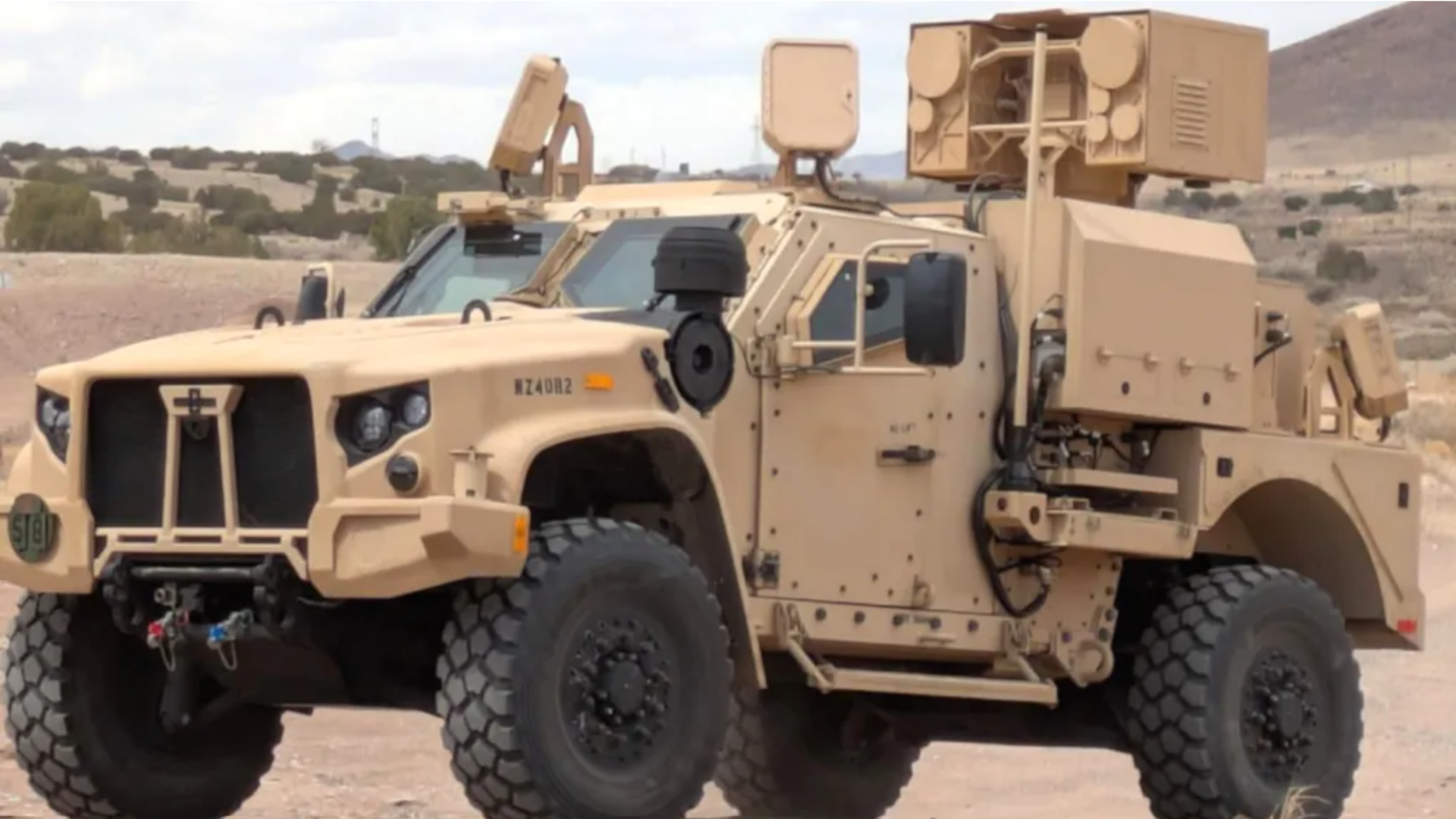
The system is designed with a modular "sled" architecture. Unlike previous attempts at laser integration, which required bespoke, permanent modifications to expensive combat vehicles like the Stryker, the X3 is designed to be detached and moved. If a truck breaks down, the weapon system can be quickly transferred to a functional vehicle, ensuring that the defensive capability remains on the front line regardless of the chassis’s mechanical health.
A Chronology of Directed Energy Development
The road to the LOCUST X3 has been paved with both technical breakthroughs and humbling setbacks.
- 2022: The Army makes a high-profile move to reactivate an air defense battalion at Fort Sill, Oklahoma. This unit was intended to be the flagship for Stryker-mounted laser systems. However, the program faced significant reliability hurdles, forcing the Army to reconsider its approach to integration and maintenance.
- March 2026: Industry trade reports begin to circulate, highlighting the extreme cost-efficiency of laser-based drone defense, citing a $5-per-shot operational cost.
- August 25, 2026: The Army reports a successful engagement and interception of an unauthorized drone near the U.S. southern border, marking a critical live-fire milestone for the LOCUST technology.
- September 2026: AeroVironment officially secures the primary manufacturing contract for the LOCUST X3.
- September 8, 2026: AeroVironment announces an international order for the system valued at over $50 million, signaling global interest in cost-effective drone defense.
- Early 2028 (Projected): The U.S. Army expects to see the first operational X3 units deployed to active duty units.
Supporting Data and Technical Specifications
The performance of the X3 is defined by its 30-kilowatt output, which is adjustable between 20 and 35 kilowatts depending on the specific mission profile. While this wattage is effective against light-to-medium drones, it is considered a baseline in the broader spectrum of directed energy.
The power constraint remains the most significant bottleneck. According to Brig. Gen. Guy Yelverton, the Army’s Capability Program Executive for Defensive Fires, the system’s batteries provide between 80 and 120 seconds of continuous firing time. Once the beam is terminated, the magazine—in this case, the electrical charge—must be replenished.
Furthermore, the "range-power-delivery" trifecta remains a challenge. Laser effectiveness is strictly dependent on atmospheric conditions. Dust, smoke, humidity, and precipitation scatter the light, reducing the intensity of the beam and, consequently, its ability to burn through the airframe of a target drone. While the Army is pushing for a 150-kilowatt containerized laser system, industry partners like nLIGHT are already looking toward the horizon, with CEO Scott Keeney expressing optimism about scaling directed energy weapons to one megawatt—a threshold that would theoretically allow for the engagement of larger, more durable aerial threats.
Official Responses and Strategic Vision
The Army’s shift toward modularity is driven by a pragmatic understanding of the modern battlefield. "We’re getting to the point where the systems are reliable enough, but we still have to make them maintainable and repairable because this is an Army system," says Kirk Williams, Chief Engineer at the Army’s Directed Energy Project Office.
Williams emphasizes that the military environment is inherently destructive. "Things are going to break. We can break things in very creative ways. So if it’s not reliable, or if it’s not maintainable, if it’s not repairable, that’s a problem."
Brig. Gen. Guy Yelverton echoes this sentiment, highlighting the vision for a universal defense capability. "We’re focused on any vehicle in the motorpool," Yelverton stated. "I want to try to integrate future capability of high-energy lasers into it." This vision moves the Army away from building specialized "laser trucks" and toward a philosophy where any vehicle can be upgraded to defend its own perimeter.
The financial commitment is equally substantial. The current Army contract is valued at $464.8 million. To support this demand, AeroVironment is investing more than $30 million to expand its Albuquerque, New Mexico, campus. This expansion is expected to create 450 high-tech jobs and provide an estimated $670 million in economic impact to the region, underscoring the massive industrial scale required to move lasers from the laboratory to the front lines.
Implications: The New Battlefield Reality
The successful deployment of the LOCUST X3 could fundamentally alter the economics of modern warfare. By reducing the cost of an engagement to less than $10, the U.S. Army effectively neutralizes the primary advantage of enemy drone swarms: the ability to overwhelm expensive defenses with cheap, disposable hardware.
However, the transition is not without its critics and skeptics. While the Army cites successful interceptions—such as the August 2026 border engagement—the lack of publicly released telemetry or detailed engagement data leaves independent analysts cautious. Without third-party verification, it remains unclear how the system performs in "contested" environments where electronic warfare, countermeasures, and adverse weather conditions are present.
Moreover, the "one-at-a-time" limitation of the current X3 architecture suggests that while lasers are a perfect solution for low-intensity threats, they may not yet be ready to counter high-volume, saturation-style attacks. The ability of the Halo Pinpoint AI to manage rapid-fire target acquisition will be the deciding factor in whether this technology becomes a true game-changer or simply another experimental niche.
As the U.S. Army moves toward its 2028 operational target, the focus will remain on refining the modular interface. If the Army succeeds in making these lasers as common and as easily swapped as a spare tire, it will have successfully rewritten the rules of aerial denial. The goal is clear: to ensure that when the next conflict arises, the U.S. soldier is not looking at a $2 million missile hitting a $5,000 drone, but rather a seamless, low-cost defensive net that renders the enemy’s most effective weapon obsolete.
