

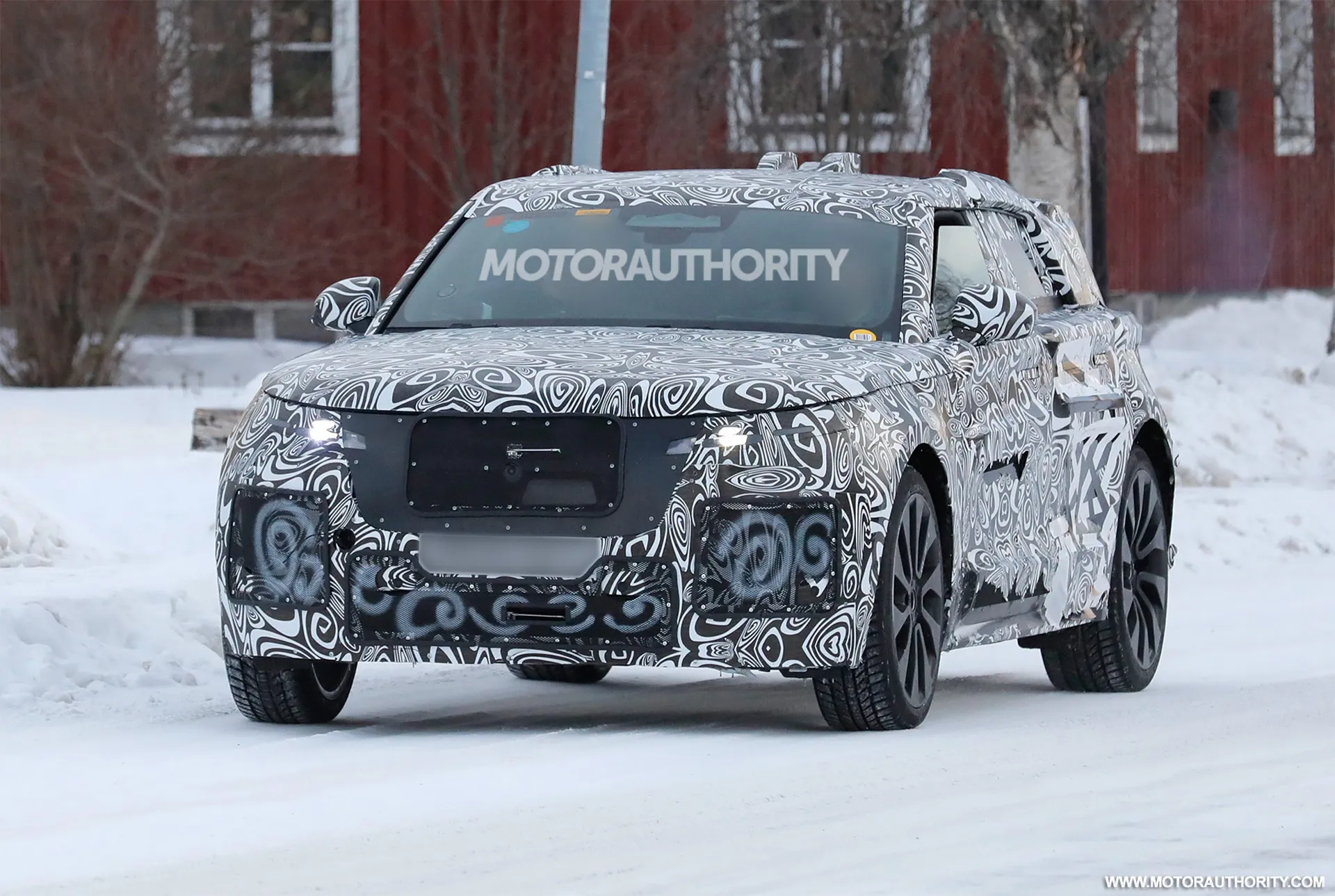
Jaguar Land Rover (JLR) is entering a pivotal chapter in its storied history. While automotive enthusiasts have been fixated on the impending arrival of the fully electric Range Rover—a flagship model designed to translate the brand’s rugged prestige into the EV era—spy photographers have recently captured a different, more enigmatic prototype undergoing rigorous testing.
This new vehicle, which adopts a lower, sleeker, and more aerodynamic profile than its boxy predecessors, appears to be the first major beneficiary of JLR’s advanced "Electrified Modular Architecture" (EMA) platform. As the brand transitions toward its "Reimagine" strategy, this prototype represents more than just a new model; it is a glimpse into the future of the Range Rover family, potentially signaling the long-awaited evolution of the Velar.
Main Facts: Decoding the Prototype
The prototype caught on camera suggests a radical departure from the traditional "tall-and-boxy" Range Rover silhouette. While the upcoming full-sized electric Range Rover and its sibling, the Range Rover Sport, retain the familiar proportions of their internal combustion counterparts—albeit with aerodynamic refinements—this mystery vehicle is noticeably lower, longer, and wider.
Key Observations:
- Design Language: The prototype’s reduced ride height and elongated wheelbase suggest a shift toward a "crossover-coupe" aesthetic. This design is likely optimized for range and efficiency, leveraging a lower drag coefficient compared to the upright Range Rover.
- Platform Specifics: The vehicle is almost certainly underpinned by JLR’s EMA (Electrified Modular Architecture) platform. Unlike the MLA (Modular Longitudinal Architecture) platform, which supports larger vehicles like the current Range Rover and Range Rover Sport, the EMA is purpose-built for the next generation of mid-sized electric SUVs.
- Market Positioning: With the Range Rover Velar approaching the end of its lifecycle—having been on the market since 2018—industry analysts believe this prototype is the direct successor to the Velar line.
Chronology: The Road to Electrification
JLR’s journey to this moment has been a calculated, multi-year progression of technology and design.
2018–2021: The Foundation
The Range Rover Velar debuted to critical acclaim in 2018, bridging the gap between the compact Evoque and the full-sized Range Rover. During this period, JLR began formulating its "Reimagine" strategy, which committed the company to a complete electrification of its lineup by the end of the decade.
2023: The Strategic Announcement
Last year, JLR formally unveiled its roadmap for the EMA platform. The company confirmed that its Halewood plant in the U.K. would be retooled to support the production of these new mid-sized electric vehicles. Executives explicitly stated that the first vehicle built on the EMA platform would be a member of the Range Rover family, slated for a 2025 debut.
2024–Present: Testing Phase
Throughout late 2024, JLR intensified its cold-weather and high-speed testing cycles. The appearance of this specific prototype—distinct from the already-teased electric Range Rover—marks the transition from digital design simulations to real-world validation.
Supporting Data: Platforms and Performance
Understanding the technical hierarchy of JLR’s vehicle architecture is essential to grasping the significance of this new prototype.
The MLA (Modular Longitudinal Architecture)
The MLA platform is the heavyweight champion of the JLR stable. It is designed for versatility, supporting Internal Combustion Engines (ICE), Plug-in Hybrids (PHEV), and Battery Electric Vehicles (BEV). It is the backbone of the flagship Range Rover and the Range Rover Sport. Its primary goal is to maintain the "go-anywhere" capability and commanding road presence that the brand is famous for.
The EMA (Electrified Modular Architecture)
The EMA platform is a specialized, EV-first architecture. By prioritizing battery integration and modularity, the EMA allows for:
- Optimized Cabin Space: Because the platform is designed for EVs, it eliminates the need for a transmission tunnel, providing more interior legroom and cargo capacity despite a smaller exterior footprint.
- Next-Gen Software: The EMA is built around a new electrical architecture that supports advanced driver-assistance systems (ADAS) and over-the-air (OTA) updates, crucial for the modern luxury buyer.
- Future-Proofing: Beyond this new SUV, the EMA will underpin the next generation of the Range Rover Evoque and the Land Rover Discovery Sport, creating a unified electric ecosystem for JLR’s smaller SUV segments.
Official Responses and Strategic Vision
While JLR remains tight-lipped regarding specific model names, company leadership has been transparent about the overarching philosophy. In recent investor briefings, JLR executives emphasized that the "Range Rover" nameplate is no longer just a model, but a "brand of brands."
"We are not simply replacing vehicles; we are reimagining the luxury SUV experience," a JLR spokesperson noted during a recent briefing. The transition to the EMA platform is intended to preserve the brand’s reputation for wading depth and off-road capability while drastically improving the on-road refinement and efficiency that electric powertrains afford.
By keeping the design of the upcoming full-sized electric Range Rover closely aligned with its gas-powered siblings, JLR is aiming for "continuity in innovation." Conversely, by testing a distinct, sleeker prototype, they are showing a willingness to expand the brand’s reach into the lifestyle-focused luxury segment where aerodynamics and aesthetics hold higher weight than raw utility.
Implications for the Market
The arrival of this new vehicle has profound implications for the luxury automotive market.
1. The Death of the "Gas-Only" Status Quo
With the introduction of the EMA platform, JLR is effectively putting its competitors on notice. The shift suggests that within the next 24 months, almost every major pillar of the Range Rover lineup will be available in a full-electric configuration. This forces rivals like the Porsche Macan Electric and the Mercedes-Benz EQE SUV to contend with a competitor that has the backing of decades of off-road prestige.
2. A New Design Language
The "lower and wider" stance of the prototype suggests that JLR is moving away from the purely utilitarian, boxy design of the past. As electric motors become smaller and more efficient, designers have more freedom. We are likely to see a "Range Rover Coupe" era, where the brand leans into high-fashion design to compete with the likes of the Aston Martin DBX or the Lamborghini Urus.
3. The 2026 Model Year Rollout
Given the current testing cadence, industry analysts expect a formal, full-reveal event in late 2025. This would position the vehicle as a 2026 model year launch in the United States. North America remains a critical market for JLR, and the success of this vehicle will likely dictate the speed at which the company pivots away from its remaining ICE-heavy portfolio.
4. Broader JLR Initiatives
The prototype does not exist in a vacuum. It is part of a broader, aggressive expansion. JLR is concurrently developing:
- The Jaguar "Type 00" Series: A complete reinvention of the Jaguar brand as an ultra-luxury, all-electric powerhouse.
- The Defender Octa: A high-performance off-road specialist designed to push the limits of the brand’s rugged heritage, including potential participation in rally raid events like the Dakar Rally.
Conclusion
The sight of this low-slung, mysterious prototype is the strongest evidence yet that JLR is serious about its electric future. By balancing the traditional, high-riding heritage of the Range Rover with the sleek, efficient requirements of the EMA platform, the company is attempting to thread a very difficult needle: satisfying the purists while attracting a new generation of eco-conscious luxury buyers.
As the prototype continues its testing, the world watches with bated breath. Will this be the official replacement for the Velar? Will it redefine what a "Range Rover" looks like in the 21st century? One thing is certain: JLR is not resting on its laurels. The transition to electric is not merely a change in powertrain—it is a fundamental restructuring of the brand’s identity. The road ahead is electric, and for JLR, it looks faster, lower, and more sophisticated than ever before.
