

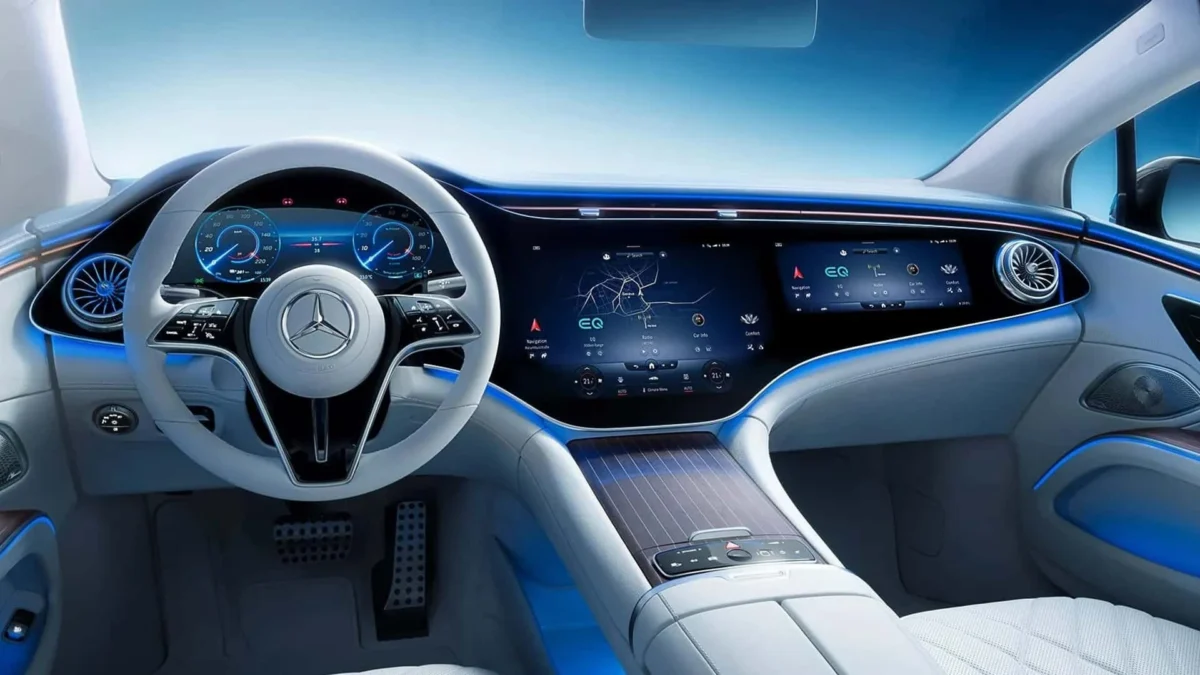
For the better part of a decade, the automotive interior has been caught in a relentless "screen-first" arms race. Inspired by the sleek, minimalist aesthetics of Silicon Valley startups and the perceived luxury of massive, high-definition digital displays, legacy automakers engaged in a frantic competition. The goal? To pack as many square inches of glass into a dashboard as possible while systematically purging the cockpit of physical buttons, knobs, and switches.
However, the tide is turning. After years of consumer frustration, safety warnings, and the realization that "technology for technology’s sake" often diminishes the driving experience, the industry is initiating a strategic pivot. From Mercedes-Benz to Volkswagen and Hyundai, the world’s leading manufacturers are quietly—and in some cases, publicly—admitting that they may have gone too far.
The Digital Deluge: A Chronology of the Touchscreen Obsession
The shift toward all-digital interfaces was not an overnight phenomenon; it was a slow, calculated creep toward a future that many users weren’t actually asking for.
The Tesla Catalyst (2012–2016)
The transformation arguably began in earnest with the 2012 Tesla Model S. By housing nearly all vehicle functions within a vertically oriented 17-inch touchscreen, Tesla established a new design language: minimalism. This approach was initially lauded as "futuristic" and "clean." Other manufacturers, eager to shed their "old-school" image, began to follow suit, viewing physical buttons as clutter that betrayed a lack of sophistication.
The "Hyperscreen" Era (2017–2022)
By the late 2010s, the race reached a fever pitch. Mercedes-Benz introduced its MBUX Hyperscreen—a 55-inch glass pane stretching from A-pillar to A-pillar. During this period, removing physical HVAC, volume, and media controls became a standard design practice. Automakers argued that digital interfaces allowed for over-the-air (OTA) updates, enabling them to refresh the user interface (UI) without mechanical changes.
The Backlash (2023–Present)
The consumer response was swift and negative. Drivers reported frustration with "menu diving"—the need to navigate three or four sub-menus just to adjust the fan speed or the heated seats. The loss of tactile feedback meant that drivers had to take their eyes off the road to ensure they had pressed the correct virtual button, a major point of contention for both safety advocates and daily commuters.
Supporting Data: Why "Analog" is More Than Just Nostalgia
The pushback against digital-heavy interfaces is supported by both ergonomic science and consumer sentiment data.
Cognitive Load and Safety
Human factors research has long established that tactile controls are superior to touchscreens for high-stakes environments like driving. A physical button provides "haptic feedback"—the user knows they have activated a feature without looking at it. Conversely, touchscreens require visual confirmation.
In 2024, the European New Car Assessment Program (NCAP) signaled a major policy shift. The safety organization announced that it would begin penalizing vehicles that lacked physical controls for essential functions like turn signals, hazard lights, and windshield wipers. This regulatory pressure has forced automakers to reconsider the ergonomic cost of their digital ambitions.
The Failure of Capacitive Sliders
One of the most widely maligned design choices of the last five years was the "capacitive slider"—a touch-sensitive strip used for volume or climate control. Unlike buttons, these strips are prone to accidental activation and offer no physical boundaries. Volkswagen, in particular, faced significant backlash for implementing these across their ID-series EVs, leading to a public commitment from company leadership to return to more intuitive, traditional inputs.
Official Responses: The CEOs Weigh In
Perhaps the most significant indicator of this shift is the admission from high-level executives that the industry’s "minimalist" obsession was a miscalculation.
In a recent interview with AutoCar, Mercedes-Benz CEO Ola Källenius provided perhaps the most candid assessment yet. "The industry as a whole might have gone a little bit too far," Källenius noted. He admitted that while the digital future is still a priority for the brand, the company lost sight of the customer’s core needs in the pursuit of high-tech aesthetics.

"Sometimes you get a bit ahead of yourself and do technology for the sake of technology and maybe forget a little bit about the customer," Källenius said. He confirmed that Mercedes-Benz is actively working to reintroduce "the most sensible buttons" into upcoming model refreshes. We are already seeing this in practice: the new Mercedes-Benz CLA, for instance, features a dedicated, physical volume knob on the steering wheel, a distinct departure from the touch-sensitive sliders found in earlier EQ models.
Similarly, brands like Porsche, which famously transitioned to a touch-heavy center console in the Taycan, have begun incorporating more physical toggles in their latest updates. Hyundai, too, has publicly pledged to prioritize "usability" in their upcoming software and interior designs, acknowledging that their recent infotainment systems were becoming too complex for the average user.
The Future of the Cockpit: A Hybrid Philosophy
What does the "post-screen" era look like? It is not a complete retreat to the 1980s. The industry is not abandoning the digital revolution; rather, it is refining it. The consensus among design experts suggests a "Hybrid UX" (User Experience) model.
1. The Survival of the Essential
The most critical vehicle functions—climate, volume, drive modes, and hazard lights—are moving back toward physical switches. These are "safety-critical" or "high-frequency" tasks that require muscle memory.
2. The Evolution of Voice Assistance
As physical buttons return, automakers are simultaneously doubling down on AI-driven voice control. Companies like Rivian and Tesla are pouring resources into natural language processing. The logic is that if you can’t press a button, you should be able to speak your request with 99% accuracy, rather than hunting through a digital menu.
3. Context-Aware Displays
The future of the screen is not a static list of icons, but a context-aware interface. Instead of a permanent, crowded display, modern cockpits will increasingly feature screens that change their layout based on the driving situation. If you are navigating, the map takes priority. If you are parked, the screen might expand to provide media or vehicle settings.
Implications: The Market Advantage of Simplicity
The pivot toward buttons is, at its core, a move toward market differentiation. In a saturated EV market where performance specs are becoming increasingly similar, "usability" is becoming a premium feature.
Scout Motors, the revived off-road brand, is making this a cornerstone of their marketing. By promising a "generous assortment of satisfying buttons and switches," they are targeting the exact demographic that feels alienated by the "spaceship" interiors of modern EVs. For these consumers, the tactile click of a switch is a sign of build quality and durability.
Furthermore, this shift is a victory for the "Aging Driver" demographic. As the average age of new car buyers continues to rise, the complexity of all-digital interfaces has become a barrier to adoption. By reintroducing buttons, automakers are making their technology more accessible, ensuring that the next generation of vehicles remains usable for everyone, not just tech-savvy early adopters.
Conclusion: Lessons Learned
The industry-wide move to remove buttons was a grand experiment in minimalism, one that proved that while we may want our cars to be computers, we don’t want them to feel like computers. When a user has to look away from the road to adjust the AC, the design has failed, no matter how "futuristic" the screen looks.
As we look toward the 2026 and 2027 model years, the dashboard will likely look different—more balanced. It will be a marriage of the digital and the physical, where high-resolution screens handle complex navigation and entertainment, but the driver’s hand still finds a reassuring, physical dial for the volume, and a tactile switch for the climate control.
In the end, the most advanced car isn’t the one with the biggest screen. It’s the one that knows when to get out of the driver’s way, allowing them to focus on the road—not the software. Mercedes-Benz and its peers have finally realized that "sensible" is the new "luxurious."
