

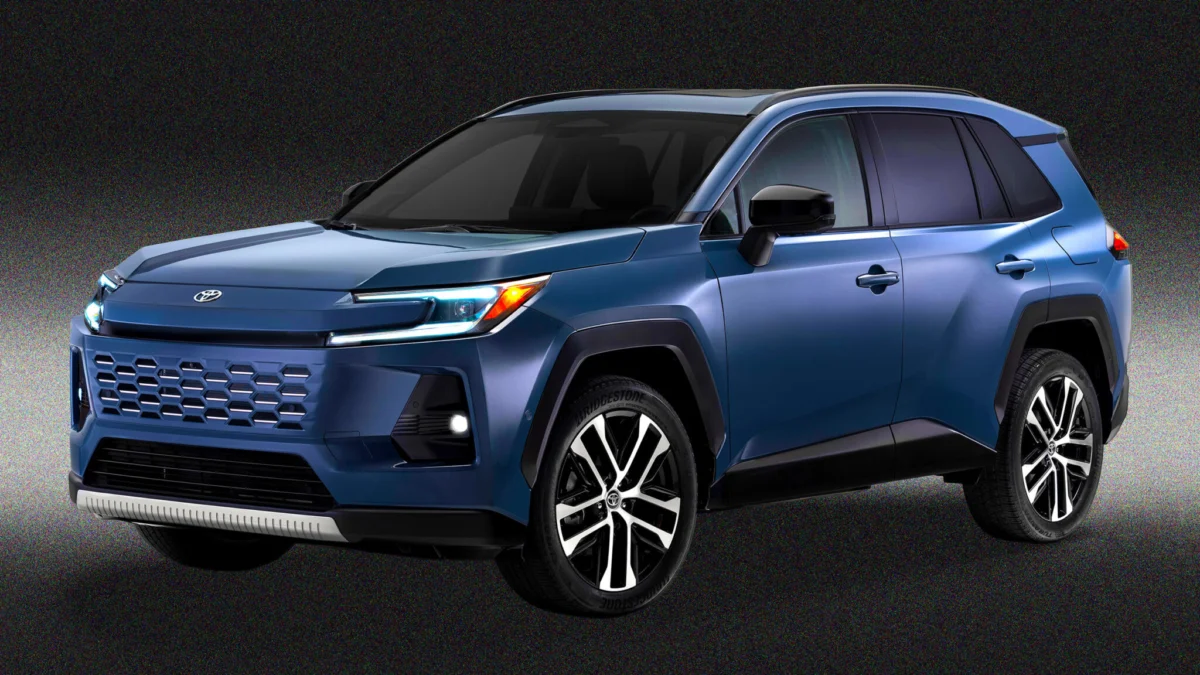
As the national average for a gallon of gasoline climbs past $4.51—a staggering $1.33 increase compared to this time last year—American consumers are feeling the pinch at the pump. In states like California, where the average price per gallon has breached the $6.15 threshold, the economic pressure is forcing a seismic shift in automotive consumer behavior. Seeking refuge from volatile energy costs, thousands of prospective buyers are flocking to Toyota showrooms, specifically targeting the automaker’s fuel-efficient hybrid and plug-in hybrid (PHEV) lineups.
However, for many, the quest for fuel economy has turned into a financial nightmare. A growing number of Toyota dealerships are exploiting this surge in demand, applying aggressive, often exorbitant "market adjustments" that effectively negate the long-term savings promised by high-efficiency powertrains.
The Anatomy of the Price Gouge: A Case Study in Excess
The 2026 Toyota RAV4 has long been a crown jewel of the automaker’s stable, lauded for its reliability and efficiency. Yet, as the model transitions deeper into hybrid and plug-in hybrid dominance, it has become the latest target for predatory pricing.
The most egregious example recently uncovered involves West Kendall Toyota in Florida. A 2026 RAV4 Woodland Plug-in Hybrid, which carries a manufacturer’s suggested retail price (MSRP) of $49,211, is currently listed by the dealership for a staggering $66,503. This price tag is not merely a result of dealer-added accessories; the breakdown includes approximately $1,572 in administrative, title, and tag fees, while the remaining balance—a jaw-dropping $15,720—is classified as a "dealer adjustment."
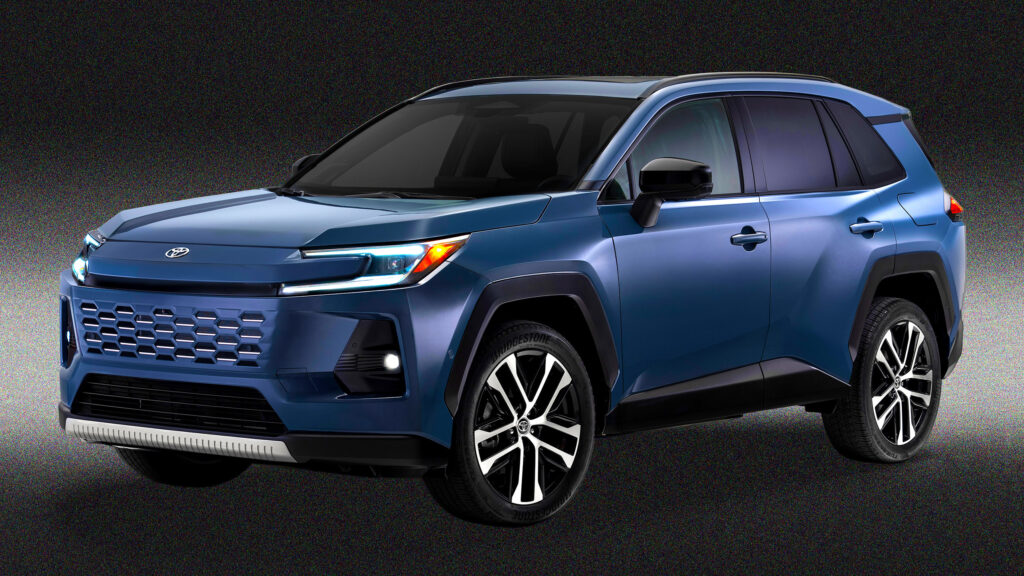
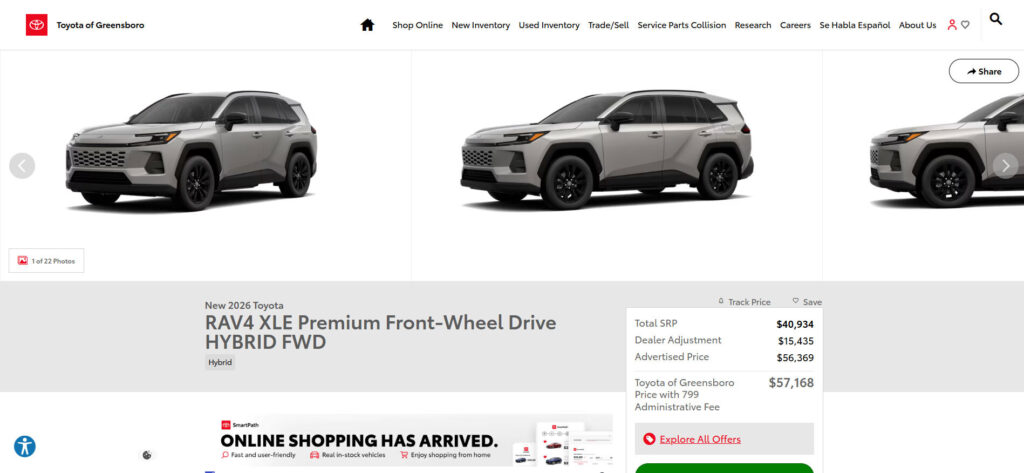
This is not an isolated incident. Across the country, the pattern repeats with alarming consistency. Toyota of Greensboro has applied a $15,435 markup to a 2026 RAV4 XLE Premium, inflating the total cost from a reasonable $40,934 to an eye-watering $56,369, excluding additional processing fees.
Chronology of a Market Trend: From Shortage to Exploitation
The current landscape of automotive pricing is rooted in the supply chain disruptions that began in 2020. However, while global manufacturing has largely stabilized, the culture of "dealer markups" has persisted, fueled by opportunistic retail management.
- 2020–2022 (The Pandemic Crunch): Initial semiconductor shortages led to a lack of inventory. Dealers, facing empty lots, began adding markups, arguing that low supply necessitated higher margins to keep businesses afloat.
- 2023 (The Normalization Attempt): As supply began to meet demand, many manufacturers issued warnings to dealers, urging them to stop price gouging to protect the brand’s reputation.
- 2024–2025 (The Hybrid Pivot): As fuel prices began their current upward trajectory, demand for hybrids spiked. Dealerships shifted their focus from general inventory shortages to "high-demand model" markups, identifying the RAV4 Hybrid and Plug-in Hybrid as prime candidates for profit maximization.
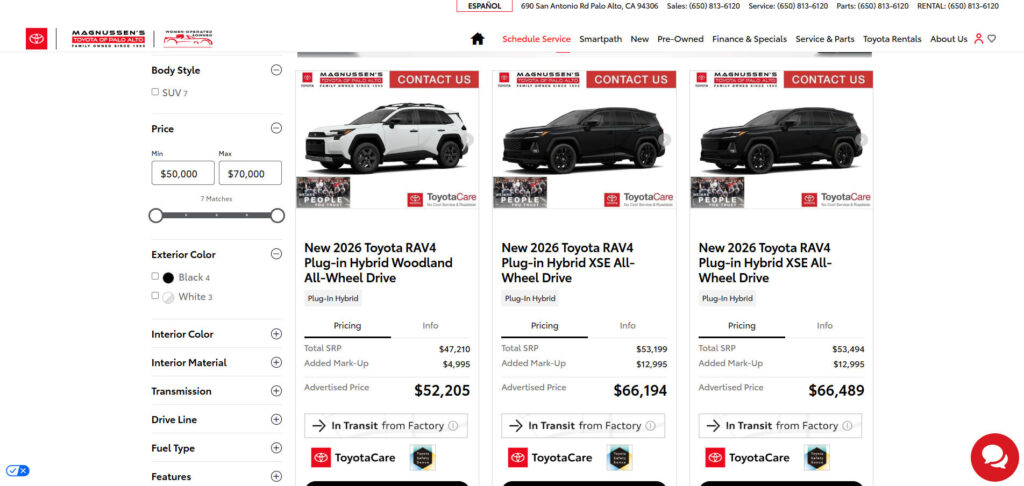
- 2026 (The Current State): We are currently witnessing a consolidation of this practice. Large dealer groups, such as the Magnussen Automotive Group in California, have begun applying blanket markups. Reports indicate that Magnussen’s Toyota of Palo Alto has applied a $3,999 markup to every single RAV4 Hybrid in its current stock. With 16 units on the lot, the dealership is effectively attempting to extract an additional $63,984 from its local customer base through this practice alone.
Supporting Data: The Math of the Markup
To understand the severity of these markups, one must look at the return on investment for the consumer. The average driver logs approximately 13,500 miles per year. A standard internal combustion engine (ICE) RAV4 gets an average of 30 MPG, while the hybrid variant achieves roughly 40 MPG.
At $4.50 per gallon, a driver of a standard RAV4 spends roughly $2,025 annually on fuel. A hybrid driver spends $1,518. The annual savings of $507 is significant, but it pales in comparison to a $15,000 markup. To break even on that markup alone—not counting the interest on the higher loan amount—a consumer would need to drive that vehicle for nearly 30 years.

Furthermore, these markups are not just affecting the sticker price; they are impacting the total cost of ownership through:
- Higher Sales Tax: Sales tax is calculated based on the total purchase price, including the markup. A $15,000 markup can add over $1,000 in additional sales tax to the transaction.
- Increased Loan Interest: Financing an extra $15,000 at current interest rates adds thousands of dollars in interest over the life of a standard 60-month loan.
- Insurance Inflation: Because the vehicle is insured for its purchase price, owners pay higher premiums to cover the inflated "market adjustment" value, which is not reflected in the vehicle’s actual book value.
The Institutional Response: Silence and Deflection
When confronted with these pricing strategies, many dealership groups point to the "free market" defense. They argue that as independent franchises, they have the right to price vehicles according to supply and demand.
Toyota corporate, meanwhile, finds itself in a precarious position. While the manufacturer often issues sternly worded internal memos discouraging excessive markups—citing the damage to brand loyalty and the long-term relationship between the consumer and the badge—their legal ability to dictate final retail pricing is limited by state franchise laws. These laws generally prohibit automakers from setting "fixed" prices, leaving dealers with the ultimate authority over the final bill of sale.
Industry analysts note that while Toyota has the power to adjust vehicle allocations based on dealer behavior, the process is slow and often politically fraught within the automotive industry. As a result, the "rotten apples" continue to operate with little fear of immediate retribution from the parent company.
Implications for the Automotive Industry
The long-term implications of this behavior are profound. By alienating the very demographic that is most loyal to the brand—those seeking efficiency and sustainability—Toyota risks a permanent shift in consumer sentiment.
1. Erosion of Brand Equity
Toyota has spent decades building a reputation for reliability, value, and honesty. By allowing, or failing to effectively curtail, the practice of aggressive price gouging, the brand risks being associated with the "greedy dealer" stereotype. This shift in perception could lead consumers to defect to competitors like Hyundai, Kia, or even Ford, who have aggressively expanded their hybrid offerings.
2. The Rise of Transparency Tools
In response to this opaque pricing, a cottage industry of consumer advocacy tools has emerged. Websites that track "no-markup" dealerships, crowdsourced spreadsheets, and social media campaigns are becoming essential tools for car buyers. Dealers who insist on these markups are finding themselves excluded from the consideration set of increasingly tech-savvy and well-researched buyers.
3. The Direct-to-Consumer Pressure
This environment serves as the strongest argument yet for the Tesla-style, direct-to-consumer sales model. As legacy automakers struggle to control their franchise networks, consumers are becoming increasingly vocal about their desire to bypass the traditional dealership experience entirely. If dealerships do not self-regulate, they may find themselves obsolete in a market that favors price transparency and a seamless, fixed-price purchasing experience.
Conclusion: A Buyer’s Guide to Avoiding the Trap
For the prospective RAV4 buyer in 2026, the message is clear: Do not accept the first offer.
The current market for hybrids is skewed by a minority of opportunistic dealers. However, many dealerships across the United States remain committed to selling at MSRP. The legwork required to find these honest retailers—calling multiple dealerships, checking inventory online, and being willing to travel—is not just a matter of convenience; it is a financial necessity.
Before signing any contract, buyers should:
- Request an itemized price sheet: Ensure that no "market adjustment," "protection package," or "documentation fee" has been hidden in the final numbers.
- Shop outside your zip code: Often, driving 50 or 100 miles to a dealership in a different market can save you thousands of dollars.
- Leverage competition: If a local dealer is charging a $15,000 markup, use that as leverage to negotiate with other dealers who may be willing to earn your business by selling at MSRP.
As the industry continues to evolve, the "Great Markup" of 2026 will likely be remembered as a turning point. Whether it leads to the reformation of the dealership model or a permanent shift toward direct sales, one thing remains certain: the consumer is finally beginning to fight back against the culture of greed, one invoice at a time.
