

This coverage is made possible through a partnership between Grist and Verite News, a nonprofit news organization dedicated to in-depth journalism in the underserved communities of the New Orleans area.
For the architects, engineers, and supply-chain contractors of Louisiana’s burgeoning offshore wind sector, the calendar is currently serving as a countdown clock. Their target date is January 21, 2029—the first full day of a new presidential administration.
In the corridors of power in Baton Rouge and the shipyards of the Gulf Coast, this date has become a rallying cry. It represents a theoretical "reset button" for an industry that has been brought to a near-total standstill by federal policy shifts over the last few years. While the Biden administration had championed the Gulf of Mexico as a new frontier for renewable energy, the subsequent Trump administration’s policies have systematically dismantled that progress, resulting in the cancellation of projects and the payout of billions in taxpayer funds to developers to walk away from their leases.
As the industry navigates this period of enforced dormancy, the strategy has shifted from expansion to survival. For companies that spent years pivoting from oil and gas expertise to wind technology, the goal is simple: hold the line, protect the institutional knowledge, and wait for the political winds to shift.
A Chronology of Retrenchment
The erosion of the U.S. offshore wind industry was not a slow decay; it was a rapid, deliberate dismantling. The decline began in earnest on January 20, 2026, when President Donald Trump signed a series of executive orders on his first day in office. These directives immediately withdrew vast swaths of federal waters from new leasing opportunities and placed an indefinite hold on all pending permits for offshore wind projects.
By the spring of 2026, the administration had escalated its tactics. Developers across the Atlantic and Gulf coasts received federal stop-work orders, effectively freezing construction on multi-billion-dollar installations. When the industry challenged these orders in court, the administration pivoted to a strategy of financial attrition. The federal government began offering significant payouts—totaling roughly $4 billion to date—to developers who agreed to surrender their federal leases and abandon their projects entirely.
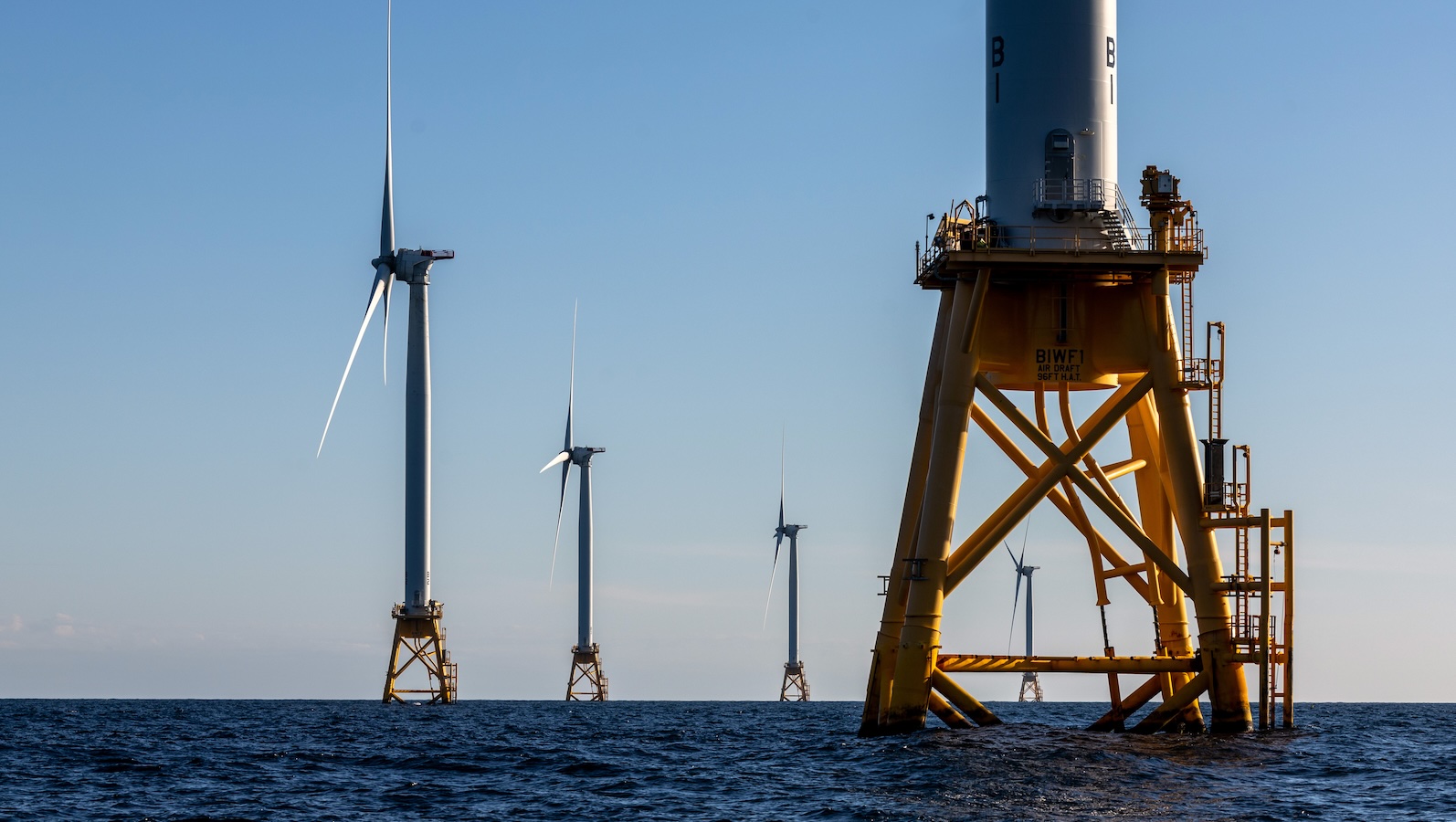
This "buy-out" program successfully cleared the board. To date, developers have relinquished 12 major offshore wind leases. Among these casualties was a massive 2-gigawatt wind farm proposed for the Gulf of Mexico, situated roughly 44 miles south of Lake Charles, Louisiana. That single project alone represented the potential to power over 350,000 homes.
The Economic Toll: Billions in Lost Potential
The cumulative impact of these cancellations is staggering. According to industry data, the projects abandoned across the U.S. represented a total of 21 gigawatts of clean energy capacity—enough to power more than 5 million American homes.
For Louisiana, the fallout is particularly acute. The state, which has spent a century as the backbone of the U.S. oil and gas industry, had positioned itself as a natural leader in the energy transition. Leveraging a deep-water expertise and a skilled workforce, Louisiana firms had successfully transitioned into the offshore wind market. By 2024, nearly a quarter of all offshore wind work contracts in the U.S. were being serviced by Gulf-based firms.
According to the Oceantic Network, an industry trade group, this growth had injected roughly $1 billion in investments into the region’s shipyards and metal fabrication shops. From family-owned supply boat businesses to specialized engineering firms, the "Gulf-to-Wind" pipeline was a success story of industrial diversification.
However, that momentum has been replaced by a "big pause button," as described by James Martin, CEO of Gulf Wind Technology. His Avondale-based company, which focuses on the research and testing of wind turbine blades, has been forced to look elsewhere to stay afloat. "It is a shame," Martin noted during a panel at Tulane University’s Future of Energy Forum. "We are seeing huge layoffs in the wind space, and some of the best engineers on the planet—people who are critical to our energy future—are simply giving up and moving into other sectors."
The Roots of the Opposition
The current hostility toward offshore wind is deeply personal for the President, predating his political career by nearly two decades. Trump’s opposition to wind energy was famously sparked in 2006 during a long-running legal battle with the Scottish government over an offshore wind farm he claimed would obstruct the views from his luxury golf course in Aberdeenshire.
Since that initial dispute, Trump’s rhetoric regarding wind power has remained consistently antagonistic. Throughout his political career, he has frequently portrayed wind turbines as existential threats to property values, wildlife, and the aesthetic integrity of coastal regions. His claims have often drifted into the hyperbolic, including unsubstantiated assertions that wind power causes cancer, drives nearby residents insane, and is responsible for spikes in food prices. These positions have translated into a governing philosophy that views the industry not as a utility, but as a political adversary.
The Human Capital Crisis
Perhaps the most damaging aspect of the current crackdown is the loss of human capital. To meet the anticipated demand for wind energy, Louisiana’s educational institutions had invested heavily in specialized training. Nunez Community College in Chalmette launched a two-year turbine technician certification, while the University of New Orleans established the Wind Energy Hub, which provided scholarships and internship pathways for engineering students.
Today, these programs are struggling to justify their existence as the industry stalls. "We spent years building a workforce pipeline," a university official noted. "When you turn off the switch on an entire industry, you don’t just lose the turbines; you lose the next generation of talent. Those students don’t wait around—they graduate and move to sectors where there is actually work."
Official Perspectives: A Strategy of Endurance
Despite the bleak outlook, industry leaders and supportive state officials are not yet ready to concede defeat. At the Future of Energy Forum, State Representative Joe Orgeron, a Republican and a veteran of the offshore wind supply chain, offered a candid assessment of the path forward.
"Come January 21, 2029, we all get to wave goodbye to this policy," Orgeron said. "The current administration has been a one-man stopping show. I am pretty confident, and I am hopeful, that it will change." When asked about his immediate strategy for the industry, he was blunt: "Just wait for the clock to run out."
This sentiment is shared by advocacy groups like the Southeastern Wind Coalition. Madelyn Smith, a program manager with the group, emphasizes that the underlying economic and technical rationale for wind energy remains unchanged, even if the political climate is currently hostile. "The payouts are compelling for companies that see no pathway for progress in the next three years," Smith explained. "But these leases were chosen for a reason—they are prime locations. The geography of the Gulf doesn’t change, and the need for energy security doesn’t change."
Implications for the Energy Landscape
The long-term implications of this forced stagnation are complex. By incentivizing developers to abandon their projects, the federal government has effectively cleared the "queue" of permits and projects that had been years in the making. Should a future administration attempt to restart the offshore wind sector, the process will essentially have to begin from square one.
For Louisiana, the challenge is to prevent the total dissipation of its specialized workforce. Many companies, like Gulf Wind Technology, are attempting to pivot temporarily into aerospace and defense to keep their facilities running. However, this is a stopgap measure. The specialized metal fabrication and marine logistics required for massive offshore turbines are not perfectly interchangeable with other industries.
The "sleeping giant" that was the Gulf’s offshore wind industry remains tethered by federal policy. As the state waits for the 2029 transition, the silence in the shipyards and the empty berths in the Gulf serve as a stark reminder of how quickly public policy can undo decades of private-sector investment. For now, the industry’s motto is one of patient, if frustrated, anticipation. The turbines may not be turning, but for those in the industry, the long game remains the only game in town.
