

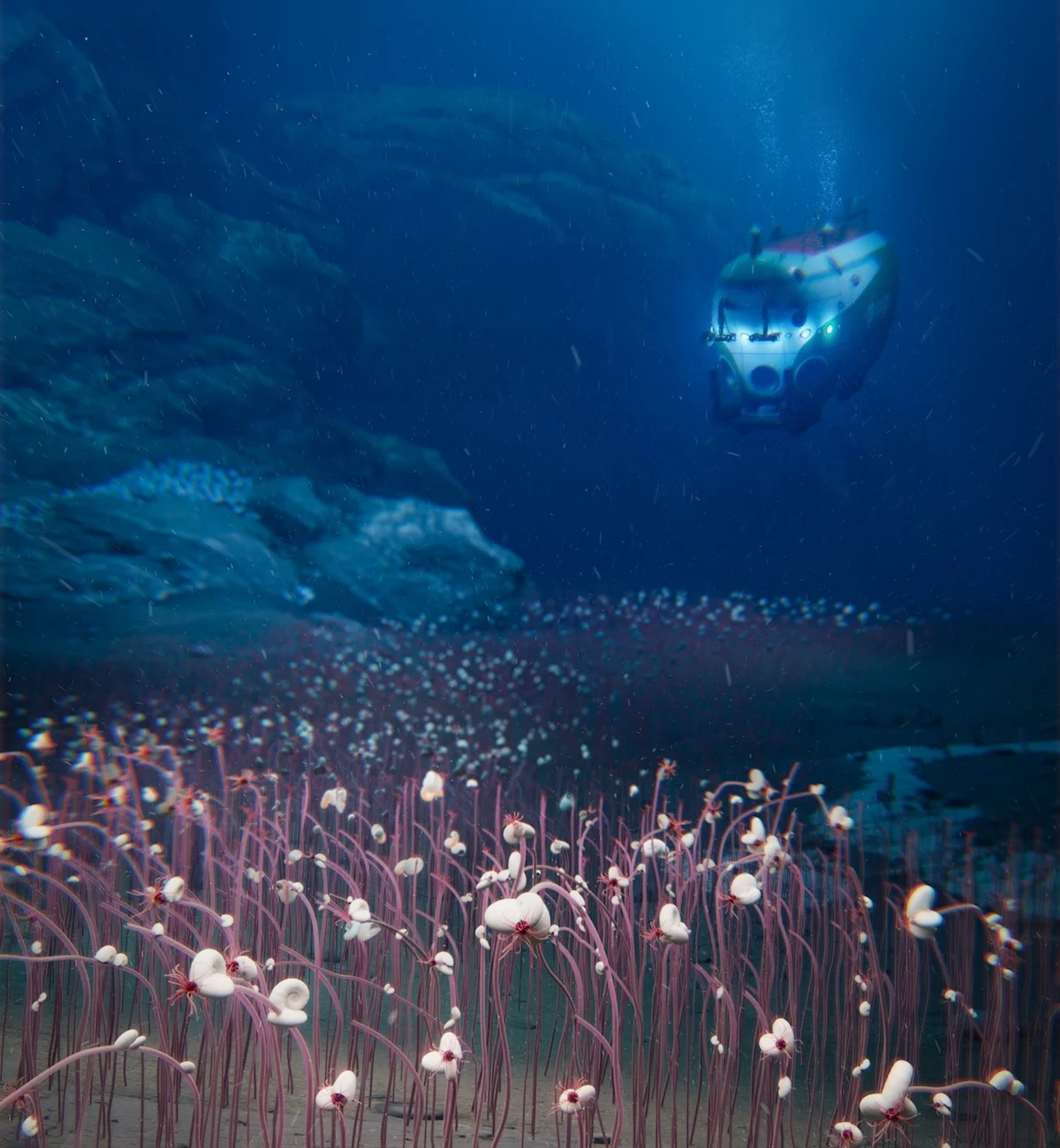
In a revelation that fundamentally shifts our understanding of planetary life, an international team of researchers has discovered a sprawling, vibrant colony of animals thriving nearly six miles beneath the surface of the Pacific Ocean. Found during an expedition to the Mariana, Kuril-Kamchatka, and western Aleutian Trenches, this discovery represents the deepest and most extensive chemosynthesis-based ecosystem ever documented.
The find, published in the journal Nature, challenges long-held scientific assumptions about the biological constraints of the "hadal zone"—the deepest reaches of the ocean—and suggests that the seafloor may be far more hospitable to complex life than previously imagined.
The Discovery: A Vibrant Oasis in the Deep Sea
The expedition, led by scientists from the Institute of Deep-sea Science and Engineering at the Chinese Academy of Sciences, utilized the manned submersible Fendouzhe to explore depths ranging from 3.6 to 5.92 miles. Over the course of 23 dives into the Mariana Trench alone, researchers encountered an environment that defied the "desolate" descriptions historically associated with the deep ocean.
Rather than a barren landscape, the team uncovered a bustling "oasis." The ecosystem is dominated by siboglinid Polychaeta (tubeworms) and Bivalvia (clams and mollusks), spanning a collective distance of over 1,500 miles across the surveyed trenches. These organisms, some of which feature tubeworms growing up to a foot in length, exist in a total-darkness environment where the crushing pressure is over 1,000 times that of sea level.
“What makes our discovery groundbreaking is not just its greater depth—it’s the astonishing abundance and diversity of chemosynthetic life we observed,” said co-author Mengran Du, a marine geochemist with the Institute. “Unlike isolated pockets of organisms, this community thrives like a vibrant oasis in the vast desert of the deep sea.”
Chronology of the Exploration
To understand the magnitude of this discovery, one must look at the historical trajectory of deep-sea exploration.
- 1960: The first human descent to the bottom of the Mariana Trench occurred, providing a brief, fleeting glimpse of the abyss. For decades, the area was characterized as a biological desert due to the extreme pressure and lack of photosynthetic potential.
- 2012: Filmmaker and explorer James Cameron completed a solo dive to the trench. His reports, which described the environment as "alien" and "desolate," reinforced the scientific consensus that the deep trenches were largely devoid of complex animal life.
- 2024: The Fendouzhe submersible conducted a series of systematic dives aimed at mapping the geological and biological composition of the western Pacific’s hadal zones.
- 2025: The findings were formally published in Nature, confirming that the "desolate" trench floor was, in fact, host to a massive, self-sustaining biological community.
Supporting Data: The Science of Chemosynthesis
The central question regarding this discovery is how complex animals survive without the sun. In shallow waters, life relies on photosynthesis, where plants and algae convert sunlight into energy. In the hadal zone, this is impossible.
Instead, the creatures discovered by the Fendouzhe team rely on chemosynthesis. The study reveals that the ecosystem is sustained by hydrogen sulfide-rich and methane-rich fluids. These fluids are transported along deep geological faults that traverse the sediment layers of the trenches. Isotopic analysis performed by the researchers indicates that this methane is produced microbially from deposited organic matter, creating a food web that operates entirely independently of the solar cycle.
The team observed tubeworms clustering densely around "snow-like" microbial mats—layers of bacteria that facilitate this chemical conversion. This symbiotic relationship forms the foundation of a complex community that includes not only mollusks and worms but also spiky crustaceans, sea lilies, and sea cucumbers. The sheer scale of this discovery—spanning 1,553.4 miles—suggests that these geological pathways are not anomalies, but rather common features of hadal trenches.

Official Responses and Expert Perspective
The scientific community has reacted to the publication with a mixture of excitement and caution. Lead author Xiatong Peng noted that the geological similarities between these trenches and others worldwide suggest that "such chemosynthesis-based communities might be more widespread than previously anticipated."
The discovery has prompted a re-evaluation of deep-ocean carbon cycling models. Previously, scientists believed that carbon cycling in the deep sea was relatively slow and limited to detritus falling from the surface. The presence of such large, high-metabolism communities suggests that the deep seafloor is a more active participant in the Earth’s global carbon cycle than current climate models account for.
"Diving in the submersible was an extraordinary experience—like traveling through time," said Du. "Each descent transported me to a new deep-sea realm, as if unveiling a hidden world and unraveling its mysteries."
Implications: The Looming Threat of Deep-Sea Mining
The timing of this discovery is critical, as it coincides with a heated global debate regarding the future of deep-sea mining. As terrestrial mineral resources become harder to extract, industrial interests are increasingly eyeing the ocean floor for polymetallic nodules—rich in copper, cobalt, and manganese—essential for the production of electric vehicle batteries and green energy technology.
Environmental advocates and marine biologists have long warned that the seafloor is a fragile, slow-to-recover ecosystem. The discovery of a thriving, 1,500-mile-long chemosynthetic community at the deepest reaches of the planet underscores the potential for catastrophic loss. If such communities exist on a wider scale than previously thought, the "unexplored" deep sea may actually be home to countless undocumented species that would be decimated by the physical disruption of mining machinery.
"The discovery highlights that we are looking at a living, breathing component of the Earth’s biosphere, not just a pile of rocks at the bottom of the ocean," said one marine biologist independent of the study. "If we begin mining these areas without a full understanding of their connectivity and ecological importance, we risk destroying ecosystems that have evolved over millions of years in isolation."
The International Seabed Authority (ISA) currently faces the daunting task of establishing a regulatory framework for this potential industry. However, the Nature study adds significant weight to the argument for a "precautionary pause." The "vibrant oasis" identified by the Fendouzhe team serves as a stark reminder that the deepest parts of our planet are not merely empty voids, but complex, functioning biological networks.
Conclusion: A New Frontier
The discovery of these chemosynthetic communities at the bottom of the Mariana Trench marks a watershed moment in marine science. By proving that complex life can flourish in the most extreme conditions on Earth, researchers have forced a recalibration of what constitutes a "habitable" environment.
As technology advances and our ability to reach the hadal zone improves, we are likely to find that the seafloor is not a desert, but a frontier teeming with life that operates on a different, chemical clock. Whether this discovery leads to a renewed commitment to conservation or a desperate scramble for resources remains the defining environmental question of the decade. For now, the "vibrant oasis" remains a testament to the resilience of life and the vast, largely hidden mysteries of our own planet.
