

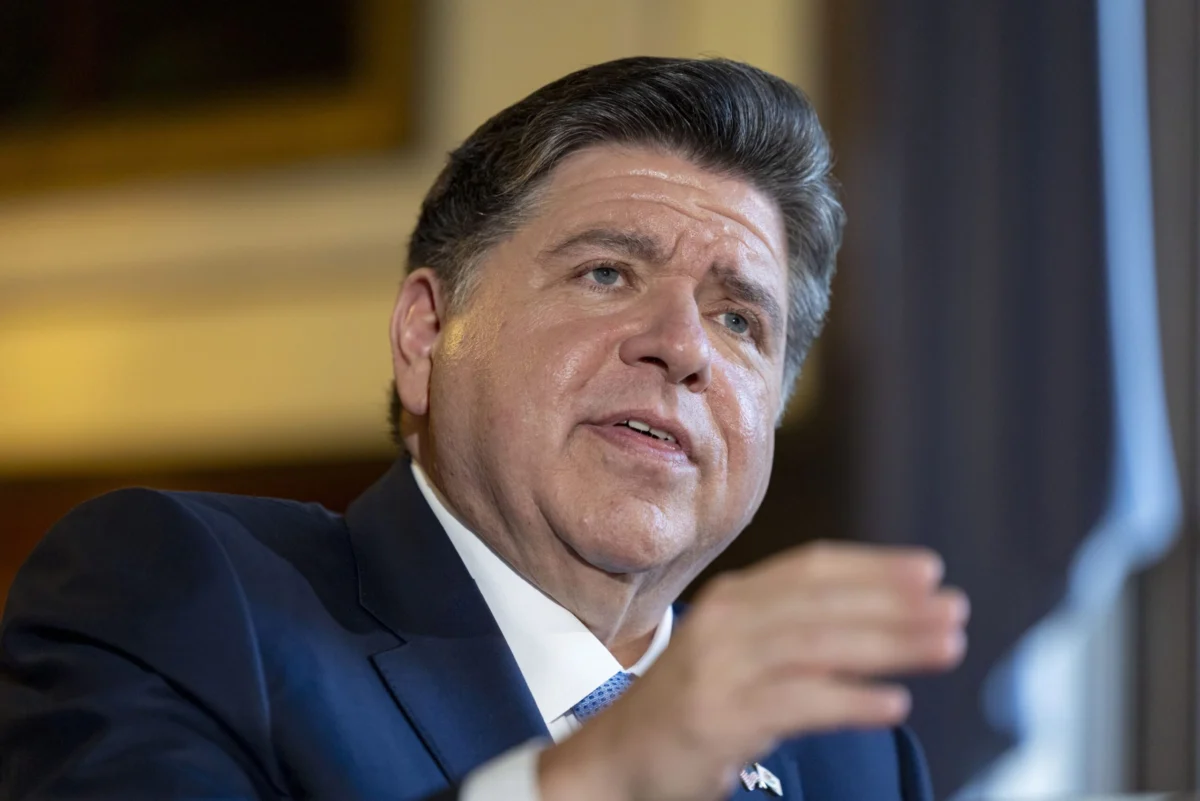
In a move that marks a significant pivot in state economic policy, Illinois Governor JB Pritzker has issued an executive order placing an immediate moratorium on state-level tax incentives for new data center projects. The decision, announced this week, is a direct challenge to the rapid, resource-intensive expansion of the digital infrastructure sector, which has become a lightning rod for concerns regarding energy affordability and grid stability.
Governor Pritzker’s administration has framed the pause as a necessary defensive measure to protect Illinois households from the surging costs associated with the state’s energy infrastructure. With data centers consuming vast amounts of electricity and water, the governor has signaled that the era of "no-strings-attached" state support for these facilities has come to an end.
The Trigger: A Legislative Impasse
The executive action follows a months-long standoff between the governor’s office and the Illinois General Assembly. In February, Pritzker introduced a legislative proposal aimed at reforming the electricity rate structure for massive, high-load users like data centers. The governor argued that these facilities, which function as the physical backbone of the internet and AI development, should pay a higher premium for their disproportionate energy consumption to offset the potential inflationary impact on residential utility bills.
When the legislature failed to pass the measure, the governor opted for executive intervention. "Data centers are asking just too much for too little in return, whether it’s electricity or clean water," Pritzker stated in a video disseminated on social media platform X. "We can’t let them cause our utility bills to go up."
The order creates a hard stop for new state-level incentives, though it includes a "grandfather" clause for projects that secured agreements prior to July 1. While local tax relief remains available, the loss of state-level benefits represents a substantial shift in the economic landscape for developers who have flocked to the Chicago area and beyond.
A Chronology of Growing Friction
The tension surrounding data center development is not a localized Illinois phenomenon but part of a broader national debate.
- 2020–2024: Illinois aggressively courted the data center industry, awarding nearly $1 billion in tax incentives during this period. These incentives were designed to make Illinois a competitive hub for global tech giants.
- January 2026: Grassroots opposition reached a boiling point in the Chicago suburb of Naperville. The City Council voted to reject a major data center proposal after local residents raised alarms over the potential for increased water and energy utility costs, signaling a shift in public sentiment.
- February 2026: Governor Pritzker formally requested that the state legislature adjust electricity rates for large-scale data centers to mitigate the impact on the state’s power grid and consumer bills.
- May 2026: Faced with a lack of legislative movement, Pritzker announced his intention to halt the tax incentive program.
- Late May 2026: Ohio Governor Mike DeWine joined the fray, ordering a temporary halt to his own state’s data center tax incentive program, pending a formal study on the projects’ economic and utility impacts.
- Current Status: Illinois enters a cooling-off period ahead of the mid-November veto session, where Pritzker intends to force the issue back onto the legislative agenda.
The Data: Costs, Benefits, and Resource Intensity
The economic footprint of the data center industry in Illinois is significant, with more than $15 billion in total investment recorded. However, the environmental and infrastructure costs are increasingly difficult to ignore.
According to reports from the Illinois Department of Commerce and Economic Opportunity, the state has been highly effective at attracting capital. Yet, industry researcher Data Center Watch notes that across the United States, roughly $64 billion in data center projects have been delayed or cancelled within the last year due to community pushback. This trend suggests that the "not in my backyard" (NIMBY) sentiment is evolving into a more structured economic critique of the industry’s resource consumption.
The debate hinges on a simple, if contentious, calculation: Are the jobs and tax revenue generated by a data center worth the long-term strain on the regional power grid? Critics argue that the massive, 24/7 energy demands of these facilities force utilities to keep older, carbon-intensive power plants online longer than planned, while simultaneously driving up the cost of service for residents and small businesses.
Official Responses and Political Fallout
The governor’s decision has created a rare, public rift between the Democratic administration and organized labor, typically a bedrock of support for the Governor.
The Labor Perspective
Climate Jobs Illinois, a coalition representing 15 separate labor unions, issued a scathing rebuttal to the governor’s executive order. For these unions, the data center industry represents a pipeline of high-paying construction and maintenance jobs.
"This pause does nothing to lower utility bills, protect the grid, or advance clean energy," the coalition stated. "Instead, it will send billions of dollars in investment and thousands of union jobs to Indiana, Kentucky, and Ohio—states that sit on the same electrical grid, where those data centers will be built anyway, just without Illinois workers."
The argument from labor is one of economic pragmatism: since the regional grid is interconnected, the electricity will be consumed regardless of where the servers are physically located. By pushing developers to neighboring states, Illinois risks losing the tax base and the jobs without actually alleviating the stress on the regional energy market.
The Gubernatorial Position
Governor Pritzker, currently navigating the complexities of his third-term bid, has maintained that his priority remains the household consumer. By positioning himself against the industry, he is attempting to capture the populist concern regarding the cost of living. The governor’s camp emphasizes that the state has already provided sufficient subsidies and that the industry must now bear its fair share of the costs of the infrastructure it utilizes.
The Broader Implications: Grid Stability and Future Policy
The pause in Illinois and the concurrent movement in Ohio suggest that state governments are beginning to view data centers as a distinct class of utility customer—one that requires a more robust regulatory framework than has existed in the past.
Grid Capacity and Energy Inflation
The core issue is that the power grid is not an infinite resource. As data centers proliferate to support the AI boom, they require massive upgrades to transmission lines and distribution substations. Traditionally, these costs are socialized across the utility’s entire customer base. Pritzker’s legislative push in February was intended to shift more of these "interconnection costs" directly onto the developers.
A New Regional Strategy
If Illinois and its neighbors continue to clash over the taxation and regulation of data centers, the industry may face a period of significant uncertainty. Investors and developers favor predictability; a patchwork of state-level moratoriums could force the industry to rethink its expansion strategies.
Furthermore, the Illinois veto session in November will serve as a bellwether for how state legislatures handle the "AI-Energy Paradox." If Pritzker succeeds in passing his rate reform, it could set a national precedent, encouraging other states to implement "utility-impact fees" on high-load users.
Environmental and Community Impact
The opposition in places like Naperville highlights a growing awareness of the "hidden" footprint of the digital economy. While users of the cloud rarely see the water used for cooling servers or the massive transmission lines required to power them, local communities are increasingly feeling the physical and financial effects. The governor’s move is an acknowledgment that public consent for these projects can no longer be assumed, and that economic development must be balanced against the necessity of affordable, reliable utility services for the public.
Conclusion
As the legislative clock ticks toward the November veto session, the future of Illinois’s data center industry hangs in the balance. Governor Pritzker has staked his political capital on the idea that the state’s economic policy must evolve to protect the consumer, even at the risk of losing investment to neighboring states.
The industry, meanwhile, remains on the defensive, arguing that the transition to a digital economy requires the physical infrastructure it provides. Whether a compromise can be reached that satisfies the unions, the developers, and the ratepayers remains to be seen. What is clear, however, is that the era of unfettered, subsidized growth for the data center industry is facing a reality check, with Illinois serving as the primary battleground for a debate that will likely shape the nation’s energy future for years to come.
